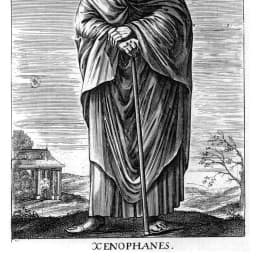
Ksenophanes
Her halkın tanrılarının tıpkı o halka benzediğini fark etti ve bariz sonucu çıkardı.
Ksenofanes, altmış yedi yıl boyunca Yunan dünyasını gezdi ve arkasında çoğu yerleşik düşünürden daha keskin bir gözlem bıraktı: Habeşliler tanrılarının koyu tenli ve basık burunlu olduğunu söylerken, Trakyalılar tanrılarının kızıl saçlı ve mavi gözlü olduğunu söylüyor. Atlar resim yapabilseydi, tanrıları at biçiminde çizerdi, diye ekledi. Şakanın ardında gerçek bir iddia vardı: Tanrı (bir, çok değil) insan bedenine hiç benzemez. Seyahat etmez, öfke duymaz, değişmez. Her şeyi yalnızca zihinle algılar. Bu arada, şeylerin doğası su ya da ateş değil, toprak ve su karışımıdır. İnsanların kesin bilgiye asla ulaşamayacağından, ancak giderek daha iyi kanaatlere varabileceğinden kuşkuluydu. Hem dine hem de bilgiye yönelen bu eleştiri ve alçakgönüllülük birleşimi, onu insan sınırlarının ilk filozofu yapar.

Geriye kalanlar
Kitabı kayıp. Geriye 6 satır kaldı; her biri sonraki bir yazar onu alıntıladığı için.
Yerler
Fikirler
Sözler
“Öküzlerin, atların ve aslanların elleri olsaydı ve resim yapabilselerdi, atlar tanrılarının biçimini at, öküzler öküz gibi çizerdi.”
“Açık gerçeği hiç kimse görmedi, tanrılar hakkında da bilgi sahibi olan olmayacak; çünkü biri doğru olanı söylese bile, yine de kendisi onu bilmez.”
Eserler
Hayat ve Anlar
Kolophon'da Doğum
İyonya'nın Kolophon kentinde, Klaros kutsal alanının yakınında doğdu. İyonya kentlerinin Pers egemenliğine girdiği kuşaktı.
İyonya'dan Ayrılışı
Pers fethi sırasında yurdunu terk etti, bir daha yerleşmedi. Kendi deyişiyle altmış yedi yıl boyunca şehir şehir dolaşıp şiirlerini okuyarak 'Yunan diyarında sürüklendi'.
Uzun bir gezgin hayatının ardından ölür
Doksanlı yaşlarında, hâlâ beste yaparken öldü. Sonraki gelenek onu Güney İtalya'daki Elea ile ilişkilendirdi, böylece onu (makul olsun veya olmasın) Parmenides'in bir öncüsü yaptı.
Etki
Etkilediği düşünürler
- Parmenides
Antik gelenek, Ksenophanes'i Parmenides'in hocası ve Elealıların ilki saymıştır; ister tanışmış olsunlar ister olmasınlar, onun ölümlülerden beden ve düşünce bakımından farklı tek bir tanrı olduğu yönündeki argümanı, Parmenides'in izlediği yönü belirlemiştir.
- Sextus Empiricus
Ksenophanes'in, hiçbir insanın kesin gerçeği bilmediği ve bilse bile bunu bilmeyeceği yönündeki sözü, yüzyıllar boyunca kuşkucu sorunun en eski Grek ifadesi olarak anıldı.

