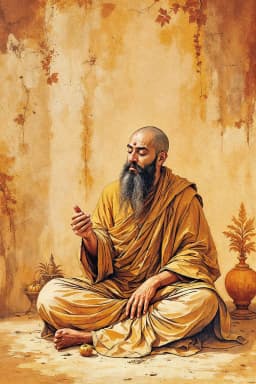
Ashvaghosha
İlk büyük Sanskrit şairi; Buda'nın hayatını bir destan olarak anlattı ve felsefeyi şarkı söyletti.
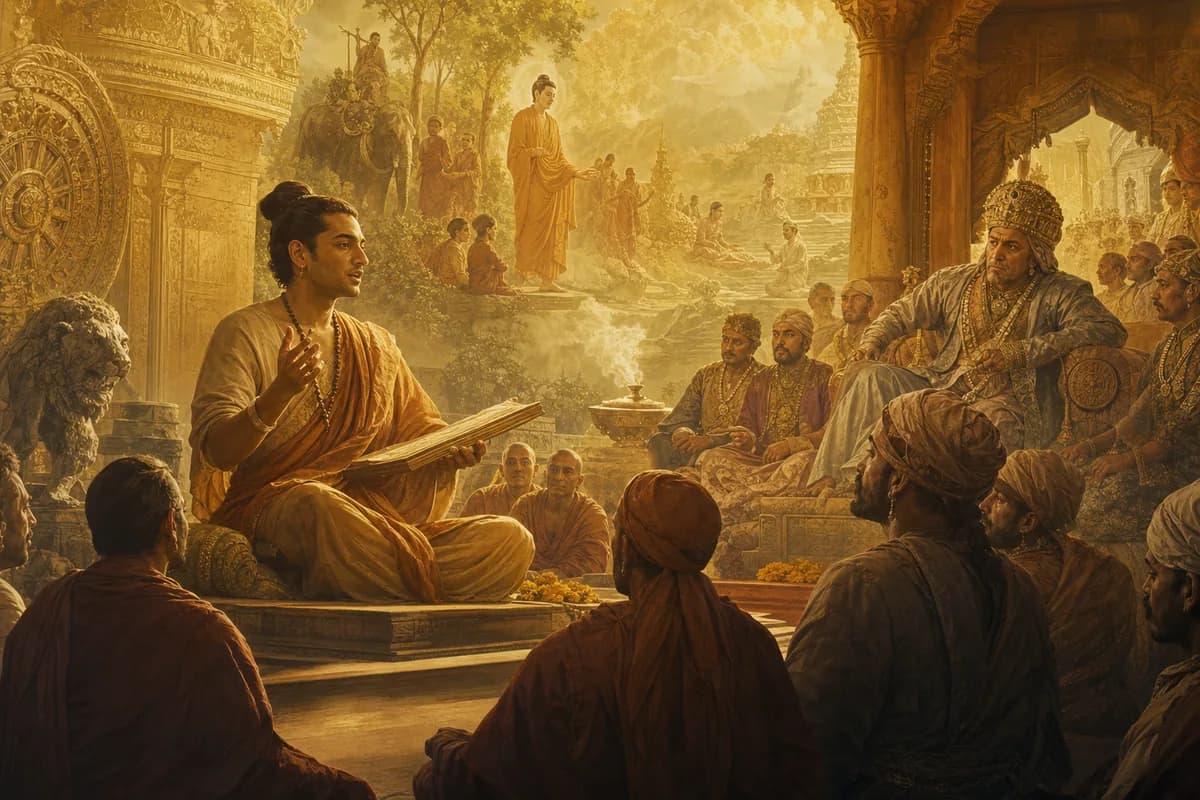
Aşvagoşa, Kuşan imparatoru Kanişka'nın sarayında Budizm'e geçen bir brahmandı ve eseri hayatta kalan en eski Sanskrit oyun yazarı ve destan şairiydi. Buddhacarita, Buda'nın korunaklı prensten uyanmış öğretmene yolculuğunu büyük güzellikte mısralarla anlatır ve öğretiyi hikâyeye dönüştürür. Bilginler için değil, kalbi dharma'ya doğru kıpırdatmak için yazdı; acı ve geçicilik, akıl yürütülmeden önce hissedilen hakikatlerdir.

Yerler
Fikirler
Sözler
“Ay, akan suda titrer nasıl, uyanmamışların gördüğü dünya da kendi arzularıyla titrer öyle.”
Eserler
Hayat ve Anlar
Brahmin şair olarak doğdu
Hindistan'ın yüksek edebiyat kültüründe doğdu; Budizm'e geçip doktrini Sanskrit şiirinde söyletecekti.
Budizm'e geçiş
Bir Budist keşiş tarafından yenilen parlak brahmin tartışmacı, armağanlarını dharmaya adadı.
Buddhacarita
Buda'nın yaşamını anlatan ilk Sanskrit destanı; felsefeyi yüksek edebiyata taşıdı.
Kanishka sarayı
Kuşan imparatorunun sarayında hizmet etti; felsefe manastırdan imparatorluğa taşındı.
Etki
Etkilendiği düşünürler
- The Buddha
Aşvaghoşa, Buda'nın ilk bütüncül şiirsel yaşam öyküsü olan Buddhacarita'yı yazdı. Saray, dört görüntü, terk ediş ve uyanış gibi olayları Sanskrit dizelerle sabitleyerek sonraki geleneğin devraldığı anlatı kalıbını oluşturdu.
Etkilediği düşünürler
- Nagarjuna
Aşvaghoşa, Mahayana temalarının edebi biçim kazandığı kuşağa aittir; sonraki gelenek, onu Nagarjuna'dan hemen önce, aynı yönelişin içinde konumlandırmıştır.

