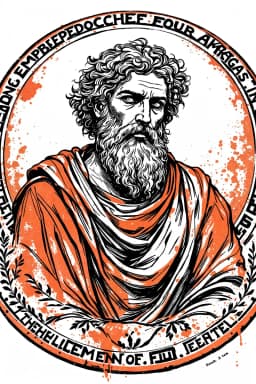
Empedokles
Dört kök: toprak, su, hava, ateş. İki güç: sevgi birleştirir, çekişme parçalar. Bir tanrı olduğunu kanıtlamak için yanardağa atladı.
Empedokles Sicilya'nın Akragas kentinden bir şair, bir şifacı ve kendini mucize adamı ilan etmiş biriydi. Bütün maddenin, iki kozmik gücün karıştırıp ayırdığı dört ebedi elementten oluştuğunu öne sürdü. Sevgi birleştirir, Çekişme böler; evren bu ikisinin egemenliği arasında döner durur. Dizelerle yazdı, halkın önünde şifalar dağıttı ve rivayete göre kendini Etna Yanardağı'na attı. Sandaleti kraterin kenarında bulundu.

Geriye kalanlar
Kitabı kayıp. Geriye 8 satır kaldı; her biri sonraki bir yazar onu alıntıladığı için.
Yerler
Fikirler
Sözler
“Yalnızca karışma ve karışan şeylerin değiş tokuşu vardır. 'Doğa' ise insanların bu şeylere verdiği bir addan ibarettir.”
“Ateş ve su, toprak ve havanın uçsuz bucaksız yüksekliği; ve bunlardan ayrı, her yönüyle dengede olan lanetli Çekişme, ve onların arasında, boyu eni kadar olan Sevgi.”
“Sevgi her şeyi bir araya topladığında ve Kavga yeniden yükselip başa geçtiğinde, o zaman her şey onun acımasız yönetimi altında ayrışır.”
Eserler
Hayat ve Anlar
Akragas, Sicilya'da doğdu
Sicilya'nın güney kıyısındaki bir Yunan kolonisi olan Akragas'ta (günümüzde Agrigento) zengin bir ailenin çocuğu olarak dünyaya geldi.
Akragas'ta Doğdu
Empedokles, İÖ 494 yılı civarında Sicilya'nın güney kıyısındaki zengin Yunan kolonisi Akragas'ta doğdu. Kent, tapınakları, atları ve lüks düşkünlüğüyle bilinirdi. Empedokles, seçkin bir aileden geliyordu ve içinde Yunan, Kartaca ve Sicilya akımlarının harmanlandığı bir yerde büyüdü. Her şeyin başka her şeyle karışım olduğunu söyleyecek bir düşünür için uygun bir başlangıç.
Dört Kök
Tüm maddelerin dört ebedi elementten (toprak, su, hava, ateş) oluştuğunu, bunların Sevgi ile karışıp Nefret ile ayrıldığını öne sürdü.
Akragas kralılığını reddeder
MÖ 460 civarında, Akragas halkı Empedokles'e kral olmayı teklif etti. O reddetti. Bu hikaye süslenmiş olabilir, ama onun hakkında doğru bir şey yakalar: O, nüfuzu makamdan ziyade varlığıyla kuran bir adamdı. Mor cübbeler ve defne tacı giyerdi. Sokaklarda kalabalıklar peşinden giderdi. Kendini ölümlüler arasında yürüyen bir tanrı olarak adlandırırdı: kibirden değil, dediğine göre, birçok hayattan arınan ruh sonunda ilahi doğasına kavuşur. Siyasi türden bir güç, bunun yanında küçük kalırdı.
Doğa ve Arınmalar Üzerine
MÖ 450 civarında Empedokles iki uzun heksametre şiiri yazdı: Doğa Üzerine ve Arınmalar. Doğa Üzerine'de dünyanın dört kökten (ateş, su, toprak ve hava) oluştuğunu ve bunları Sevgi ile Nefret adını verdiği iki gücün yönettiğini öne sürdü. Sevgi farklı şeyleri bir araya getirir, Nefret ise ayırır. Evren, bu güçlerin üstünlük kazanıp kaybetmesiyle döngüler halinde hareket eder. Arınmalar'da ise ruhun yeniden doğuşlar yoluyla yolculuğunu, eski bir suçun musallatında ilk saflığına dönme çabasını anlattı. İki şiir tuhaf bir gerilim içindedir ve bilginler o günden beri bunların tek bir vizyon mu yoksa iki ayrı vizyon mu oluşturduğunu tartışır.
Etna Dağı'nda Ölüm
Efsaneye göre, ya tanrı olduğunu kanıtlamak için ya da sırf gitmeyi seçtiği için Etna Yanardağı'nın kraterine atladı. Kenarda bir bronz sandalet bulundu.
Etna Dağı'nda efsanevi ölüm
Hikayeye göre Empedokles, Etna Dağı'nın zirvesine çıkar ve kraterin içine atlar. Ne bir ceset, ne bir mezar ne de sıradan bir ölümün izini bırakmak ister; yalnızca ilahlaşmış bir adam söylentisi kalsın ister. Volkan bu durumdan etkilenmemiş gibi, bronz sandaletlerinden birini ağzına kadar fırlatıp dağın kenarına bırakır. Hikaye neredeyse kesinlikle uydurmadır ama iki bin beş yüz yıldır ona yapışıp kalmıştır; bu da, nasıl hatırlanmak istediğine dair gerçek bir şey söylediğini gösterir.
Etki
Etkilendiği düşünürler
- Parmenides
Empedokles, Parmenides'in hiçbir şeyin yoktan var olamayacağı savını kabul etti, sonra değişen dünyayı dört değişmez kökün bir karışımı yaparak kurtardı, değişim, yaratılış değil yeniden düzenlenişti.
- Pythagoras
Empedokles'ın bir erkek, bir kız, bir çalı, bir kuş ve bir balık olduğunu iddia etmesi, Sicilya ve Güney İtalya'daki Yunan şehirlerinde yayılmış olan Pisagorcu ruh göçü öğretisine aittir.
Etkilediği düşünürler
- Aristotle
Aristoteles, Empedokles'in dört kökünü kendi fiziğine dört öğe olarak aldı, ancak ona Sevgi ve Nefret'in, uygun bir neden açıklamasının yapması gereken işi yapmasına izin verdiği için kusur buldu.
- Lucretius
Lucretius, Evrenin Doğası Üzerine adlı eserinde Empedokles'i övgüyle anar; felsefeyi şiir olarak yazma kararına ve dünyayı ögelerden kurma açıklamasına hayranlık duyar, ancak onun dört kökü yerine atomları koyar.
- Gorgias
Antik gelenek, Gorgias'ı Empedokles'in öğrencisi sayar. Bu da Yunan retoriğinin kökenlerini, dört kökün ve arınma şiirinin çıktığı aynı Sicilya çevresine yerleştirir.


