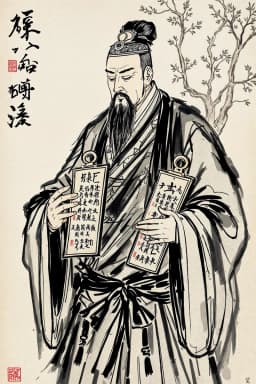
Shang Yang
He remade a single state with law alone, and the methods that raised it eventually consumed him.
Shang Yang was the statesman who turned Legalist theory into a working machine. Serving the state of Qin, he abolished hereditary privilege, tied rank to military merit, standardized measures, and bound the population into mutual-responsibility groups under a code of strict, public, impartial law. Virtue does not govern people, he held; clear rewards and certain punishments do. Qin grew into the power that would unify China. When his protector died, the nobles he had stripped of privilege turned the law against him, and he was executed by the very system he had built.

Places
Ideas
Words
“A wise man creates laws, while a foolish man is controlled by them.”
Works
Life & Moments
Born in Wey
Born a minor prince of the small state of Wey, he left to seek a ruler who would let him test his ideas.
The Reforms of Qin
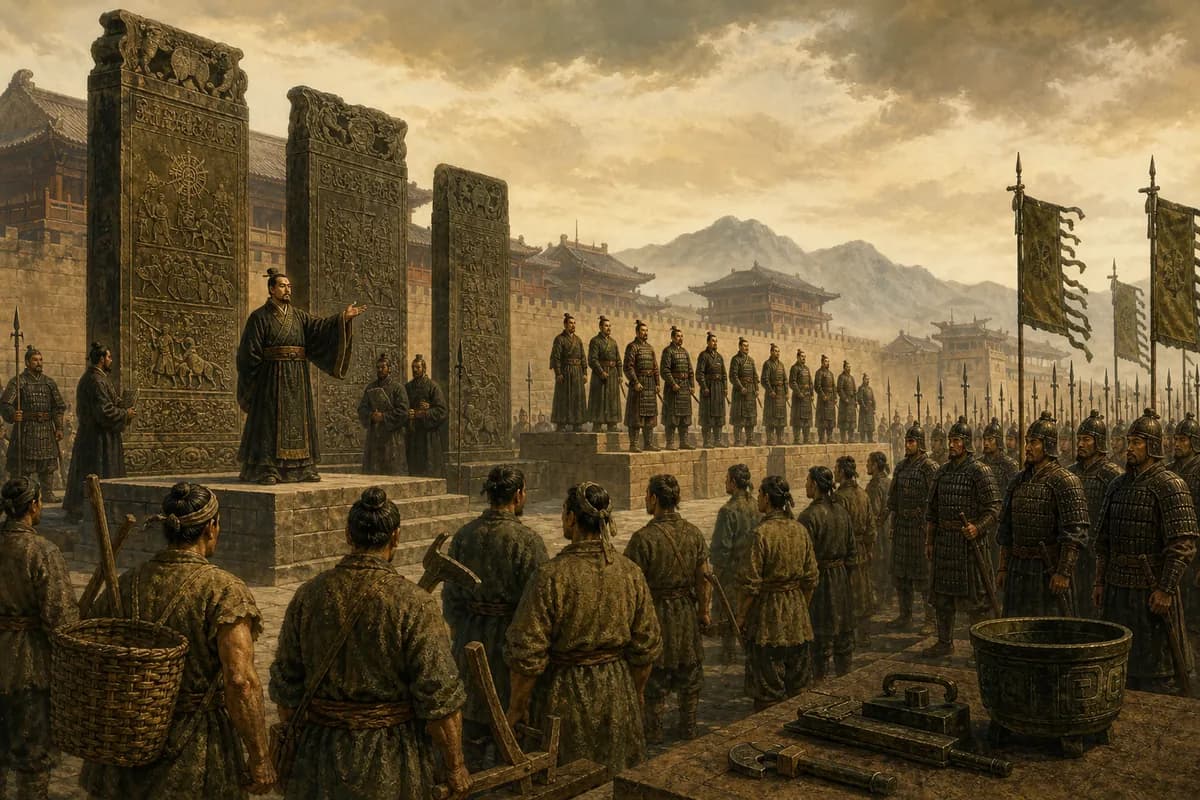
Rebuilt the state of Qin on strict, public law and military merit, abolishing inherited privilege and laying the ground for China's first empire.
Mutual Responsibility Groups
Bound neighbors to report one another's crimes, making law visible in every household. Qin grew strong because punishment and reward were certain.
Torn Apart by His Own Law
When his protector died, the nobles he had humiliated turned the code against him. He was executed by chariot-tearing, killed by the machine he built.
Influence
Influenced by
- Confucius
Shang Yang built the Qin state on the opposite assumption to Confucius: that people are moved by reward and punishment rather than by shame and example, and that a ruler who trusts virtue will lose.
Influenced
- Han Feizi
Han Feizi synthesized into theory the Legalist statecraft that Shang Yang had already put to work in Qin.
- Dong Zhongshu
The Han inherited the administrative apparatus Shang Yang had built and then dressed it in Confucian dress, a settlement Dong Zhongshu did more than anyone to articulate.


