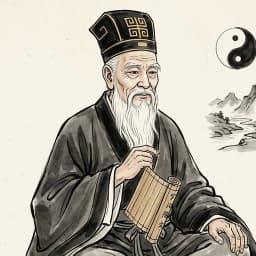
Zou Yan
Yin ve yang döngülerini beş element evresiyle birleştirip tek bir değişim kozmolojisi yarattı; ardından bunu kullanarak hangi hanedanın kaçınılmaz olarak yükseleceğini, fetbedeceğini ve nihayetinde çökeceğini öngördü.
Zou Yan, zengin Qi devletinde hükümdarların devrin önde gelen düşünürlerini danışman ve prestij süsü olarak ağırlamak için yarıştığı, devlet destekli bir toplanma yeri olan Linzi'deki Jixia Akademisi'nde ders verdi ve en ünlü cazibe merkezlerinden biri haline geldi. Merkezi katkısı, yin-yang ile beş element (tahta, ateş, toprak, metal, su) gibi iki eski ve gevşek fikri, kozmik ve tarihsel değişime dair tek bir iç içe geçmiş teori halinde sistemleştirmekti. Yin ve yang, dünyanın en temel ritmini, tamamlayıcı zıt güçler arasında bitmeyen bir değişimi tanımlarken; beş element, bu enerjilerin sabit bir üretici ve yok edici dizi boyunca nasıl hareket ettiğini yönetiyordu: her element sonunda bir sonrakine yol açıyor ve ardından onun tarafından aşılarak sonsuz bir döngü oluşturuyordu. Zou Yan'ın tarihsel olarak en önemli hamlesi, bu kozmolojiyi doğrudan siyasete uygulamaktı: her hükümran hanedan kozmik olarak beş elementten biriyle uyumluydu ve er geç, onu alt eden elementle uyumlu bir halef hanedan tarafından fethedilmeye mahkumdu. Bu meşru ardıllık teorisi, hükümdarlar için fathetmeyi haklı çıkarmada son derece yararlıydı, aynı zamanda kendi nihai devrilmelerini meşrulaştırmada da rahatsız ediciydi. Ayrıca, bilinen Çin dünyasının sadece uçsuz bucaksız okyanuslarla çevrili dokuz kıtadan biri olduğunu öne sürdüğü çarpıcı derecede geniş bir kozmografya ortaya attı; bu iddia çağdaşlarına çılgın bir spekülasyon gibi geldi, ancak daha sonraki düşünürler ara sıra büyük bir dünyanın nadir antik öngörülerinden biri olarak onu zikretti. Kendi yazılarından hiçbiri günümüze ulaşmadı; sistemi neredeyse tamamen Sima Qian'ın ölümünden bir asırdan fazla süre sonra yazdığı Tarih Kayıtları'ndaki kısa bir biyografiden ve dağınık özetlerden inşa edildi; yine de kristalize etmesine yardımcı olduğu yin-yang ve beş element çerçevesi, sonraki iki bin yıl boyunca Çin tıbbına, astrolojisine ve siyaset teorisine yön verdi.

Yerler
Fikirler
Sözler
“Her ne zaman yeni bir hanedanlık yükselecek olsa, Gök, aşağıdaki insanlara, beş evreden birinin gücüyle eşleşen uğurlu işaretler gösterir.”
“Konfüçyüsçü bilginlerin Orta Krallık dediği yer, bütün dünyanın yalnızca seksen birde biridir.”
Eserler
Hayat ve Anlar
Jixia Akademisi'nde Ders Verir
Zou Yan, Qi hükümdarlarının danışman ve prestij süsü olarak rakip düşünce okullarını finanse ettiği Linzi'deki Jixia Akademisi'nin en ünlü düşünürlerinden biri oldu.
Dokuz Kıta Kozmografisini Önerir
Zou Yan, bilinen Çin dünyasının uçsuz bucaksız okyanuslarla çevrili dokuz kıtadan sadece biri olduğunu ileri sürdü. Çağdaşları bu iddiayı aşırı spekülatif buldu, ancak sonraki düşünürler bunu gerçekten daha büyük bir dünyanın kadim bir öngörüsü olarak alıntıladılar.
Etki
Etkilediği düşünürler
- Dong Zhongshu
Dong Zhongshu, Konfüçyüs ahlakı ile kozmik düzenin sentezini, Zou Yan'ın bir asırdan fazla süre önce sistemleştirdiği yin-yang ve beş aşama çerçevesi üzerine doğrudan inşa etti ve Han hanedanı Konfüçyüsçülüğüne kozmolojik yapısını kazandırdı.
- Wang Chong
Zou Yan’ın sistemleştirdiği beş evre ve bunların hanedan döngüleri, Wang Chong’un Lunheng’de karşı çıktığı ortodoksi hâline gelmişti. Ona göre gökyüzünün hiçbir niyeti yoktu; işaret göndermezdi.

