Atlas of Thinkers
ThinkersAtlasTimelineWorksBlog
Atlas of Thinkers
ThinkersAtlasTimelineWorksBlog
Journey/

Arthur Schopenhauer

Pessimist
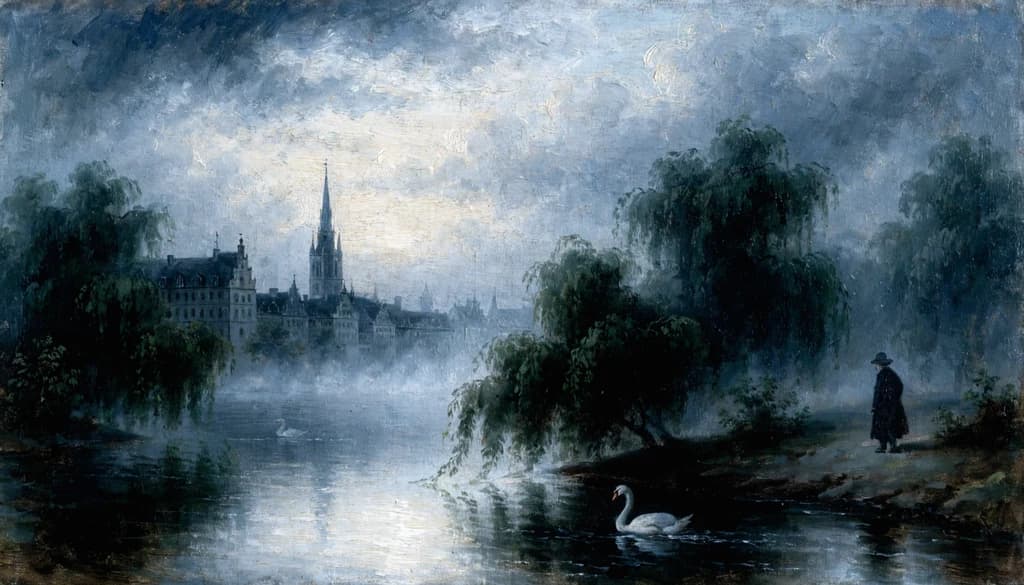
A solitary figure walks the misty Frankfurt riverside at dusk, swans on dark water, weeping willows, the city silhouette dissolving in fog.
Will and its shadow.
1/3

Schopenhauer did not think the world was rational or purposive or moving toward anything good. Behind everything — the leaf, the stone, the striving of animals and humans — he found one thing: will. Blind, directionless will, knowing neither rest nor satisfaction, endlessly reproducing itself in the suffering of every creature. He read Kant, absorbed the Upanishads, and built a philosophy of remarkable internal consistency and devastating conclusion: life as suffering, desire as its source, with only three narrow exits — aesthetic contemplation, moral compassion, and the ascetic denial of will. He was the first major Western philosopher to take Indian thought seriously as philosophy, and the first to make music the highest art, since music alone expresses the will directly rather than representing the world. Nietzsche read him at twenty-one and never fully recovered.

Teaching
1820·Berlin

Lectures to empty halls alongside Hegel

In 1820, Schopenhauer deliberately scheduled his Berlin lectures opposite Hegel's — a challenge that ended in humiliation. Hegel's lecture hall was packed; Schopenhauer's was empty. He never taught in a university again. The defeat sharpened the contempt for academic philosophy that permeates all his later writing.

Words

“The two foes of human happiness are pain and boredom.”

— Arthur Schopenhauer
Full profile→
Portrait of Friedrich Nietzsche

Continue to

Friedrich Nietzsche →