Atlas of Thinkers
ThinkersAtlasTimelineWorksBlog
Atlas of Thinkers
ThinkersAtlasTimelineWorksBlog
Journey/

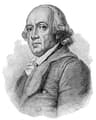
Giambattista Vico

Enlightenment
1/3

Vico spent most of his life as a poorly paid professor of rhetoric in Naples, largely ignored by the Cartesian fashion of his age, and produced a work — the New Science — that would not be properly read until the nineteenth century. His central argument is the verum-factum principle: we can only truly know what we have made. Mathematics we know with certainty because we invented it. The natural world we cannot fully know, because God made it. But history — human institutions, laws, languages, myths, rituals — we can genuinely understand, because humans made it. He developed from this a theory of historical cycles: nations pass through ages of gods, heroes, and men, decline into barbarism, and begin again. He read myth not as poetic fancy but as the compressed thought of an earlier mode of consciousness, alien to our abstraction but not less real. He was wrong about many details and right about something that most of his contemporaries could not see.

Birth
1668 CE·Naples

Born above a Naples bookshop

Born the son of a poor bookseller, and nearly killed at seven by a fall from the shop ladder that left him, he said, with his melancholic temperament. He was largely his own teacher among his father's books.

Words

“The true and the made are convertible: we can truly know only what we ourselves have made.”

— Giambattista Vico
Full profile→