A quotation from Protagoras
Quotation
Concerning the gods, I have no means of knowing whether they exist or not, nor what form they might take; for there is much to prevent knowledge: the obscurity of the subject and the shortness of human life.
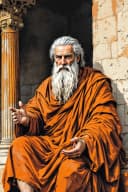
Protagoras
Man is the measure of all things. The first and greatest of the Sophists turned philosophy toward human judgment.
Protagoras was the most famous of the Sophists, traveling from city to city teaching rhetoric, argument, and civic virtue for a fee. His claim that 'man is the measure of all things' made truth relative to the perceiver. He wrote a book on the gods that began 'About the gods I cannot know either that they exist or that they do not.' Athens burned his books and banished him. Plato named a dialogue after him and treated him with surprising respect.
Socrates vs. Protagoras
Objective Truth vs. Relativism: Is truth discovered through dialectic, or is man the measure of all things?
The collision between Socrates and Protagoras defined the struggle for the Western mind in 5th-century Athens. Protagoras, the prince of the Sophists, declared:…
Explore Debate→More Lines from Protagoras
More from Protagoras→Understanding This Quotation
What does Protagoras mean by this quotation?
Man is the measure of all things. The first and greatest of the Sophists turned philosophy toward human judgment. Protagoras was the most famous of the Sophists, traveling from city to city teaching rhetoric, argument, and civic virtue for a fee. His claim that 'man is the measure of all things' made truth relative to the perceiver.…