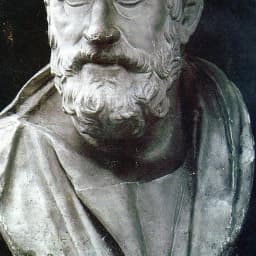
Karneades
Roma'ya elçi olarak gönderildi, bir gün adaleti savunan parlak bir konuşma yaptı, ertesi gün aynı derecede parlak bir konuşmayla adaleti yerle bir etti ve gerçeğin her iki tarafa da kolayca savunulabileceğini göstermesi yüzünden kentten kovuldu.
Karneades, Atina'daki Akademi'yi en şüpheci döneminde yönetti; Platon'un kurduğu okul, bir asır önce Platon'un kendine güvenen metafiziğine sırt çevirip sistemli kuşkuyu yöntem haline getirdiğinden beri süregelen bir geleneği sürdürüyordu. Kesinliğe ulaşılamayacağını savundu ama radikal kuşkuculardan farklı olarak tüm inançların eşit derecede değersiz olduğu sonucuna varmadı; bir olasılık dereceleri teorisi geliştirdi, bazı izlenimlerin diğerlerinden daha muhtemel olduğunu ve makul bir insanın nihai onayı askıya alırken eldeki en ikna edici izlenime göre hareket ettiğini öne sürdü; dogmatizm ile eylemsizlik arasında bir orta yol olan bu görüş, daha sonra Cicero'nun felsefi duruşunu doğrudan etkiledi. En ünlü performansı MÖ 155'te, Atina'nın kendisini diplomatik bir heyetle Roma'ya göndermesiyle gerçekleşti. Adalet üzerine art arda iki gün konuştu: önce adaleti doğal bir erdem olarak savunan cilalı bir konferans, ardından toplanan Romalıları dehşete düşürecek şekilde aynı konumu eşit derecede cilalı bir biçimde yerle bir eden ve adaletin sadece bir gelenek olduğunu, imparatorlukların (Roma'nınki dahil) organize hırsızlık üzerine kurulduğunu iddia eden başka bir konferans. Yaşlı Cato, Roma gençlerinin her soruyu her iki taraftan da eşit beceriyle tartışmayı öğrenmesinden endişelenerek felsefe heyetinin bir an önce evine gönderilmesini sağladı. Karneades hiçbir şey yazıya dökmedi, argümanlarını tamamen sözlü tartışma ve ders yoluyla sundu; bu nedenle onun görüşleri hakkında bilinen her şey yalnızca öğrencilerin ve sonraki yazarların, başta Cicero ve Sextus Empiricus'un eserleri aracılığıyla günümüze ulaşmıştır. Bu yazarlar, sabit sonuçlara o kadar alerjili bir zihni korumuş ve bazen onunla tartışmışlardır ki, kendi okulunun öğretilerinin bile dogma haline gelmesine izin vermediği rivayet edilir.

Yerler
Fikirler
Sözler
“Bilge kişi, bazen kesin olmadığı konularda bile fikrini söyler, yeter ki bu konunun kesin olmadığını belirtip uyarıda bulunsun.”
“Adalet, eğer varsa, herkesin çıkarlarına eşit saygı göstermekten ibaret olurdu; ama büyük olmak isteyen hiçbir ulus bunu uygulayamaz.”
Hayat ve Anlar
Roma’da adalet üzerine karşılıklı nutuklar atar
Atinalı bir diplomatik heyetin parçası olarak Karneades, arka arkaya iki gün adalet üzerine ders verdi; ilk gün adaleti doğal bir erdem olarak savundu, ertesi gün aynı görüşü yerle bir etti. Bu durum Yaşlı Cato’yu telaşlandırdı ve filozofların şehirden derhal kovulması için baskı yapmasına yol açtı.
Akademi'nin kuşkucu dönüşüne öncülük eder
Karneades, Platon'un Akademisi'ni en köktenci kuşkuculuğa yöneltti. Bir olasılık dereceleri teorisi geliştirdi: makul bir insan, kesinlik iddiasına kalkışmadan en ikna edici izlenime göre hareket edebilirdi.
Etki
Etkilendiği düşünürler
- Plato
Karneades, Platon'un kurduğu Akademi'ye yön verdi; ondan nesiller sonra okul, Platon'un metafiziğinden koparak sistemli bir kuşkuculuğa yönelmişti. Antik yazarlar bu ironiyi doğrudan belirttiler, çünkü Karneades'in argümanları genellikle Platon'un türünden bir kesinliği hedef alırdı.
- Pyrrho
Pyrrhon'un yargıyı tamamen askıya alması ile Karneades'in Akademik kuşkuculuğu, antik kuşkunun iki büyük kolunu temsil eder. Karneades'in olasılık dereceleri kuramı, kısmen Pyrrhonculuğun tamamen askıya almanın gerçekte yaşanamaz olduğunu bulan eleştirmenlere bir yanıttı.

