Atlas of Thinkers
ThinkersAtlasTimelineWorksBlog

Atlas of Thinkers

A story-first philosophy atlas. Explore history's greatest thinkers through place, time, movement, and ideas.

Explore

  • Thinkers
  • Atlas
  • Works

Browse

  • Concepts
  • Volumes

About

  • About the Atlas
  • Image Credits

Volume I · Ancient Greece · 624-262 BCE

Atlas of Thinkers
ThinkersAtlasTimelineWorksBlog
  1. Home
  2. /Thinkers
  3. /Hui Shi
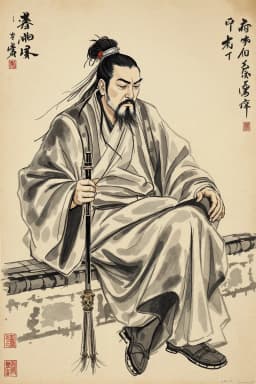
Portrait of Hui Shi

Hui Shi

Chinese

Born c. 370 BCE

Died c. 310 BCE

Statesman, logician, and Zhuangzi's beloved sparring partner, who taught that the largest and smallest things alike have no boundary.

Hui Shi was chief minister of the state of Wei and the sharpest of the School of Names. He left ten famous paradoxes that dissolve the lines we draw across the world: the greatest thing has nothing outside it, the smallest nothing inside; the sky is as low as the earth; love all things, for heaven and earth are one body. His lifelong friend and rival was Zhuangzi, who mourned that after Hui Shi died he had no one left worth talking to. Where the Daoist used paradox to free the mind, Hui Shi used it to probe how language carves up a seamless reality.

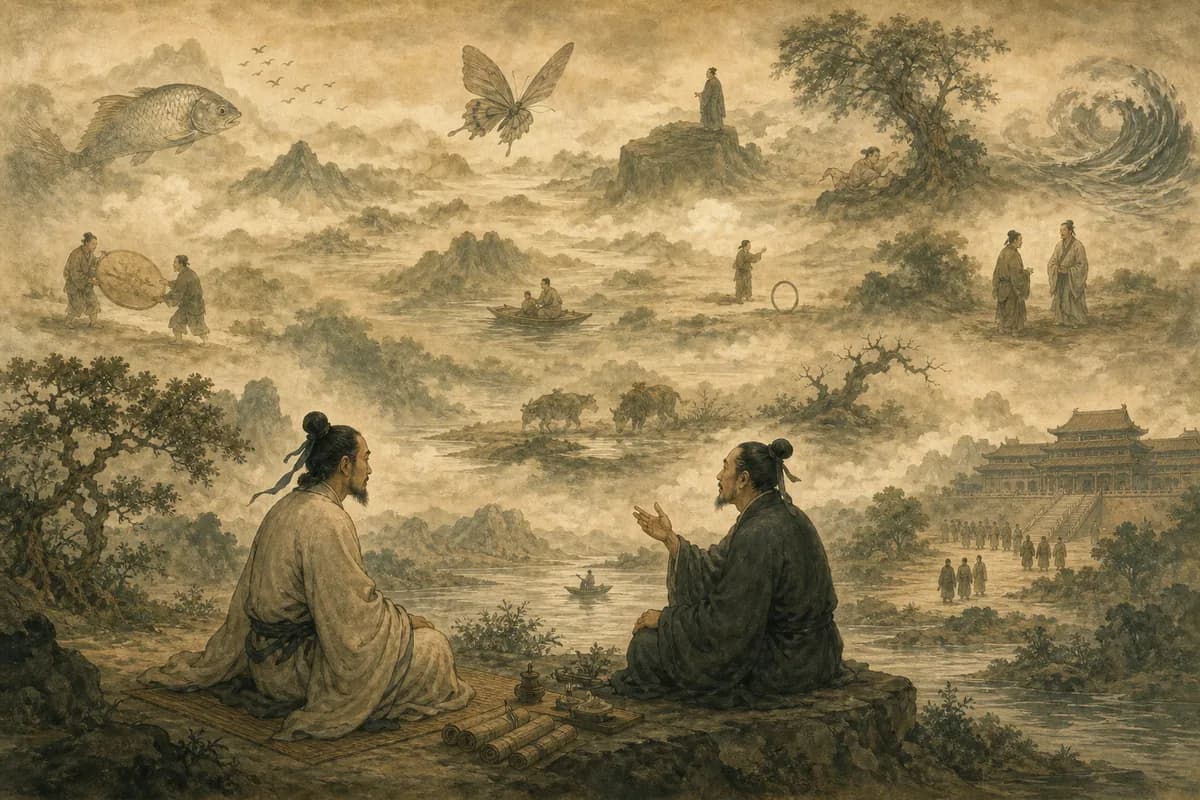
Hui Shi debates Zhuangzi by the Wei river, paradoxes dissolving horizons, friendship and logic intertwined.
The sky is as low as earth.

Places

Ideas

BeingReason

Words

“The greatest has nothing beyond itself; the smallest has nothing within. Love all things, for heaven and earth are one body.”

— Hui Shi

Works

The Ten Paradoxes

fragmentary
·Chinese

Hui Shi's thought survives as ten compressed paradoxes, preserved in the Zhuangzi, that dissolve the boundaries between large and small, high and low, today and yesterday. They probe how language imposes divisions on a world that may be, as he put it, one single body.

Life & Moments

c. 370 BCE

Born in the Warring States

A statesman and logician of the School of Names, and the lifelong sparring partner of Zhuangzi.

c. 334 BCE

Minister of Wei

Served as chief minister of the state of Wei and left ten paradoxes dissolving the boundaries we draw across the world.

c. 330 BCE

The Ten Paradoxes

Argued that the largest has no outside and the smallest no inside; the sky is as low as earth when perspective shifts.

c. 310 BCE

Death and Zhuangzi's Grief

Died leaving Zhuangzi to mourn that he had no one left worth talking to. Their friendship turned rivalry into philosophy.

Influence

Influenced

  • →
    Zhuangzifriend and rival

    Hui Shi and Zhuangzi were lifelong debating partners; Zhuangzi mourned that after his friend died he had no one worth talking to.

Related Thinkers

Portrait of Zhuangzi

Zhuangzi

c. 369 BCE – c. 286 BCE

Read the Journey →Compare with Zhuangzi

Atlas of Thinkers

A story-first philosophy atlas. Explore history's greatest thinkers through place, time, movement, and ideas.

Explore

  • Thinkers
  • Atlas
  • Works

Browse

  • Concepts
  • Volumes

About

  • About the Atlas
  • Image Credits

Volume I · Ancient Greece · 624-262 BCE