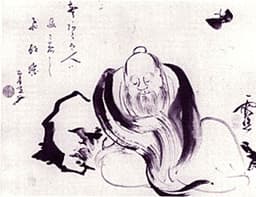
Zhuangzi
Ben, rüyasında kelebek olduğunu gören bir adam mıyım, yoksa kendisinin bir adam olduğunu düşleyen bir kelebek miyim? Felsefeyi vahşi, parlak hikayelere dönüştürdü.
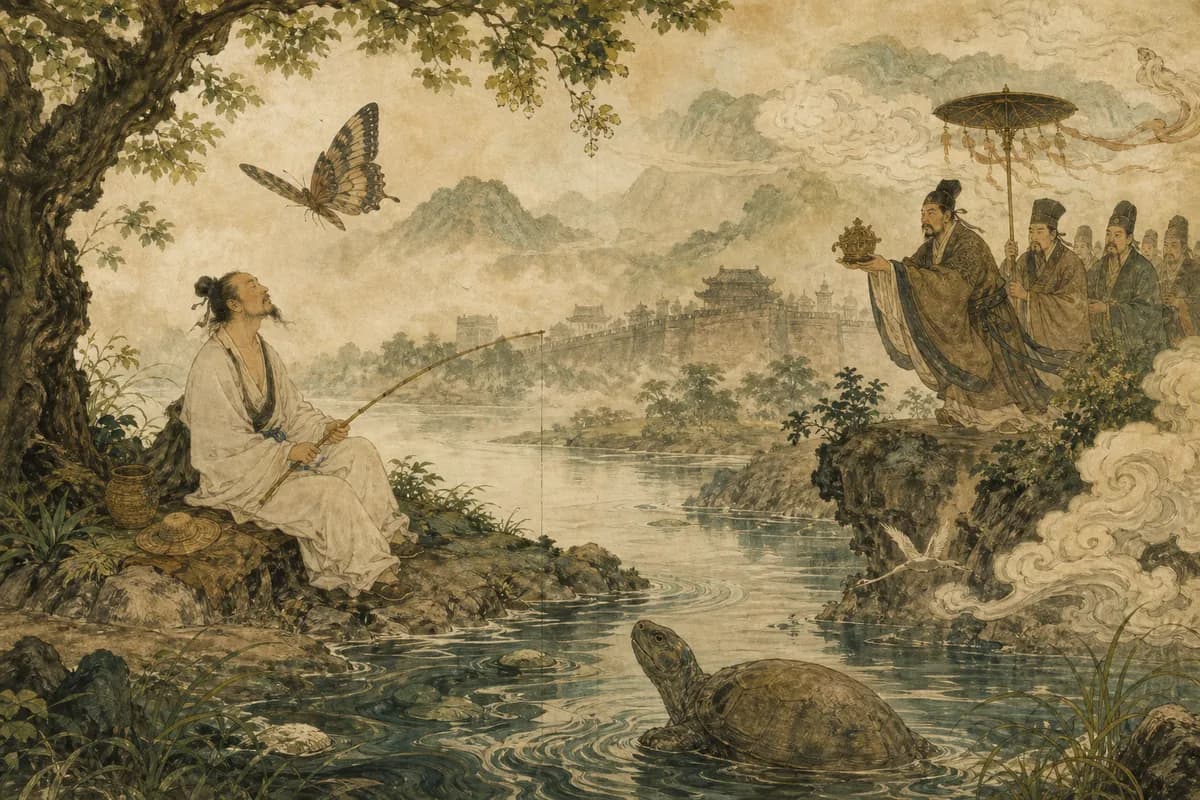
Zhuangzi, Laozi'nin fikirlerini alıp onları daha tuhaf, daha komik ve daha radikal hale getirdi. Zhuangzi kitabı, konuşan hayvanlarla, canavarca ağaçlarla ve ani bakış açısı değişimleriyle doludur. Kendisine başbakanlık teklif edildi ama reddetti; bir kaplumbağa gibi kuyruğunu çamurda sürüklemeyi tercih ettiğini söyledi.

Kütüphanede Oku
Yerler
Fikirler
Sözler
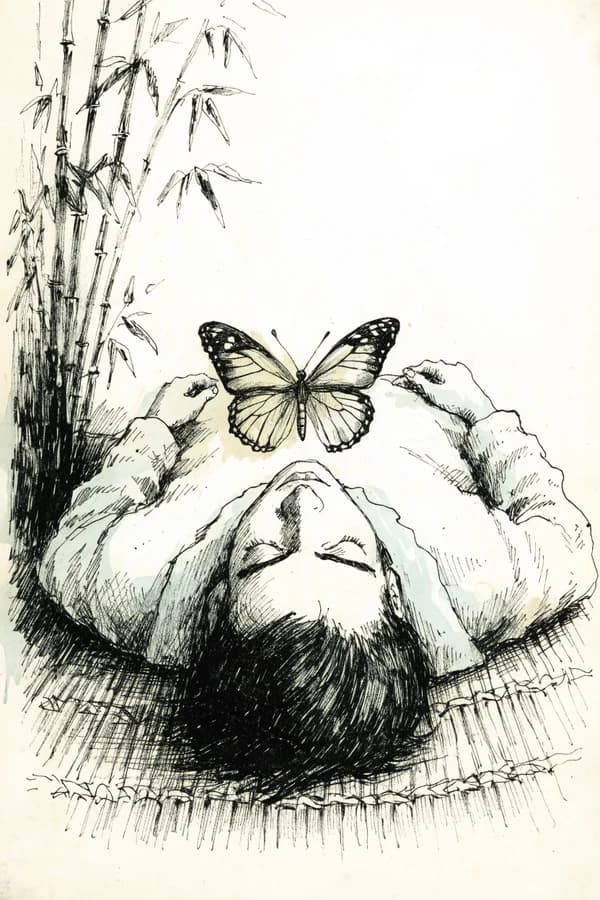
“Bir zamanlar Zhuang Zhou, bir kelebek olduğunu düşledi. Uçuşup duran bir kelebek. Zhuang Zhou olduğunu bilmiyordu.”
“Balık tuzağı, balık yüzünden vardır. Balığı yakaladıktan sonra tuzağı unutabilirsin.”
Eserler
Hayat ve Anlar
Song'da doğdu
Song devletinde doğdu. Küçük bir devlet görevi tuttu; siyasetten çok yoksulluğu seçti.
Başbakanlığı reddetmek
Chu kralı başbakanlık teklif etti; o balık tutuyordu. Kutsal kaplumbağa mı ölü ve saygı görür, canlı ve çamurda mı sürünür diye sordu.
Kelebek rüyası
Kelebek olduğunu sandığı bir rüya gördü. Uyanınca insan mı kelebek rüyası gördü, kelebek mi insan rüyası gördü bilemedi.
Song'da ölüm
Song'da öldü; Daoizmi tuhaf, komik ve özgür kılan hikâyeler bıraktı.
Etki
Etkilendiği düşünürler
- Laozi
Zhuangzi, Laozi'nin öğretilerini miras alıp genişletti. Dao De Jing sadeyken, Zhuangzi vahşi ve yaratıcıdır.
- Liezi
Liezi ile Zhuangzi, rüya ve dönüşümün aynı vahşi, mesellerle örülü Taoculuğunu paylaşır.
- Hui Shi
Hui Şi ile Zhuangzi ömür boyu tartışma arkadaşıydı; Zhuangzi, dostu öldükten sonra konuşmaya değer kimsesi kalmadığına üzüldü.
- Gongsun Long
Zhuangzi, tartışmacıların argümanlarını iyi biliyordu; onları kullanıp bir kenara bıraktı ve beyaz at paradoksunu dilin dünyayı bölmeye güvenilmez olduğunun bir kanıtı olarak ele aldı.
- Yang Zhu
Yang Zhu'nun imparatorluk karşılığında kendinden bir parça dahi vermeyi reddetmesi, Zhuangzi'de de akan aynı içgüdüye aittir; ancak Zhuangzi bunu bir kendini koruma öğretisinden çıkarıp daha çok bir oyuna dönüştürür.
Zhuangzi ile Felsefe Yapın
Bu düşünürün yer aldığı rehberli yollar, münazaralar ve zihin deneyleriyle fikirleri derinleştirin.
Daoizm & Doğu Bilgeliği
Zhuangzi, bu geleneğin en büyük temsilcilerindendir. Zihninizin bu okula ne kadar yakın olduğunu test edin.
Doğu Bilgeliği: Akış, Uyum ve Zihin
Batı düalizminin ötesine geçerek Daoizm, Konfüçyüsçülük ve Budizm'in derinliklerine inin; sürtünmesiz ve merkezde bir yaşamın kadim sırlarını öğrenin.
Zhuangzi ve Xunzi
Kelebek Rüyasının Özgürlüğü ile İnsan Doğasını Eğiten Toplumsal Düzen.


