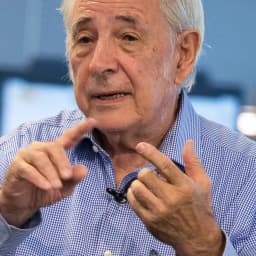
John Searle
Bir odada kilitli bir adam, kural kitabına uyarak Çince soruları anlamadan doğru cevaplar: onun argümanı, ne kadar akıllıca programlanmış olursa olsun hiçbir bilgisayarın gerçekten bir şey anlamadığıdır.
Searle, ilk ününü Oxford'daki hocası J.L. Austin'in sıradan dil gözlemini (bir şey söylemenin çoğu zaman bir şey yapmanın bir yolu olduğunu, örneğin söz vermek, uyarmak, bir gemiyi vaftiz etmek) Wittgenstein dostu bir hale getirerek inşa etti. Söz edimleri teorisinde, bir ifadenin gerçek bir söz verme, iddia etme veya talep etme eylemi sayılması için hangi koşulların geçerli olması gerektiğini sistematik olarak açıkladı. En ünlü katkısı bir on yıl sonra geldi ve güçlü yapay zeka dediği şeyi hedef aldı: yani doğru programı çalıştıran bir bilgisayarın sadece bir zihni taklit etmekle kalmayıp aynı zamanda bir zihne sahip olduğu iddiası. Çin Odası düşünce deneyi, Çince bilmeyen bir kişinin, içinde İngilizce kapsamlı bir kural kitabı bulunan bir odada kilitli olduğunu varsayar: bu kişi bir delikten Çince semboller alır, kural kitabını izleyerek yanıt olarak başka Çince semboller üretir ve bunları dışarı verir: yeterince inandırıcı bir şekilde ki dışarıdaki Çince konuşan biri, anlayan biriyle sohbet ettiğini sanır, oysa içerideki kişi mekanik sembol karıştırmaktan başka hiçbir şey anlamaz. Sonucu şuydu: sözdizimsel kurallara göre sembolleri manipüle etmek, program ne kadar karmaşık olursa olsun, asla kendi başına anlambilim üretemez; gerçek anlama, gerçek anlam, doğru girdi-çıktı davranışından fazlasını gerektirir ve bunun, bir beyin gibi gerçek bir biyolojik özellik olması gerektiğini savundu, herhangi bir yeterince karmaşık sembol işlemcinin otomatik olarak kazandığı bir şey değil. Berkeley'de altmış yıl, bilinç ve toplumsal gerçeklikle ilgili bu ve benzeri argümanları geliştirerek geçirdi ve yaşayan en çok alıntı yapılan zihin filozoflarından biri haline geldi: ta ki 2019'da üniversite, eski bir araştırma asistanını cinsel tacizde bulunduğunu tespit eden bir Başlık IX soruşturmasının ardından onu emeritus unvanından mahrum bırakana dek. Kendisi bu sonucu reddetti, ancak bu durum uzun kariyerinin nasıl hatırlanacağını kalıcı olarak karmaşıklaştırdı.

Yerler
Fikirler
Sözler
“Bilgisayara ne kadar biçimsel ilke koyarsanız koyun, bunlar anlamak için yeterli olmayacaktır; çünkü bir insan bu biçimsel ilkeleri hiçbir şey anlamadan da izleyebilir.”
“Bir dil konuşmak, kurallarla yönetilen bir davranış biçiminde bulunmaktır.”
Eserler
Hayat ve Anlar
Çin Odası argümanını yayımlar
Searle'ün 'Minds, Brains, and Programs' adlı makalesi, Çin Odası düşünce deneyini ortaya koydu. Bu deney, sembolleri kurallara uygun şekilde manipüle eden bir sistemin aslında hiçbir şeyi anlamadığını öne sürerek güçlü yapay zeka iddialarına doğrudan meydan okur.
Fahri statüsünü kaybetti
Bir Eylül 2019'da Berkeley Üniversitesi, eski bir araştırma asistanına cinsel tacizde bulunduğuna dair yapılan Title IX soruşturmasının ardından John Searle'nin fahri profesör unvanını iptal etti. Searle suçlamaları reddetti ve bu karar, uzun kariyerinin nasıl hatırlanacağını kalıcı olarak karmaşıklaştırdı.
Etki
Etkilendiği düşünürler
- Ludwig Wittgenstein
Searle'ün söz edimleri kuramı, Wittgenstein'ın Oxford ve Cambridge'de yerleşmesine yardımcı olduğu gündelik dil felsefesinden doğdu. Bu görüş, bir ifadenin anlamını onun bir yaşam biçimi içindeki kullanımından ayrılmaz sayar.
Etkilediği düşünürler
- David Chalmers
Searle ve Chalmers, 1990'ların bilinç tartışmalarında birbirlerinin argümanlarıyla doğrudan hesaplaştı. Searle, bilincin beynin basit bir biyolojik özelliği olduğunda ısrar ederken, Chalmers zor problemin bu tür kolay bir doğallaştırmaya direndiğini savundu.

