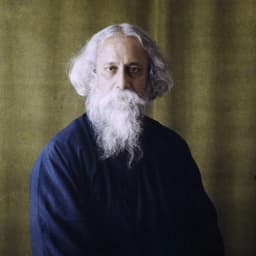
Rabindranath Tagore
He was the first non-European to win the Nobel Prize in Literature, and returned his knighthood to the British Crown when colonial troops massacred his people.
Tagore was born into Bengal's leading intellectual family and created a body of work (poetry, novels, plays, songs, philosophy, painting) that no single genre contains. His Gitanjali, translated into English in 1912, stunned the Nobel committee into giving him the prize the following year. His philosophy was neither Western nor narrowly Hindu: he believed in the creative individual, in the connection between the human and the divine that runs through beauty, and in education that grows from nature rather than imposition. His university at Santiniketan sat under open skies and held classes beneath trees. When British troops massacred unarmed civilians at Jallianwala Bagh in 1919, he returned his knighthood to the Crown in protest, a gesture that cost him nothing materially and everything symbolically. He corresponded with Einstein about science and reality, debated Gandhi on the village versus the city, and wrote the national anthems of two countries: India and Bangladesh. He died in 1941, having watched the nationalism he had critiqued his whole life drag the world to war again.

Read in the Library
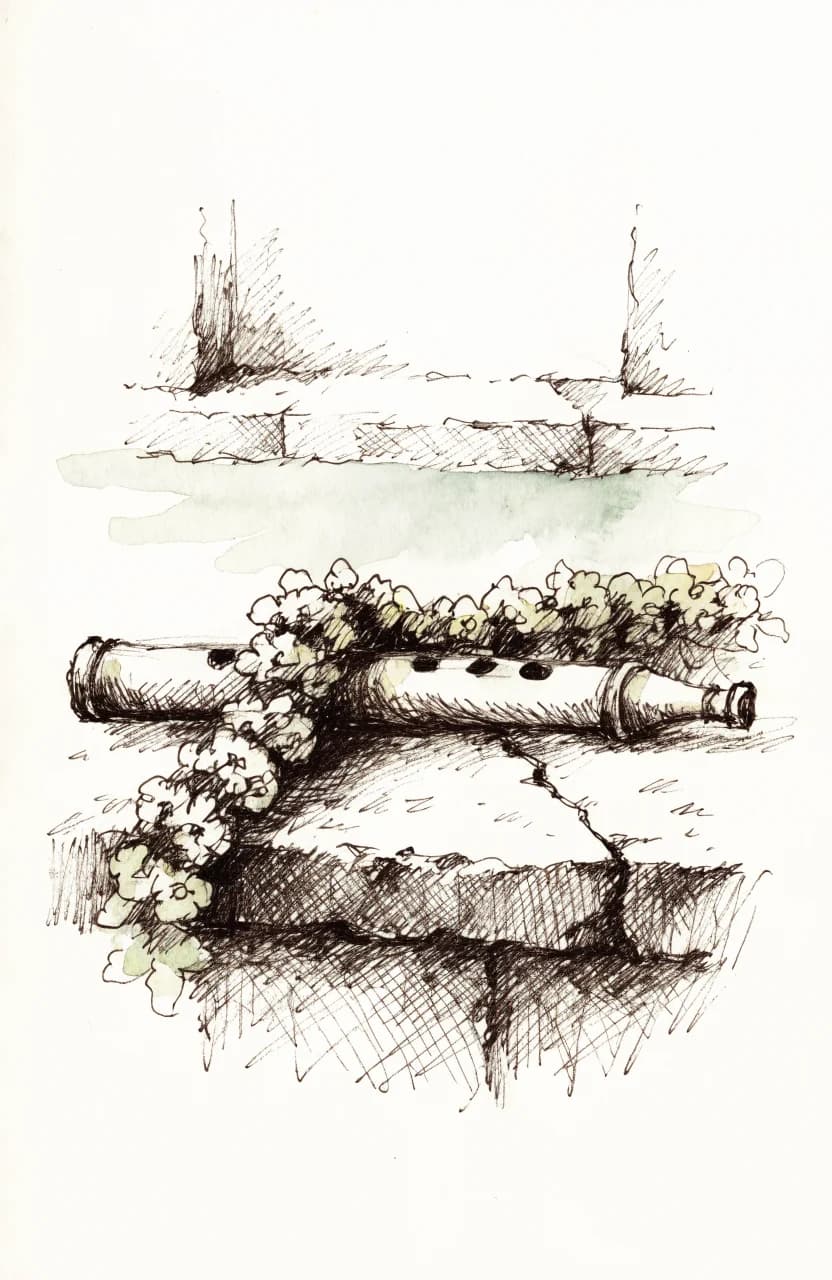
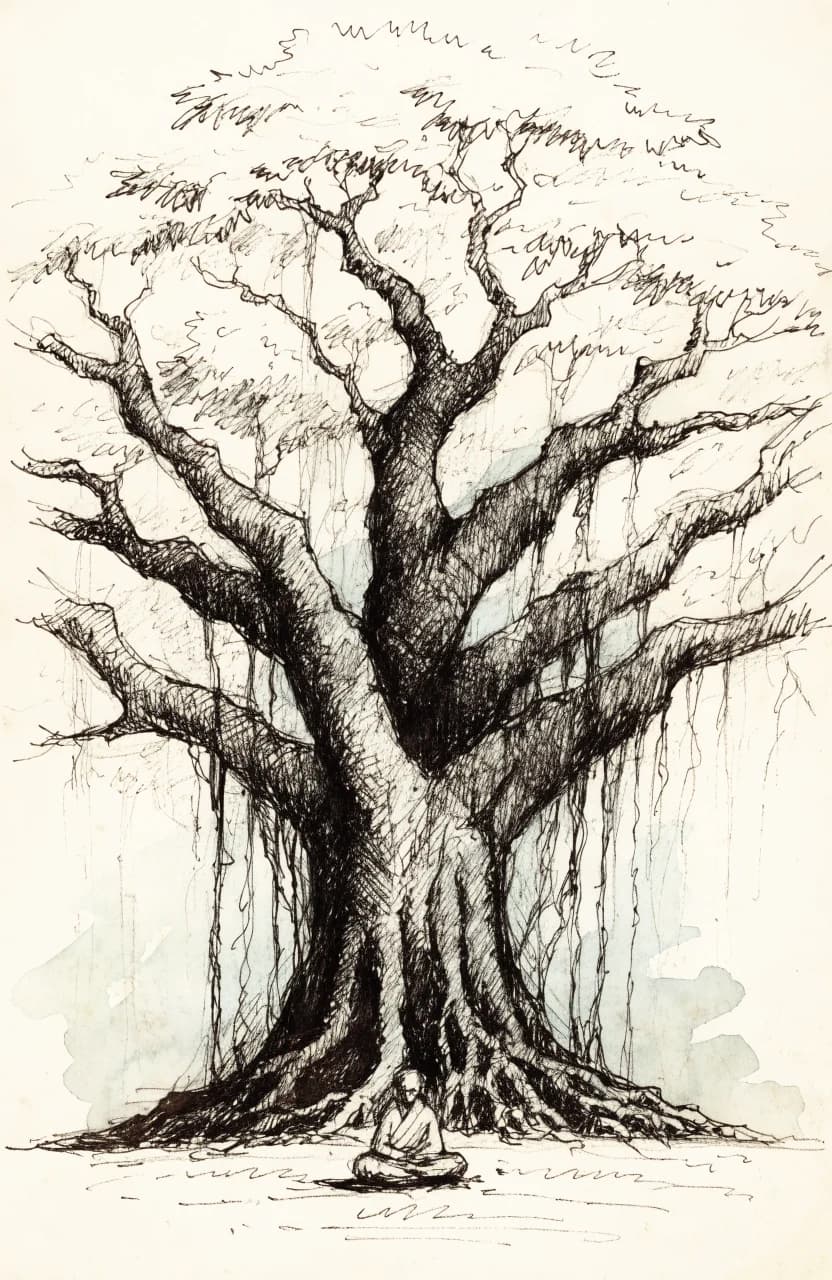
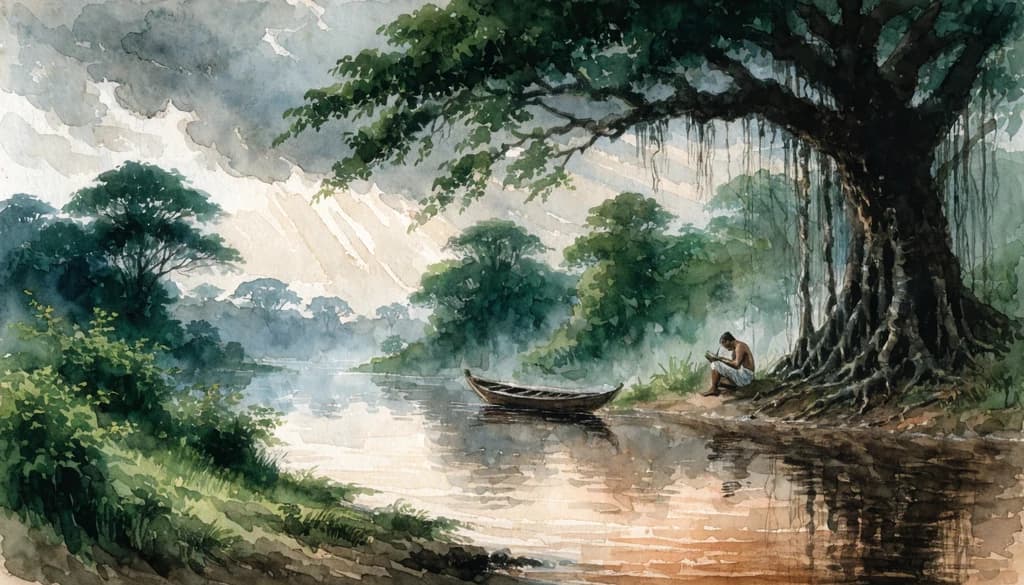
Places
Ideas
Words
“The butterfly counts not months but moments, and has time enough.”
“You can't cross the sea merely by standing and staring at the water.”
“Where the mind is without fear and the head is held high, where knowledge is free — into that heaven of freedom, my Father, let my country awake.”
Works
Gitanjali
A collection of devotional poems, translated into English prose by Tagore himself, that won the 1913 Nobel Prize in Literature. Gitanjali means 'song offerings.' The poems speak of the relationship between the human and the divine not through doctrine but through longing, gratitude, and the sensory world: rain, harvest, the lamp at dusk.
Sadhana: The Realisation of Life
Eight lectures Tagore delivered at Harvard in 1912-13, published as a philosophical statement. He argues against the Western separation of the individual from nature and the divine, for a vision of human life as participation in a larger whole: not through doctrine but through love, art, and the education of feeling.
Life & Moments
Nobel Prize in Literature
In 1913, Tagore became the first non-European to win the Nobel Prize in Literature, for Gitanjali, his English prose rendering of his own Bengali devotional poetry. The Nobel committee cited its 'profoundly sensitive, fresh and beautiful verse.' W.B. Yeats wrote the introduction to the English edition after reading the manuscript and claiming he had wept. The award made Tagore a world figure overnight and gave the Bengal Renaissance its first global audience.
Returns knighthood after Jallianwala Bagh massacre
On April 13, 1919, British troops under General Dyer opened fire on an unarmed crowd gathered in Jallianwala Bagh, Amritsar, killing at least 379 people (Indian estimates were far higher). Tagore wrote to the Viceroy renouncing his knighthood: 'The time has come when badges of honour make our shame glaring in their incongruous context of humiliation.' It was the most consequential renunciation of a colonial honour in history.
Founded Visva-Bharati university at Santiniketan
In 1921, Tagore formally established Visva-Bharati at Santiniketan, West Bengal, as a university where East and West could meet. Classes were held outdoors, under trees, following the ancient Indian gurukul tradition. He believed the English-colonial model of schooling (indoor, examination-based, English-medium) was a form of cultural violence. Gandhi visited, Nehru visited, and Romain Rolland sent his endorsement from Europe.
Influence
Influenced by
- Adi Shankara
Tagore wrote from a Vedantic inheritance in which the divine is not separate from the world, which is why his poems keep finding the infinite in a particular river, a particular light, a particular child.
- The Buddha
Tagore returned repeatedly to the Buddha as a moral figure, admiring the compassion while resisting the withdrawal, and arguing that the world is to be loved rather than escaped.
Influenced
- W.E.B. Du Bois
Du Bois and Tagore exchanged admiration across the Atlantic; both critiqued Western nationalism while engaging with its forms. Tagore's insistence that Asian civilization had something to teach the West, not merely to receive from it, paralleled Du Bois's argument that the 'gift of Black folk' was a specific cultural contribution, not just a claim on rights.


