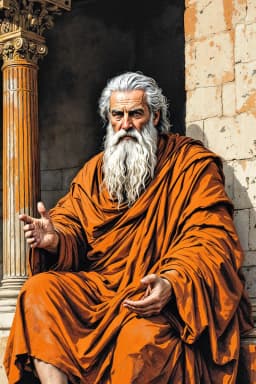
Protagoras
İnsan her şeyin ölçüsüdür. Sofistlerin ilki ve en büyüğü, felsefeyi insanın yargısına doğru çevirdi.
Protagoras Sofistlerin en ünlüsüydü; kentten kente dolaşarak para karşılığı retorik, tartışma ve yurttaşlık erdemi öğretti. 'İnsan her şeyin ölçüsüdür' iddiası, hakikati onu algılayana göreli kıldı. Tanrılar üzerine yazdığı kitap şöyle başlıyordu: 'Tanrılar hakkında ne var olduklarını ne de olmadıklarını bilebilirim.' Atina kitaplarını yaktı ve onu kentten sürdü. Platon bir diyaloğuna onun adını verdi ve ona şaşırtıcı bir saygıyla yaklaştı.

Geriye kalanlar
Kitabı kayıp. Geriye 3 satır kaldı; her biri sonraki bir yazar onu alıntıladığı için.
Yerler
Fikirler
Sözler
“İnsan, her şeyin ölçüsüdür: var olan şeylerin var olduklarının, var olmayan şeylerin var olmadıklarının ölçüsü.”
“Tanrılar hakkında, var olup olmadıklarını ya da nasıl bir biçim alabileceklerini bilme olanağım yok; çünkü bilginin önünde engel çok: konunun belirsizliği ve insan ömrünün kısalığı.”
Eserler
Hayat ve Anlar
Abdera'da Doğdu
Protagoras, M.Ö. 490 civarında, Ege'nin kuzey kıyısında bir Trak şehri olan Abdera'da doğdu. Abdera'nın haksız ama kalıcı bir ünü vardı: safdiller şehri olarak anılırdı. Aynı şehir, beşinci yüzyılın en keskin zekâlarından ikisini, Demokritos ve Protagoras'ı çıkardı. Protagoras, Yunan dünyasının kıyısında, Yunan olmayan halklara ve kültürlere yakın bir şehirde büyüdü. Bazı antik kaynaklara göre, yetenekleri fark edilmeden önce hamallık yapıyordu. Gerçek ne olursa olsun, sonunda çağının en başarılı öğretmeni oldu.
İlk Profesyonel Sofist Olur
MÖ 460 civarında Protagoras, retorik ve yurttaşlık erdemi öğretmek için ücret alan ilk kişi oldu. Atina, Sicilya, Thurii şehirlerini dolaştı; zengin ailelerin oğullarına toplum içinde konuşma, tartışma ve davranma sanatını öğretti. Sunduğu şeyin soyut bilgelik değil, pratik beceri olduğunu açıkça ifade etti. 'İnsan her şeyin ölçüsüdür' sözü nihilizm değildi. Bu, insan algısı ve yargısına dayanan, demokratik tartışma ve çıkar çatışmalarına uygun bir bilgi teorisiydi.
Atina'da Ders Vermek
Atina'nın en gözde hocası oldu; retorik ve yurttaşlık erdemi dersleri için yüksek ücretler aldı. Perikles'le dosttu.
Tanrılar Üzerine
MÖ 440 civarında Protagoras, Tanrılar Üzerine adlı kısa bir eser yazdı. Yüzyıllar boyunca alıntılanacak, kınanacak ve tartışılacak bir cümleyle başlıyordu: tanrılar hakkında, var olup olmadıklarını, neye benzediklerini bilmediğini söylüyordu, çünkü soru karanlık ve hayat kısa. Tanrıları inkâr etmiyor, meselenin insan kavrayışının ötesinde olduğunu söylüyordu. Bu ayrım onu kurtarmadı. Tanrıların hem kamusal hem teolojik olduğu Atina'da bu tür bir ihtiyat dinsizlik gibi görünüyordu.
Kitaplar Yakıldı, Sürgün
Tanrılar Üzerine adlı kitabı Atina agorasında yakıldı. Şehirden sürüldü. Kaçarken denizde boğulduğu söylenir.
Kitapları yakıldı, Atina'dan sürüldü
MÖ 411 civarında Atina, Protagoras'ı sürdü ve Tanrılar Üzerine adlı eserinin kopyalarını agorada yaktı. Bu, Batı tarihinde kaydedilen en eski kitap yakma olaylarından biridir. Sicilya felaketinden sonra siyasi iklim ekşimiş, kentin alışılmadık öğretilere hoşgörüsü keskin biçimde daralmıştı. Olayın tam olarak anlatıldığı gibi yaşanıp yaşanmadığı kesin değildir. Ancak bu gelenek tutarlıdır ve dönemin ruhuna uyar. Protagoras, yıllar boyunca Atinalılara gerçeğin bakış açısına göre değiştiğini ve tanrıların bilinemeyeceğini söylemişti. Kent eninde sonunda sabrını tüketti.
Kaçarken denizde boğuldu
Protagoras, MÖ 411 civarında Atina'dan sürgün edildikten sonra denizi geçerken boğulduğu söylenir. Hikâye bir ibret masalına benzer: Tanrıları sorgulayan adam, en çok tanrısal kaprisle ilişkilendirilen unsur olan deniz tarafından öldürülmüştür. Bunu doğrulayamayız. Bildiğimiz, aşağı yukarı bu dönemde tarihten kaybolduğu, kitaplarının çoğunun yok edildiği, fikirlerinin daha çok muhaliflerinin argümanları aracılığıyla ayakta kaldığıdır. Platon, adını taşıyan diyalogda ona saygın bir dinleyiş sağlamıştır; bu Atina'nın sonunda ona verdiğinden daha fazlasıdır.
Etki
Etkilendiği düşünürler
- Democritus
Antik gelenek, iki adamı Abdera'nın vatandaşları, hatta bazen öğretmen ve öğrenci olarak birbirine bağlar; kronoloji belirsiz olsa da, ikisi de şeylerin nasıl göründüğüne dair ortak bir ilgiden zıt sonuçlar çıkarmıştır.
Etkilediği düşünürler
- Plato
Platon, Protagoras'a iki diyalog verdi ve 'her şeyin ölçüsü insandır' sözünü kendi konumunun en ciddi rakibi olarak ele aldı, onu çürütmeye çalışırken muhafaza etti.
- Sextus Empiricus
Sextus, Protagoras'ın relativizmini kuşkucu argümanın ataları arasında aktarır ve sınıflandırır; ancak onu kendi savunduğu yargıyı askıya almaktan dikkatle ayırır.
Protagoras ile Felsefe Yapın
Bu düşünürün yer aldığı rehberli yollar, münazaralar ve zihin deneyleriyle fikirleri derinleştirin.
Sokrates ve Protagoras
Nesnel Hakikat ve Rölativizm: Hakikat keşfedilir mi, yoksa insan her şeyin ölçüsü müdür?


