Explore
Compare
Life
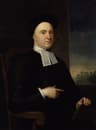
To be is to be perceived. He argued matter does not exist, and dared anyone to refute him.
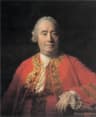
The most thoroughgoing skeptic in the history of philosophy. He argued that reason cannot justify itself, causation cannot be proven, and the self is a fiction.
Connection
George Berkeley empiricist predecessor David Hume — Hume took up Berkeley's empiricism and followed it past immaterialism into a thoroughgoing skepticism.
Ideas
Words
“To be is to be perceived.”
“Reason is, and ought only to be the slave of the passions, and can never pretend to any other office than to serve and obey them.”
“Custom, then, is the great guide of human life.”
Key Moments
1685 CE
Born near Kilkenny
1710 CE
A Treatise Concerning Human Knowledge
1713 CE
Three Dialogues
1753 CE
Death as Bishop of Cloyne
1711 CE
Born in Edinburgh
1739 CE
A Treatise of Human Nature
1763 CE
The Paris Salons
1776 CE
A Cheerful Death
Works
A Treatise Concerning the Principles of Human Knowledge
A Treatise of Human Nature
An Enquiry Concerning Human Understanding
Dialogues Concerning Natural Religion