Explore
Compare
Life

He took apart the great philosophical system of Avicenna argument by argument, and rebuilt Islamic theology on the ruins.
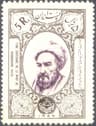
Astronomer, mathematician, and ethicist who saved a library from the Mongols and built the observatory that reformed the model of the heavens.
Connection
Fakhr al-Din al-Razi commentary answered by commentary Nasir al-Din al-Tusi — Al-Tusi wrote his own commentary on the Pointers expressly to rescue Ibn Sina from Fakhr al-Din's attacks, producing one of the sharpest exchanges in Islamic philosophy, conducted across a century and entirely in the margins of another man's book.
Ideas
Words
“The utmost reach of the intellects is a shackle; most of the striving of the learned is going astray.”
“I have tested the methods of theology and the ways of philosophy, and I did not find in them what quenches the thirsty.”
“The end of philosophy is to order the soul as the astronomer orders the heavens: by measure, not by wish.”
Key Moments
1149 CE
Born in Rayy
c. 1180 CE
Disputations across the East
c. 1203 CE
Honored at Herat
1201 CE
Born in Tus
1259 CE
The Maragheh Observatory
c. 1260 CE
The Tusi Couple
1274 CE
Death in Baghdad
Works
The Great Commentary
The Nasirean Ethics