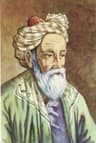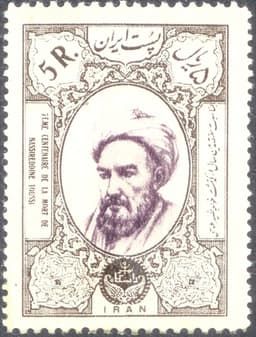
Nasîrüddin Tûsî
Bir kütüphaneyi Moğollardan kurtaran ve göklerin modelini yenileyen rasathaneyi kuran astronom, matematikçi ve ahlakçı.
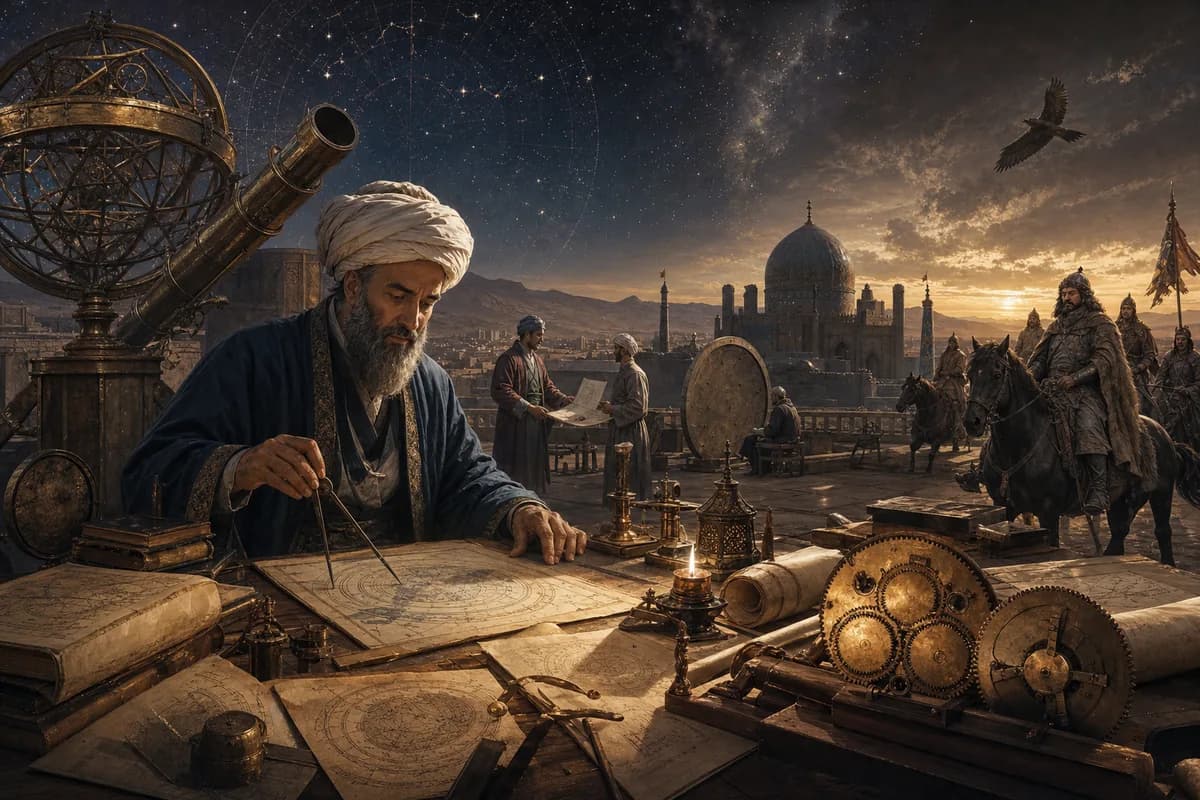
Tûsî, Moğol fethini yaşadı ve felaketi fırsata çevirdi; fatih Hülagü'yü Meraga'da yüz binlerce ciltlik bir kütüphaneyle büyük bir rasathane kurmaya ikna etti. Orada Asya'nın dört bir yanından astronomları topladı ve Batlamyus'u geliştiren, yüzyıllar sonra Kopernik'te yeniden beliren Tûsî çiftini tasarladı. Farsçadaki en etkili ahlak kitabını yazdı, trigonometriyi bağımsız bir bilime dönüştürdü ve İbn Sina'nın felsefesini savundu. Az zihin aynı anda bu kadar geniş ve bu kadar kesin olmuştur.

Yerler
Fikirler
Sözler
“Felsefenin amacı, astronomun gökleri düzenlediği gibi ruhu düzenlemektir: ölçüyle, istekle değil.”
Eserler
Hayat ve Anlar
Tus'ta doğdu
Tus'ta doğdu; astronomi, matematik ve ahlak alanında çok yönlü âlim oldu.
Marağa rasathanesi
Moğol fatihi Hülagu'yu büyük bir rasathane ve kütüphane yaptırmaya ikna etti.
Tusi çifti
Batlamyus'u aşan geometrik model kurdu; yüzyıllar sonra Kopernik'te yeniden göründü.
Bağdat'ta ölüm
Bağdat'ta öldü; kütüphaneleri fetihten kurtardı, gökleri ölçümle yeniden düzenledi.
Etki
Etkilendiği düşünürler
- Ibn Sina
Tusi, İbn Sina'nın felsefesini eleştirilerine karşı savundu ve düşüncelerini yeni bir çağa taşıdı.
- Omar Khayyam
Tusi, Hayyam'ın Öklid'in paralel postulatını kanıtlama girişimini ele aldı; ikisinin ilerlettiği yakın kanıtlar zinciri, sonunda bu postulatın bağımsız olduğunun anlaşılmasına katkıda bulundu.
- Fakhr al-Din al-Razi
Tusi, İbn Sina'yı Fahreddin er-Râzî'nin saldırılarından kurtarmak için İşaretler üzerine kendi şerhini yazdı. Bu şekilde, İslam felsefesinin en keskin tartışmalarından biri ortaya çıktı: bir asra yayılan, tamamen başka bir adamın kitabının kenar boşluklarında süren bir diyalog.
- Al-Biruni
Biruni'nin temsil ettiği kesin gözlem ve hesaplama geleneği, Tusi'nin Meraga'da kurumsallaştırdığı geleneğin aynısıdır. Tusi, tek bir bilginin tek başına yaptığını bir rasathanenin sistematik biçimde yapmasını sağlamıştır.