Explore
Compare
Life

Stoic philosopher, tutor to an emperor, and the richest man in Rome. He wrote about poverty and died by his own hand on Nero's orders.
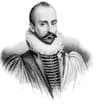
He invented the essay to ask a single question of everything: what do I know? His honest answer was, almost nothing for certain.
Connection
Seneca the essay's ancestor Montaigne — Montaigne kept Seneca constantly at hand and said so, taking from him the habit of writing philosophy as a personal address rather than a system, which is most of what the essay form became.
Ideas
Words
“We suffer more often in imagination than in reality.”
“It is not that we have a short time to live, but that we waste a great deal of it.”
“What do I know?”
Key Moments
c. 4 BCE
Born in Cordoba
41 CE
Exiled to Corsica
49 CE
Recalled to Tutor Nero
62 CE
Moral Letters to Lucilius
1533 CE
Born near Bordeaux
1571 CE
Retreat to the Tower
c. 1580 CE
What Do I Know?
1592 CE
Death at Montaigne
Works
On Anger
The Minor Dialogues
Letters to Lucilius
Essays