Atlas of Thinkers
ThinkersAtlasTimelineWorksBlog

Atlas of Thinkers

A story-first philosophy atlas. Explore history's greatest thinkers through place, time, movement, and ideas.

Explore

  • Thinkers
  • Atlas
  • Works

Browse

  • Concepts
  • Volumes

About

  • About the Atlas
  • Image Credits

Volume I · Ancient Greece · 624-262 BCE

Atlas of Thinkers
ThinkersAtlasTimelineWorksBlog
  1. Home
  2. /Thinkers
  3. /Montaigne
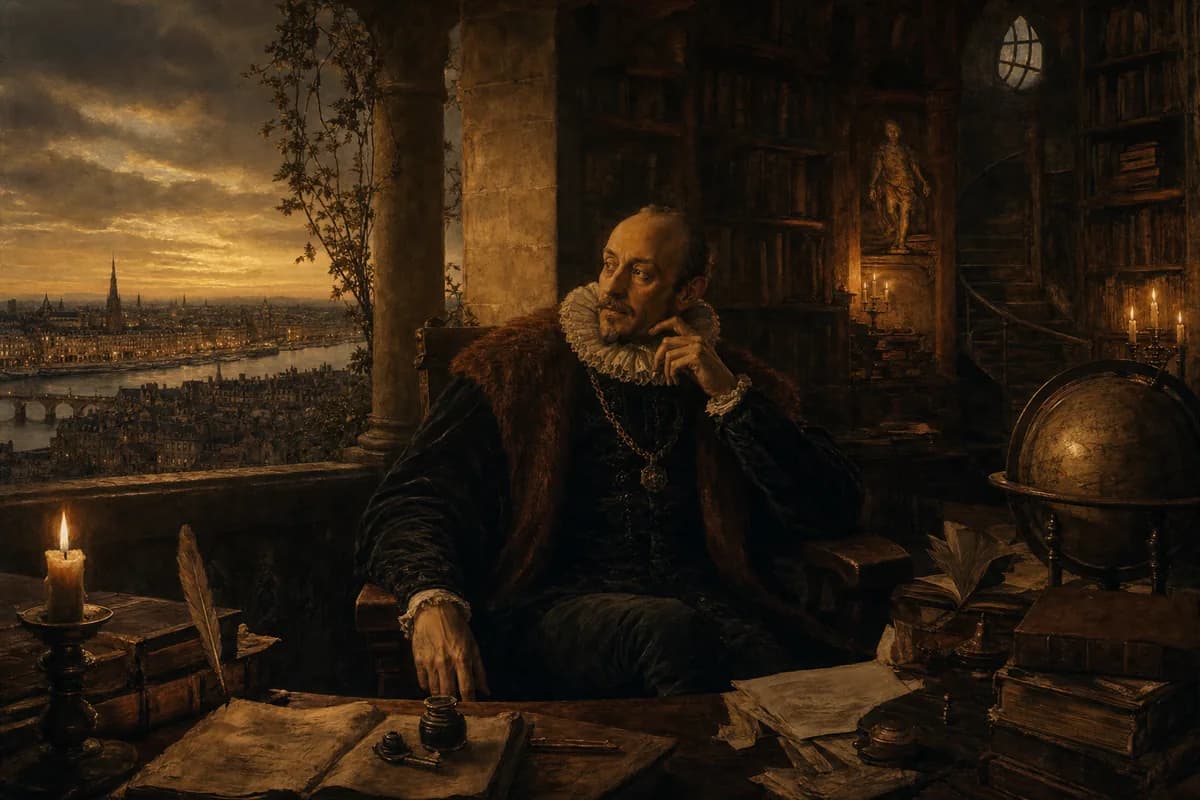
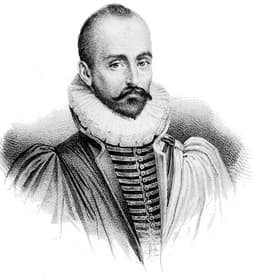
Portrait of Montaigne

Montaigne

SkepticEarly Modern

Born 1533 CE, Bordeaux

Died 1592 CE

He invented the essay to ask a single question of everything: what do I know? His honest answer was, almost nothing for certain.

Retiring to a tower on his estate near Bordeaux, Montaigne began writing what he called essais, attempts, turning his attention on himself with unprecedented candor. What do I know, he asked, and found that the more he examined his certainties the more they dissolved, leaving custom, fear, and habit where he had expected reason. His revived skepticism became a school of tolerance and self-knowledge: suspend your confidence, watch your own mind, and judge others gently. Descartes set out to defeat the doubt Montaigne had made fashionable, and modern prose has never stopped imitating his voice.

Montaigne writes Essays in his tower library near Bordeaux, what do I know carved into introspection.
What do I know?

Places

Ideas

SkepticismMethodical Doubt

Words

“What do I know?”

— Montaigne

Works

Essays

·French

The book that invented its own form: attempts, in which Montaigne turns his attention on himself with unprecedented candor. The more he examines his certainties, the more they dissolve into custom and habit, leaving self-knowledge and a gentle tolerance in their place.

Life & Moments

1533 CE

Born near Bordeaux

Born at the family estate near Bordeaux, raised at first to speak only Latin.

1571 CE

Retreat to the Tower

Withdrew to his library to write the Essays, inventing a form built around a single question: what do I know?

c. 1580 CE

What Do I Know?

Examined his own mind with unprecedented candor and found custom and habit where he had expected certainty. Skepticism became tolerance.

1592 CE

Death at Montaigne

Died in his tower library, having invented the essay and taught Europe to doubt gently.

Influence

Influenced by

  • ←
    Sextus Empiricusrevived in the Renaissance

    The rediscovery of Sextus in the sixteenth century handed Montaigne the skeptical arguments behind his question, what do I know?

  • ←
    Plutarchfavorite source

    Montaigne quarried Plutarch endlessly; the Essays are steeped in his Lives and his morals.

Influenced

  • →
    Descartesprovoked

    Descartes set out to defeat the very doubt that Montaigne had made fashionable, seeking one certainty that could not be shaken.

  • →
    Pascaladmired and resisted

    Pascal wrestled with Montaigne, borrowing the force of his skepticism while recoiling from its worldly calm.

Related Thinkers

Portrait of Descartes

Descartes

1596 CE – 1650 CE

Portrait of Pascal

Pascal

1623 CE – 1662 CE

Portrait of Sextus Empiricus

Sextus Empiricus

c. 160 CE – c. 210 CE

Portrait of Plutarch

Plutarch

c. 46 CE – c. 120 CE

Read the Journey →Compare with Descartes

Atlas of Thinkers

A story-first philosophy atlas. Explore history's greatest thinkers through place, time, movement, and ideas.

Explore

  • Thinkers
  • Atlas
  • Works

Browse

  • Concepts
  • Volumes

About

  • About the Atlas
  • Image Credits

Volume I · Ancient Greece · 624-262 BCE