Explore
Compare
Life
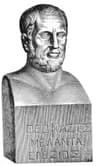
Aristotle's chosen successor, who turned the master's curiosity on plants, weather, stones, and the small comedies of human character.

He translated Greek philosophy into Latin and into politics. Rome's greatest orator was also its most restless thinker.
Connection
Theophrastus a model of philosophical prose Cicero — Cicero read Theophrastus closely and praised him repeatedly for writing philosophy that a Roman could admire as literature, borrowing both his ethical questions and his manner of handling them.
Ideas
Words
“Time is the most valuable thing a person can spend.”
“We die just when we are beginning to live.”
“The life of the dead is placed in the memory of the living.”
“A room without books is like a body without a soul.”
Key Moments
c. 371 BCE
Born on Lesbos
322 BCE
Heir to the Lyceum
c. 319 BCE
The Characters
106 BCE
Born in Arpinum
c. 79 BCE
Studies in Athens and Rhodes
63 BCE
Consul of Rome
46 BCE
Philosophical Works in Retirement
Works
The Characters
Tusculan Disputations
On Duties