Fragments
What survives of Xenophanes
Nothing Xenophanes wrote survives complete. These 6 lines reached us only because later writers copied them into works of their own, usually while arguing about something else.
The Fragility of Ancient Papyrus
None of the early Greek philosophers left manuscripts that survived antiquity. Their prose books and philosophical poems disappeared into the dust of Mediterranean library fires, political upheavals, and decay. The few sentences we possess today survived solely because later commentators—from Aristotle and Simplicius to Diogenes Laërtius and Sextus Empiricus—quoted them while writing treatises of their own centuries later.
DK 21 B11, Wording secure
Sextus Empiricus, Against the Logicians I.193 (c. 200 CE)
A sceptic assembling evidence that people disagree irreconcilably about the gods. Xenophanes attacking Homer was useful to him as an example of the disagreement, not as a position he shared.
DK 21 B15, Wording secure
Clement of Alexandria, Miscellanies V.109.3 (c. 200 CE)
A Christian writer quoting a pagan Greek against pagan religion. Xenophanes had aimed the argument at Homer's gods; Clement copied it out because it demolished the gods of everyone except his own.
DK 21 B16, Wording secure
Clement of Alexandria, Miscellanies VII.22.1 (c. 200 CE)
Copied a few pages away from the oxen and horses, in the same campaign against images of the gods made in human shape.
DK 21 B23, Wording secure
Clement of Alexandria, Miscellanies V.109.1 (c. 200 CE)
Quoted approvingly this time. Clement wanted to show that the better Greeks had glimpsed a single god on their own, and read Xenophanes as a witness for the prosecution turned witness for the defence.
DK 21 B18, Wording secure
Stobaeus, Anthology I.8.2 (c. 450 CE)
An anthologist compiling improving extracts under headings for his son's education. This one was filed under time.
DK 21 B34, Wording secure
Sextus Empiricus, Against the Logicians I.49 (c. 200 CE)
The sceptics claimed Xenophanes as an ancestor for this line, and quoted it often enough that it survives in several versions. He is arguing that certainty was doubted long before his own school existed.
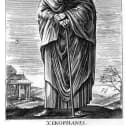
Xenophanes
(c. 570 BCE – c. 478 BCE)Xenophanes wandered the Greek world for sixty-seven years, and he left behind something sharper than most settled thinkers: the observation that Ethiopians say their gods are dark and flat-nosed, while Thracians say theirs are red-haired and blue-eyed. If horses could draw gods, he added, they would draw them as horses. Behind the joke was a genuine claim: God (one, not many) is nothing like a human body. It does not travel, does not feel anger, does not change. It perceives the whole by mind alone. The nature of things, meanwhile, is not water or fire but earth and water mixed. He doubted that humans can ever achieve certainty, only better and better opinion. That combination of critique and humility, aimed at both religion and knowledge, makes him the first philosopher of human limits.
Quotes & Sayings by Xenophanes
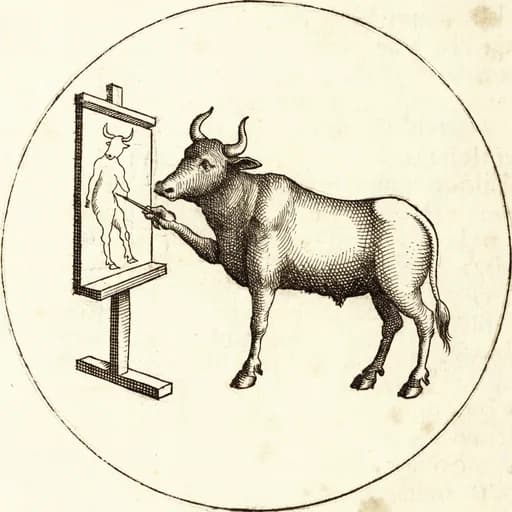
“If oxen and horses and lions had hands and could draw, horses would draw the forms of the gods like horses, and oxen like oxen.”
“The clear truth no man has seen, nor will there be anyone who knows about the gods; for even if one should happen to say what is right, still he himself does not know it.”