Journey/

John Locke

Early Modern
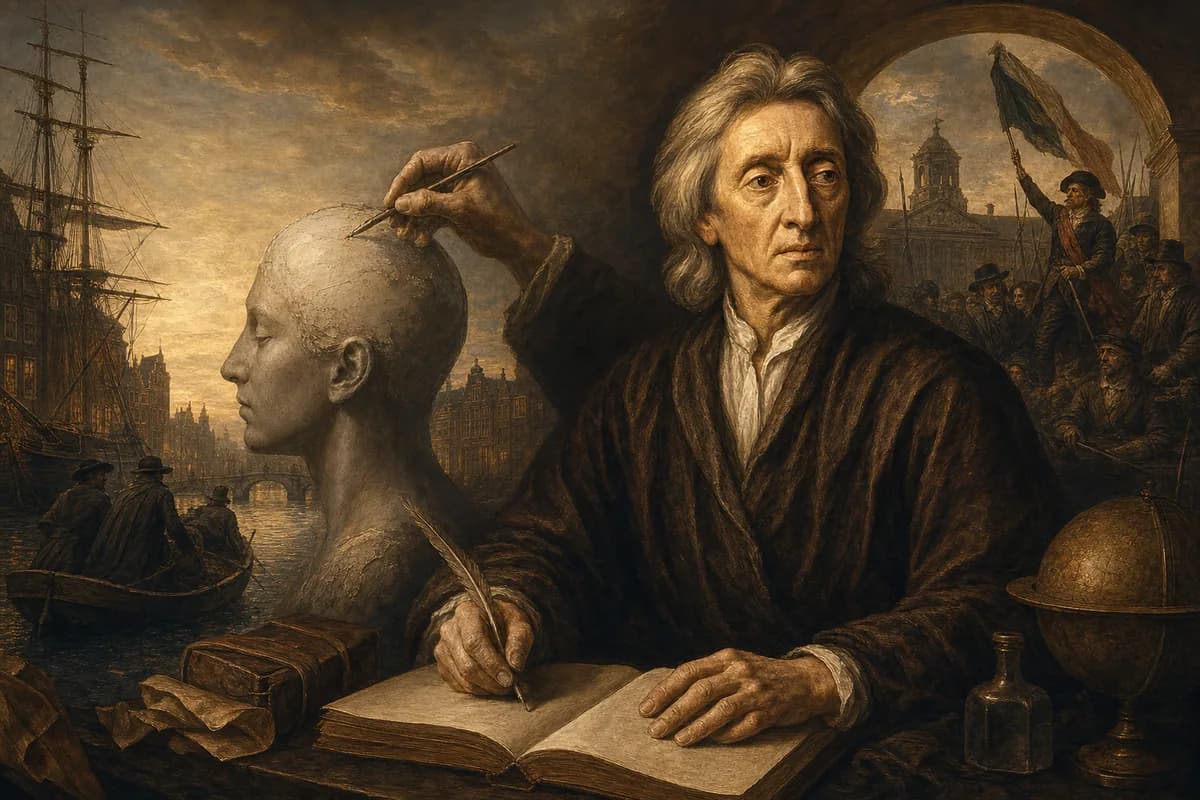
Locke writes Essay on blank slate mind in Amsterdam exile, sensation and reflection, Glorious Revolution ship returning.
The mind begins empty.
1/4

Locke was a physician, political advisor, and the most influential philosopher of the English-speaking world. His Essay Concerning Human Understanding argues that there are no innate ideas: the mind at birth is a white paper, and all knowledge comes from sensation and reflection. His Two Treatises of Government provided the intellectual foundation for the Glorious Revolution, the American Revolution, and the French Revolution. He spent years in exile in Amsterdam, returned to England in 1689, and spent his last years writing on toleration, education, and the reasonableness of Christianity.

Birth
1632 CE·London

Born in Wrington, Somerset

Born in a small village in Somerset. His father was a country lawyer and cavalry captain in the Parliamentary army. Locke grew up during the English Civil War and its aftermath, which shaped his lifelong concern with the limits of political authority.

Words

“No man's knowledge here can go beyond his experience.”