A quotation from Auguste Comte
Quotation
Savoir pour prévoir, prévoir pour pouvoir.
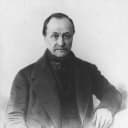
Philosophical Context
PositivistFrenchAuguste Comte
He argued that human thought passes through three ages (the religious, the philosophical, and the scientific) and tried to found a new science, and eventually a new religion, for the last one.
Comte served for several years as secretary and self-described adopted son to the utopian social reformer Henri de Saint-Simon before an increasingly bitter falling-out over credit and direction, a rupture that pushed him to build his own system rather than remain anyone's disciple. His law of three stages proposed that every branch of human thought passes in sequence through a theological phase, explaining events by the will of gods or spirits, a metaphysical phase, explaining them by abstract forces and essences, and finally a positive phase, explaining them by systematically observed, testable laws: and he believed the study of society itself, which he named sociology, was only now catching up to the physical sciences by entering this final stage. His six-volume Course of Positive Philosophy laid out this scheme across the whole of human knowledge, and made him, almost by default, the founder of sociology as a distinct discipline. In his later years, after a consuming and unrequited love for a much younger woman named Clotilde de Vaux who died shortly after they met, his thought took an unexpected turn: he began designing an entire secular Religion of Humanity, complete with its own calendar, saints drawn from history's benefactors, and rituals of devotion to what he called the Great Being of collective humanity: a project many of his scientific admirers, John Stuart Mill included, found difficult to follow him into, and that has left him remembered as much for this strange late devotion as for the sober science that made his name.
More Lines from Auguste Comte
More from Auguste Comte→Understanding This Quotation
What does Auguste Comte mean by this quotation?
He argued that human thought passes through three ages (the religious, the philosophical, and the scientific) and tried to found a new science, and eventually a new religion, for the last one. Comte served for several years as secretary and self-described adopted son to the utopian social reformer Henri de Saint-Simon before an increasingly bitter falling-out over credit and direction, a rupture that pushed hi…