A quotation from Alasdair MacIntyre
Quotation
I can only answer the question 'What am I to do?' if I can answer the prior question 'Of what story or stories do I find myself a part?'
Philosophical Context
ModernVirtue EthicsAlasdair MacIntyre
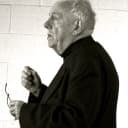
He argued that modern moral arguments never resolve because we inherited the vocabulary of virtue while losing the shared way of life that gave it meaning.
MacIntyre spent his early career moving restlessly across Marxism, analytic philosophy, and the sociology of religion before writing the book that reoriented his life's work and much of academic ethics with it. After Virtue argues that modern moral disagreements (about abortion, about justice, about war) tend to go in circles because both sides are using fragments of older moral languages, Aristotelian, Christian, Kantian, utilitarian, that have been ripped from the social practices and shared conceptions of a good life that once made them coherent. What survives, he argued, are just the emotive shells of moral claims, dressed up as rational argument but functioning mostly as assertions of preference. His proposed remedy looked backward: recover Aristotle's idea that virtues are habits built and sustained by participation in practices, arts, sciences, crafts, forms of community life, pursued within traditions that hand down standards of excellence across generations. This made him one of the architects of the modern revival of virtue ethics, a movement that pulled moral philosophy away from its long focus on rules and consequences and back toward character and the kind of life a person builds over time. He converted to Catholicism in his fifties, which sharpened rather than softened the historical argument: for him, the loss he was diagnosing was not abstract but the disappearance of a whole tradition of shared practice.
More Lines from Alasdair MacIntyre
More from Alasdair MacIntyre→Understanding This Quotation
What does Alasdair MacIntyre mean by this quotation?
He argued that modern moral arguments never resolve because we inherited the vocabulary of virtue while losing the shared way of life that gave it meaning. MacIntyre spent his early career moving restlessly across Marxism, analytic philosophy, and the sociology of religion before writing the book that reoriented his life's work and much of academic ethics with it. After Vir…
What was the context or school of thought behind this idea?
Alasdair MacIntyre articulated this thought in After Virtue. Argues that modern moral philosophy is fragmented, having inherited pieces of older ethical traditions without the shared practices that once made them meaningful. Proposes a revival of Aristotelian v…