A quotation from C.S. Peirce
Quotation
The very origin of the conception of reality shows that this conception essentially involves the notion of a community.
Philosophical Context
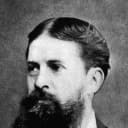
PragmatistLogicianC.S. Peirce
He founded American pragmatism and modern semiotics, then spent his final decades in rural poverty, sustained mostly by the loyalty of the friend who made the movement famous instead of him.
Peirce was a genuine polymath: trained as a chemist, employed for three decades by the United States Coast and Geodetic Survey doing serious work in geodesy and gravity measurement, and along the way virtually inventing two fields of philosophy on the side. His pragmatic maxim proposed that the entire meaning of a concept lies in its practical, conceivable effects: to understand an idea fully is to understand what difference it would make if it were true, nothing more and nothing hidden behind it. He also built, mostly alone and mostly unpublished in his lifetime, an elaborate theory of signs distinguishing icons, indices, and symbols by how they relate to what they represent, laying groundwork that semiotics and later linguistics would spend a century rediscovering. Difficult, proud, and by several accounts genuinely hard to work with, he was dismissed from a lecturing position at Johns Hopkins amid scandal over his second marriage and never again held a stable academic post, drifting into worsening poverty at a house he called Arisbe in rural Pennsylvania. William James, who had studied alongside him and borrowed the term 'pragmatism' for his own more popular version of the idea, spent years quietly arranging lecture invitations and financial support to keep his old friend from destitution, and it is largely thanks to James's public credit that pragmatism became a recognized American philosophy at all, even though Peirce, annoyed at how far James's version had drifted from his own, eventually renamed his position 'pragmaticism': a word, he said, ugly enough that no one would want to steal it.
More Lines from C.S. Peirce
More from C.S. Peirce→Understanding This Quotation
What does C.S. Peirce mean by this quotation?
He founded American pragmatism and modern semiotics, then spent his final decades in rural poverty, sustained mostly by the loyalty of the friend who made the movement famous instead of him. Peirce was a genuine polymath: trained as a chemist, employed for three decades by the United States Coast and Geodetic Survey doing serious work in geodesy and gravity measurement, and along the way virtually inventing …