A quotation from Ludwig Wittgenstein
Quotation
Whereof one cannot speak, thereof one must be silent.
Philosophical Context
AnalyticModernLudwig Wittgenstein
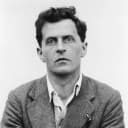
He wrote two complete philosophies that contradict each other. Both became influential. He disowned the first while writing the second.
Wittgenstein wrote two complete philosophies, and both became influential, and they contradict each other. The Tractatus Logico-Philosophicus argues that language pictures reality: a sentence is a logical picture of a fact, and the limits of language are the limits of the world. Whereof one cannot speak, thereof one must be silent. The Philosophical Investigations, written twenty years later, argues nearly the opposite: meaning is not a private picture but a public practice, a language game embedded in a form of life. Philosophical problems arise when language goes on holiday, when we take words out of the context that gives them meaning. He was born into one of the wealthiest families in Vienna, gave away his inheritance, worked as a gardener and a village schoolteacher and an architect, fought in two wars, and spent most of his philosophical career at Cambridge, where he was Russell's most troublesome student and then the most important philosopher in the room.
Wittgenstein vs. Russell
The Limits of Language & Mystical Silence vs. Logical Atomism & Scientific Rationalism.
When the eccentric Austrian aeronautical engineer Ludwig Wittgenstein burst into Bertrand Russell's rooms at Cambridge in 1911, Russell famously said: 'He is th…
Explore Debate→More Lines from Ludwig Wittgenstein
More from Ludwig Wittgenstein→Understanding This Quotation
What does Ludwig Wittgenstein mean by this quotation?
He wrote two complete philosophies that contradict each other. Both became influential. He disowned the first while writing the second. Wittgenstein wrote two complete philosophies, and both became influential, and they contradict each other. The Tractatus Logico-Philosophicus argues that language pictures reality: a sentence is a logical picture of a fa…