Empiricists
Key Idea
“There is nothing in the intellect that was not first in the senses.”
Overview & Origins
Bacon and Locke made the same wager: nature is better understood through careful observation than through pure reason. Bacon designed the modern scientific method (induction, experiments, the systematic elimination of bias) without having the mathematics to use it himself. Locke completed the project for the mind: at birth we are blank slates; all our ideas come from experience. His conclusion that governments require the consent of the governed shaped two revolutions.
The Empiricist school, flourishing between the late Renaissance and early Enlightenment, revolutionized epistemology by grounding knowledge in sensory experience. Francis Bacon, its pioneering voice, rejected medieval scholasticism's reliance on abstract reasoning, advocating instead for systematic observation, experimentation, and inductive reasoning—laying the foundation for the modern scientific method. John Locke, synthesizing these ideas, argued that the mind begins as a tabula rasa, shaped entirely by experience, thus challenging innate ideas. This emphasis on observable evidence over a priori speculation extended to politics: Locke's assertion that legitimate governance requires consent became a cornerstone of liberal democracy, inspiring both the American and French Revolutions. Empiricism's legacy endures in its insistence that truth claims must be verifiable, shaping everything from scientific inquiry to contemporary debates on the limits of human understanding.
Core Tenets
Primacy of Experience
All knowledge originates from sensory perception; there are no innate ideas.
Inductive Methodology
General truths are derived through systematic observation and experimentation, not deductive logic alone.
Political Consent
Governance legitimacy arises from the consent of the governed, not divine or hereditary right.
Philosophers of this Tradition

Francis Bacon
Knowledge is power. He tore down the old logic and built a new one based on observation, experiment, and induction.

John Locke
The mind begins as a blank slate. All knowledge comes from experience. He wrote the philosophy that launched modern democracy.
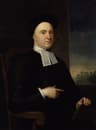
George Berkeley
To be is to be perceived. He argued matter does not exist, and dared anyone to refute him.
Canonical Works
The New Instrument. Bacon's replacement for Aristotle's logic. Proposes systematic observation and induction as the path to knowledge, and catalogues the mental idols that lead us astray.
The founding text of British empiricism. Locke argues that the mind at birth is a blank slate and that all ideas come from experience: either from sensation or from reflection.
Berkeley's argument that to exist is to be perceived, and that matter conceived as existing apart from any mind is a fiction. The world is real but mental, a steady stream of ideas held in being by the perceiving of God.
Core Ideas & Concepts
Voices & Maxims
“Knowledge is power.”
“Read not to contradict and confute, nor to believe and take for granted, but to weigh and consider.”
“No man's knowledge here can go beyond his experience.”
“To be is to be perceived.”