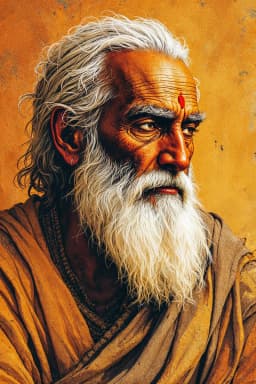
Badarayana
Upanişadların öğretilerini Vedanta'nın temeli olan iplikçiklere dokudu.
Badarayana, Upanişadları sistemleştiren ve Vedanta okulunu kuran Brahma Sutralar'ı yazdı. Çektiği iplik, benliğin (atman) ile nihai zemin olan Brahman'ın ilişkisi ve ikisinin bir mi, ayrı mı yoksa nasıl ikisi birden mi olduğudur. Sutralar o kadar yoğundur ki şerh olmadan hemen hemen okunamaz; ardından gelen büyük yorumcular ne demek istediğini tartışarak Hint felsefesinin merkezi tartışmalarını yarattılar.

Yerler
Fikirler
Sözler
“Şimdi, öyleyse, Brahman'ın araştırılması.”
Eserler
Hayat ve Anlar
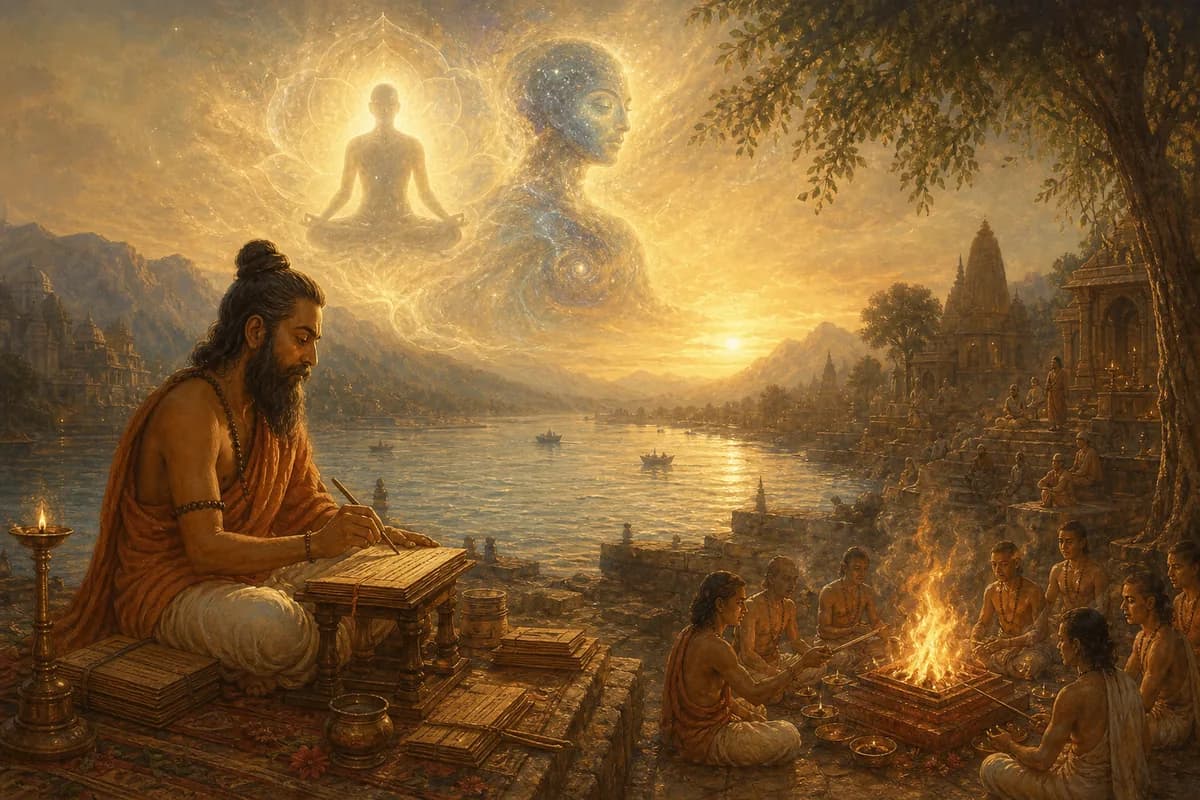
Ganj kıyısında doğdu
Gelenek ona Vyasa adını verir; Upanişad'ları öz ile mutlak hakkındaki sorulara dönüştürdü.
Brahma Sutraları
Upanişad öğretilerini Vedanta okulunun temelini atan özlü önermelere dokudu.
Benlik ve mutlak
Atman ile Brahman bir mi, ayrı mı, yoksa ikisi birden mi? Her okul bu birkaç satır için savaştı.
Vedanta tartışmaları
Shankara, Ramanuja ve Madhva onun birkaç satırı üzerine yorum imparatorlukları kurdu.
Etki
Etkilendiği düşünürler
- Jaimini
Jaimini'nin ritüel ödeve dair sorgulaması ve Badarayana'nın Brahman'a dair sorgulaması, birbirine atıfta bulunan, aynı araştırmanın önceki ve sonraki yarıları olarak görülüyordu; ancak iki yönelim farklı istikametlere sapıyor.
Etkilediği düşünürler
- Adi Shankara
Şankara'nın en etkili eseri, Badarayana'nın Brahma Sutraları'nın doğrudan bir şerhidir; Badarayana'nın yoğun özdeyişlerini sistemleştirerek Advaita Vedanta'nın bütün mimarisine dönüştürür ve genişletir.
- Ramanuja
Ramanuja, tıpkı kendisinden önceki Shankara gibi tüm sistemini Badarayana'nın Brahma Sutraları üzerine bir yorum olarak inşa etti; özlü deyişlerin aslında Shankara'nın katı yorumundan ziyade nitelikli non-dualizmi desteklediğini savundu.


