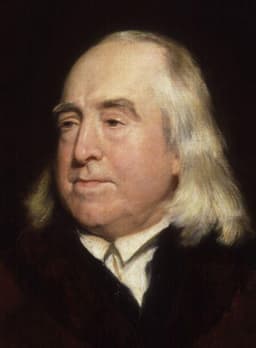
Jeremy Bentham
Ahlakı tek bir aritmetiğe indirgeyen reformcu: en çok sayıda insanın en büyük mutluluğu; ve her kurumu buna göre yeniden tasarlamaya çalıştı.
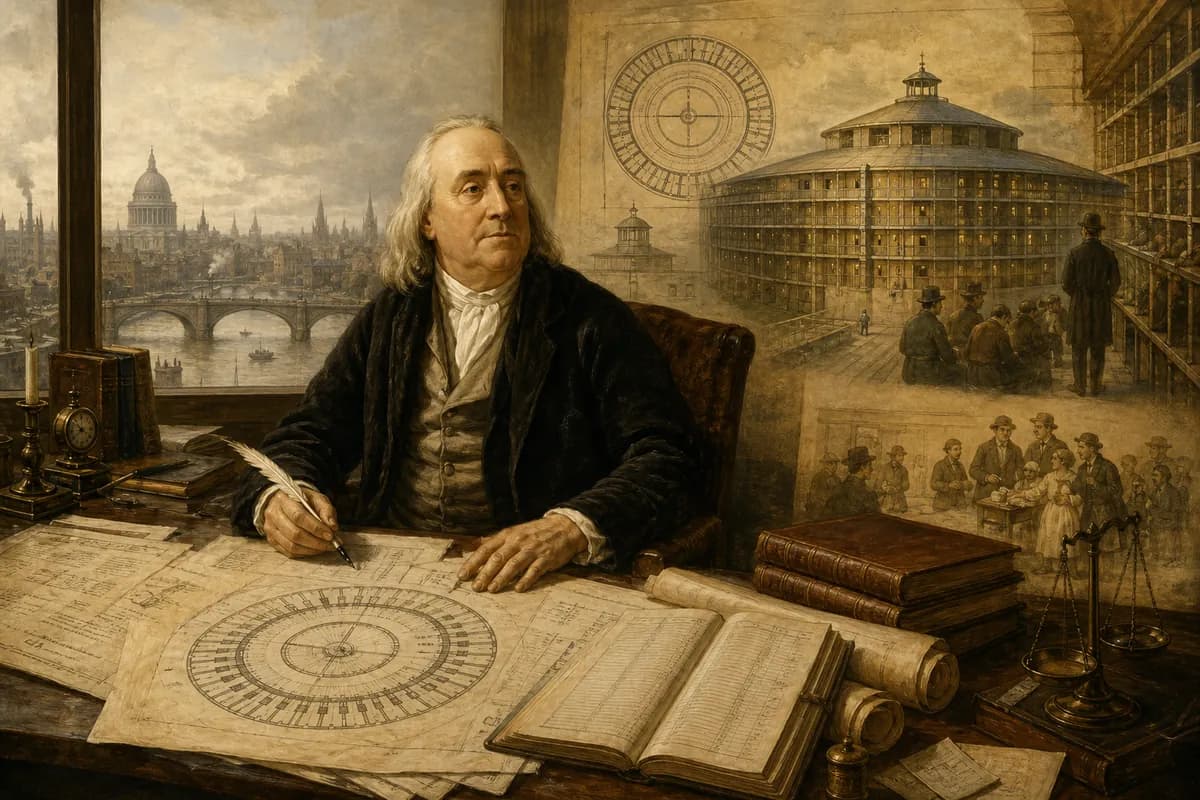
Bentham, doğanın bizi haz ve acı adlı iki efendinin altına koyduğunu ve doğru eylemin yalnızca en çok insan için en çok mutluluğu üreten eylem olduğunu savundu. Bu tek ilkeden yola çıkarak hukuku, cezayı, hapishaneleri ve hükümeti akılcı çizgilerde yeniden inşa etmeye girişti. Bir hapishane tasarımı olan Panoptikon, görünmez tek bir gözlemcinin herkesi izleyebileceği yapı, modern iktidarın kalıcı bir imgesi oldu. Bedenini, duygu yerine yarara dair son bir jestle teşrih edilip sergilenmeye bıraktı.

Yerler
Fikirler
Sözler
“En büyük sayının en büyük mutluluğu, doğru ve yanlışın ölçüsüdür.”
Eserler
Hayat ve Anlar
Londra'da doğdu
On iki yaşında Oxford'a giren bir dahi; avukatlığı bırakıp hukuku yeniden tasarlamaya döndü.
Ahlak ve Mevzuat İlkeleri
En büyük mutluluk ilkesini ortaya koydu; kurumları akılcı çizgilerle yeniden kurmaya başladı.
Panoptikon
Görünmeyen gözetimin mahkûmları ıslah edeceği dairesel bir hapishane tasarladı; mimariyi kontrol kuramına dönüştürdü.
Londra'da ölüm
Bedeninin otopsi edilip sergilenmesini vasiyet ederek öldü; sonuna kadar faydacı.
Etki
Etkilendiği düşünürler
- David Hume
Bentham, mutluluk hesaplamasını Hume'un temizlediği seküler, ampirist zemine inşa etti.
Etkilediği düşünürler
- John Stuart Mill
Mill, babası aracılığıyla Bentham'ın doğrudan etkisi altında büyüdü. Faydacılığı korudu ancak kaba haz hesaplamasını inceltti; yüksek ve alçak hazları birbirinden ayırdı ve bireysel özgürlüğü çoğunluğun tiranlığına karşı savundu.
- Peter Singer
Singer, Bentham'ın sorusunu doğrudan alıntılar: hayvanlar akıl yürütebilir ya da konuşabilir mi değil, acı çekebilir mi diye. Hayvan Özgürleşmesi büyük ölçüde bu cümlenin ciddiye alınıp uygulanmasıdır.