John Stuart Mill
He was raised as a philosophical experiment, had a breakdown at twenty, worked his way out through poetry, and spent the rest of his life refining the case for liberty.
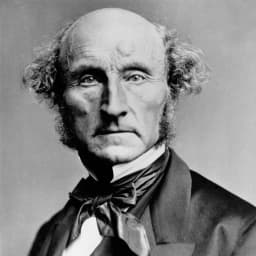
John Stuart Mill was raised by his father as a philosophical experiment: Greek at three, logic at eight, economics at twelve, no religion, no fiction. The experiment was partly successful, he became one of the most precise thinkers of the century, and partly catastrophic: at twenty he had a breakdown. He worked his way out of it through poetry. What followed was a lifelong refinement of the utilitarian tradition he had inherited and a sustained argument for individual liberty. His On Liberty makes a single claim with great force: society has no right to silence any opinion, because the suppressed opinion might be true, and even if false, truth requires opposition to stay alive. He also wrote the clearest case for women's equality in the nineteenth century. He believed in evidence and revision, changed his mind when the arguments required it, and wrote with a clarity that made even his opponents grateful.

Read in the Library

Places
Ideas
Words
“The only freedom which deserves the name is that of pursuing our own good in our own way, so long as we do not attempt to deprive others of theirs.”
“It is better to be Socrates dissatisfied than a fool satisfied.”
Works
On Liberty
Mill's small, concentrated defense of individual freedom. Its one principle: that the only legitimate reason to interfere with another person's liberty is to prevent harm to others. The argument for free expression that follows, that even false opinions serve truth by keeping correct ones alive and tested, has never been bettered.
Utilitarianism
Mill's defence of the principle that actions are right as they tend to produce happiness. He answers the charge that this is a doctrine fit for swine by insisting that pleasures differ in kind as well as amount, and that anyone who has known both would rather be Socrates dissatisfied than a fool satisfied.
Life & Moments
Mental crisis and recovery through poetry
Around 1826, Mill suffered what he later called a 'mental crisis', a collapse of the utilitarian framework he had been raised inside. Working through Wordsworth's poetry, he slowly recovered, but the experience permanently enlarged his view of human nature. He concluded that feeling, culture, and the individual imagination mattered in ways his father's Benthamism had not imagined.
On Liberty published
Published in 1859, On Liberty was written jointly with Harriet Taylor, who died in 1858 before it appeared. Mill called it the book on which he and Harriet had worked hardest and valued most. It argued for a single principle of liberty with a lucidity that made it immediately controversial, defended, and influential beyond England.
Elected MP for Westminster
Mill served as a Member of Parliament for Westminster from 1865 to 1868, the only philosopher to do so in the Victorian era. In Parliament he moved an amendment to include women in the Reform Act of 1867, becoming the first MP to argue for women's suffrage in the Commons. The amendment failed 73 to 194.
Influence
Influenced by
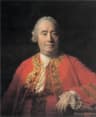
- David Hume
Mill worked within and extended the British empiricist tradition that Hume had brought to its crisis. His father James Mill was a Humean utilitarian, and John Stuart absorbed the tradition from childhood.
- Jeremy Bentham
Mill grew up under Bentham's direct influence via his father. He kept utilitarianism but refined its crude pleasure-calculus, distinguishing higher from lower pleasures and defending individual liberty against the tyranny of the majority.
- Auguste Comte
Mill corresponded extensively with Comte and initially embraced much of positivism's scientific ambition for the study of society, before breaking with him publicly over the Religion of Humanity, which Mill considered a strange and illiberal turn.
Influenced
- Peter Singer
Singer's utilitarianism descends directly from Bentham and Mill: what matters is sentient suffering and pleasure, not species membership. He pushed this to a conclusion neither Bentham nor Mill drew, animal liberation.
Engage with John Stuart Mill
Explore structured paths, classic debates, and thought experiments featuring this thinker.
Humanism & Virtue Ethics
John Stuart Mill is a foremost representative of this school. Test your alignment with this tradition.
Foundations of Ethics: What is the Good Life?
Travel across 2,500 years of ethical philosophy to understand how humanity's greatest minds defined duty, virtue, happiness, and moral duty.
The Trolley Problem
Is an action judged solely by the tally of its consequences, or are certain moral boundaries inviolable regardless of the outcome?