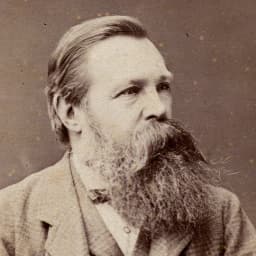
Friedrich Engels
Bir tekstil fabrikası sahibinin oğlu olan Engels, mirasını Marx'ın yazılarına harcadı ve işçilere zincirlerinden başka kaybedecek bir şeyleri olmadığını söyleyen broşürü birlikte kaleme aldı.
Engels, dindar ve muhafazakâr babası tarafından ailenin Manchester'daki pamuk fabrikasını yönetmesi için gönderildi; amaç onu radikal siyasetten uzaklaştırmaktı. Oysa bu deneyim, İngiltere'de Emekçi Sınıfların Durumu'nu doğurdu: Endüstriyel yoksulluğun ilk elden çarpıcı bir anlatısı olan bu kitap, Engels'i kapitalizmin yalnızca bazı istenmeyen etkileri olan bir sistem değil, makinelerini çalıştıran insanları ezip geçmek üzerine kurulu bir sistem olduğuna ikna etti. Kısa süre sonra Paris'te Marx'la tanıştı ve ömür boyu sürecek bir ortaklık başladı: Engels, fabrika koşullarına dair ampirik ayrıntıları ve daha da önemlisi, siyaseten mahkûm ettiği o fabrikadan gelen düzenli geliri sağladı. Bu gelir olmasaydı Marx, Kapital'i yazmak için geçirdiği on yıllarda hayatta kalamazdı. İkili birlikte Komünist Manifesto'yu yazdı. Tarihi sınıf mücadelesi olarak ele alan kuramlarını ve devrim çağrısını, yüksek sesle okunmak, ezberlenmek ve gizlice elden ele dolaşmak üzere kısa bir broşüre sıkıştırdılar. 'Bütün ülkelerin işçileri, birleşin; zincirlerinizden başka kaybedecek bir şeyiniz yok,' siyasi tarihin en çok alıntılanan cümlelerinden biri olmaya devam ediyor. Marx'ın ölümünden sonra Engels, son on yılını bir bağlılık eylemine adadı: Kapital'in ikinci ve üçüncü ciltlerini, Marx'ın meşhur okunaksız ve bitmemiş el yazmalarından düzenleyip yayımladı, böylece dostunun başyapıtının yayımlanmadan ölmesine izin vermedi. Bu dönemde ailede ve kadınların ezilmesinde özel mülkiyetin doğuşunun rolünü inceleyen erken dönem materyalist bir çalışma da dâhil olmak üzere bağımsız kuramsal eserler de verdi. Son yıllarını uluslararası sosyalist hareketin yaşlı devlet adamı olarak geçirdi; hareket onu, pek de doğru olmayan biçimde, eş yazar olmaktan çok Marx'ın genç ortağı olarak görmeye başlamıştı.

Yerler
Fikirler
Sözler
“Devlet kaldırılmaz, sönüp gider.”
“İngiltere'de bir sanayi devrimi yaşandı, bütün toplumsal yapıyı dönüştüren bir devrim...”
Eserler
Hayat ve Anlar
İngiltere’de Emekçi Sınıfının Durumu’nu Yayımlar
Babası tarafından ailenin Manchester’daki fabrikasını yönetmesi için gönderilen Engels, bunun yerine sanayi yoksulluğunu anlatan yıkıcı bir ilk el tanıklık kitabı yazdı ve kapitalizmin yarattığı acıların rastlantısal değil, sistemik olduğuna ikna oldu.
Kapital'in ikinci ve üçüncü ciltlerini düzenleyip yayımlar
Marx'ın ölümünden sonra Engels, arkadaşının meşhur okunaksız, eksik müsveddelerini çözmek ve başyapıtın yarım kalmaması için Kapital'in kalan ciltlerini bitirip yayımlamakla geçirdi son on yılını.
Etki
Etkilendiği düşünürler
- G.W.F. Hegel
Engels, Marx gibi, Hegel'in tarihi bir çatışma ve çözüm süreci olarak kavrayan diyalektik yöntemini benimsedi, ardından bu yöntemin idealist öncülünü tersine çevirerek tarihsel değişimi Tin'in açılımının değil, maddi ve ekonomik koşulların yönlendirdiğini savundu.
- Karl Marx
Marx ve Engels birlikte Komünist Manifesto'yu yazdılar ve ömür boyu süren entelektüel ve mali bir ortaklık kurdular; Engels'in aile fabrikasından elde ettiği gelir, Marx'ı onlarca yıl destekledi ve Engels, arkadaşının ölümünden sonra son yıllarını Marx'ın bitmemiş elyazmalarından Kapital'i tamamlayarak geçirdi.

