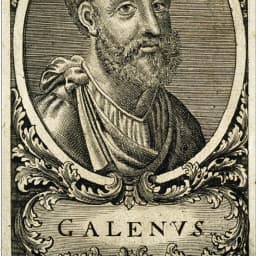
Galen
Gladyatörleri, ardından imparatorları tedavi etti; hayvan diseksiyonuyla öyle yetkin bir tıp sistemi kurdu ki, ondört yüzyıl boyunca hekimler onun sözlerini tartışmasız gerçek olarak tekrarladı.
Galen, memleketi Bergama'daki Asklepios Tapınağı'nda eğitim gördü; burada hastalar rüyalarla şifa arar, genç ve hırslı bir hekim de bakmakla görevlendirildiği gladyatörlerin yaralarından epey pratik anatomi öğrenebilirdi. Roma yasaları insan kadavrasını parçalamayı yasakladığından, Galen anatomi bilgisini domuz, maymun ve diğer hayvanlar üzerinden kurguladı; bunu insana uyarlarken öyle bir özgüvenle hareket etti ki, çoğu kez şaşırtıcı derecede doğru sonuçlara ulaştı, yanıldığı yerlerdeyse bu yanlışlar bin yılı aşkın süre fark edilmedi. Roma'ya gidip Marcus Aurelius da dahil bir dizi imparatorun özel hekimi oldu; filozof-imparatorun kronik mide rahatsızlığını tedavi ederken, herhalde, bir yandan da onun Stoacı elkitabını okuduğunu ima etmemeye özen gösteriyordu. Günümüze kalan eserleri antik çağ için olağanüstü hacimlidir; bu yapıtlar anatomi, fizyoloji, farmakoloji ve Hippokrates'ten devraldığı dört hılt (sıvı) kuramını, sağlığı denge, hastalığı dengesizlik olarak açıklayan sistematik bir anlatı, kapsar. Galen, dönemin rakip tıp okullarına karşı, akla dayalı kuramla dikkatli gözlemin birlikte çalışması gerektiğini savundu; toplum önünde yaptığı diseksiyonlar ve gösterilerin amacı kısmen tartışmaları çözmek, kısmen de, kendi anlatımından bellidir ki bu gösteriden aldığı keyfi de saklamamıştır, onları kazanmaktı. Galen'in otoritesi Hristiyan ve İslam tıp dünyasında öylesine mutlaklaştı ki, bin yılı aşkın bir süre boyunca, Galen'le çelişmek, çoğu zaman kendi gördüklerine karşı ondan daha güçlü bir kanıt sayıldı. İbn Sina'nın benimseyip sistemleştirdiği bu bilgi birikimini, on altıncı yüzyılda anatomist Andreas Vesalius ancak sorgulamaya başladı ve Galen'in aslında hiçbir insan cesedini incelemediğini ortaya koydu.

Yerler
Fikirler
Sözler
“Çalışmak doğanın hekimidir ve insan mutluluğu için elzemdir.”
“Dilin başlıca erdemi açıklıktır ve biliriz ki hiçbir şey bundan alışılmadık terimler kadar eksiltmez.”
Eserler
Hayat ve Anlar
Gladyatörlerin hekimi olarak atandı
Genç Galen, Bergama'daki gladyatörlerin hekimi olarak atandı. Yaraları, hayvan diseksiyonuyla asla öğrenemeyeceği doğrudan, pratik anatomi ve travma bilgisi kazandırdı.
Marcus Aurelius'un hekimi olur
Galen, İmparator Marcus Aurelius'un hizmetine girerek filozof-imparatorun kronik rahatsızlıklarını tedavi etti. Bu süreçte tartışılmaz bir tıbbi otorite inşa etti; bu otorite, hem Avrupa'da hem de İslam dünyasında bin yılı aşkın bir süre boyunca sarsılmadı.
Etki
Etkilendiği düşünürler
- Aristotle
Galen, yöntemini açıkça Aristoteles'in mantığına ve teleolojik akıl yürütmesine dayandırdı; vücudun organlarını, dikkatli gözlemle keşfedilebilecek amaçlar için tasarlanmış kabul etti. Bu çerçeveyi döneminin rakip tıp ekollerine karşı savundu.
Etkilediği düşünürler
- Ibn Sina
İbn Sina, Galen tıp külliyatını alıp kendi Kanun fi't-Tıb adlı eserinde sistematize etti. Bu eser, İslam dünyasında ve Latince çevirisiyle Avrupa üniversitelerinde beş yüz yılı aşkın süre standart ders kitabı oldu.
- Al-Razi
Râzî, Galenos'un tıbbını tamamen özümsedi, ardından Galenos Hakkında Şüpheler adlı eserini yazdı. Kendi klinik gözlemlerinin üstatı düzeltebileceğinde ısrar etti, miras alınan otoriteye alışılmadık derecede doğrudan bir meydan okumaydı bu.


