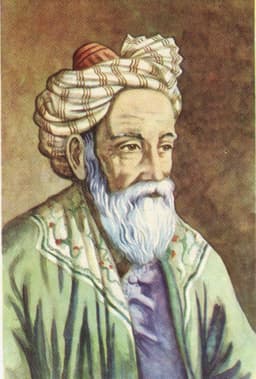
Ömer Hayyam
Gündüzleri matematikçi, geceleri şüphe şairi. Kübik denklemleri çözdü ve bunların ne işe yaradığını sordu.
Ömer Hayyam, Farsça takvimi Avrupa'nın yüzyıllar sonra ulaşamadığı bir kesinlikle düzeltti ve kübik denklemlere geometrik çözümler buldu. Rubaiyat'ta da aynı zihni görürüz: şarap, ölümlülük ve göklerin sessizliği. An'a nazik ol, der şiirler; geri dönmeyecek. İman ve şüphecilik onda çözümsüz yan yana oturur.

Kütüphanede Oku

Yerler
Fikirler
Sözler
“Bu anın tadını çıkar. Bu an senin hayatın.”
Eserler
Hayat ve Anlar
Nişabur'da doğdu
Horasan'ın Nişabur kentinde doğdu; cebir ve şiir bir arada büyüdü.
Kübik denklemler
Kübik denklemlere geometrik çözümler verdi; cebri Yunan matematiğinin ötesine taşıdı.
Takvim reformu
Fars takvimini Avrupa'nın beş yüzyıl yetişemediği bir kesinlikle düzenledi.
Nişabur'da ölüm
Nişabur'da öldü; hem kesin astronomi hem şüpheli Rubaiyat bıraktı.
Etki
Etkilendiği düşünürler
- Ibn Sina
Hayyam, İbn Sînâ felsefesinin bir öğrencisi olduğunu söyledi, onun eserinin bir kısmını tercüme etti ve metafiziğini savundu, bu yönü, rubailerinin ardında çoğu zaman gizli kaldı.
Etkilediği düşünürler
- Nasir al-Din al-Tusi
Tusi, Hayyam'ın Öklid'in paralel postulatını kanıtlama girişimini ele aldı; ikisinin ilerlettiği yakın kanıtlar zinciri, sonunda bu postulatın bağımsız olduğunun anlaşılmasına katkıda bulundu.