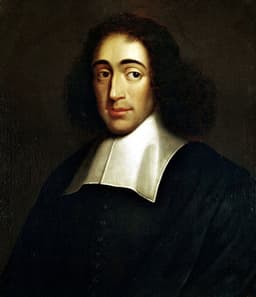
Spinoza
Tanrı ve Doğa aynı şeydir. Bunu söylediği için aforoz edildi, geçimini sağlamak için lens cilaladı ve başyapıtını öldükten sonra yayımlandı.
Spinoza, yirmi üç yaşında Amsterdam'daki Yahudi cemaatinden aforoz edildi. Hayatını lens cilalayarak ve yazarak geçirdi. Etika adlı eseri, Tanrı ve Doğa'nın özdeş olduğunu ve özgürlüğün zorunluluğu anlamak olduğunu savunur. Kırk dört yaşında öldü.

Kütüphanede Oku
Yerler
Fikirler
Sözler
“İnsan eylemlerini alaya almak, ağlamak ya da küçümsemek değil, anlamak için durmaksızın çaba harcadım.”
Eserler
Hayat ve Anlar
Amsterdam'da doğdu
Portekiz Yahudi cemaatinde doğdu; ailesi Engizisyon'dan kaçmıştı.
Topluluktan kovulma
Yirmi üçünde sinagog onu tarihin en sert cherem'lerinden biriyle lanetledi.
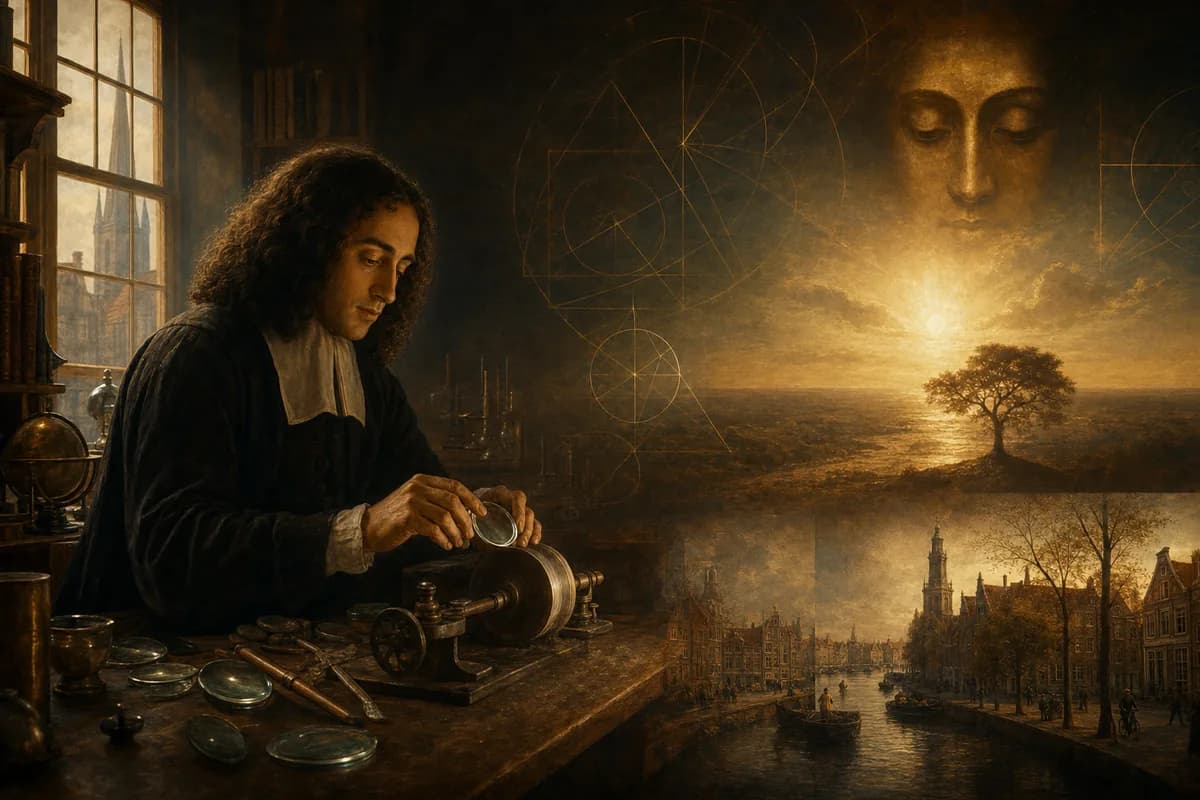
Mercek bileme
Küçük bir odada optik mercek bileme ile geçimini sağladı; cam tozu ciğerlerini yıprattı.
Ethics ölümünden sonra
Tanrı ile Doğa'nın özdeş olduğunu geometrik kanıtlarla savundu; yaşarken gizledi.
Lahey'de ölüm
Kırk dört yaşında öldü; Amsterdam'ın laneti mezara kadar gitmedi.
Etki
Etkilendiği düşünürler
- Descartes
Spinoza, Descartes'ın töz metafiziğini alıp radikalleştirdi: iki töz yerine yalnızca bir tane vardır.
- Giordano Bruno
Bruno'nun tanrının dünyanın dışında değil, dünyanın kendi sonsuz hayatı olduğu konusundaki ısrarı, bir yüzyıl sonra Spinoza'nın daha titizlikle savunacağı pozisyonu haber verir.
Etkilediği düşünürler
- Gilles Deleuze
Deleuze'ün Felsefede Dışavurumculuk: Spinoza adlı eseri, Spinoza'nın tek ve tek-anlamlı tözünü, aşkın hiyerarşi olmaksızın gerçekliği düşünmek için bir model olarak ele alır; bu fikir, Deleuze'ün sonraki bütün içkinlik kavramlarında yinelenir.
- Moses Mendelssohn
Jacobi, Lessing'in bir Spinozacı olarak öldüğünü iddia edince Mendelssohn bu tartışmanın içine çekildi. Tartışma Spinoza'yı Alman felsefesinin merkezine taşıdı. Mendelssohn arkadaşını savunurken Spinoza'nın vardığı sonuçları kabul etmedi.
- Anne Conway
Conway, Spinoza'dan doğrudan söz eder ve onu reddeder; Tanrı ile yaratılışı tek bir cevherde birleştirmeyi reddeder, ancak yaratılan her şeyin tek bir doğayı paylaştığında ısrar eder.
Spinoza ile Felsefe Yapın
Bu düşünürün yer aldığı rehberli yollar, münazaralar ve zihin deneyleriyle fikirleri derinleştirin.
Akılcılık & Rasyonalizm
Spinoza, bu geleneğin en büyük temsilcilerindendir. Zihninizin bu okula ne kadar yakın olduğunu test edin.
Spinoza ve Leibniz
Panteist Zorunluluk ve Monadlar: Evren tek bir zorunlu Töz mü, yoksa ahenk içindeki sonsuz ruhlar mı?


