Journey/

Cicero

Roman
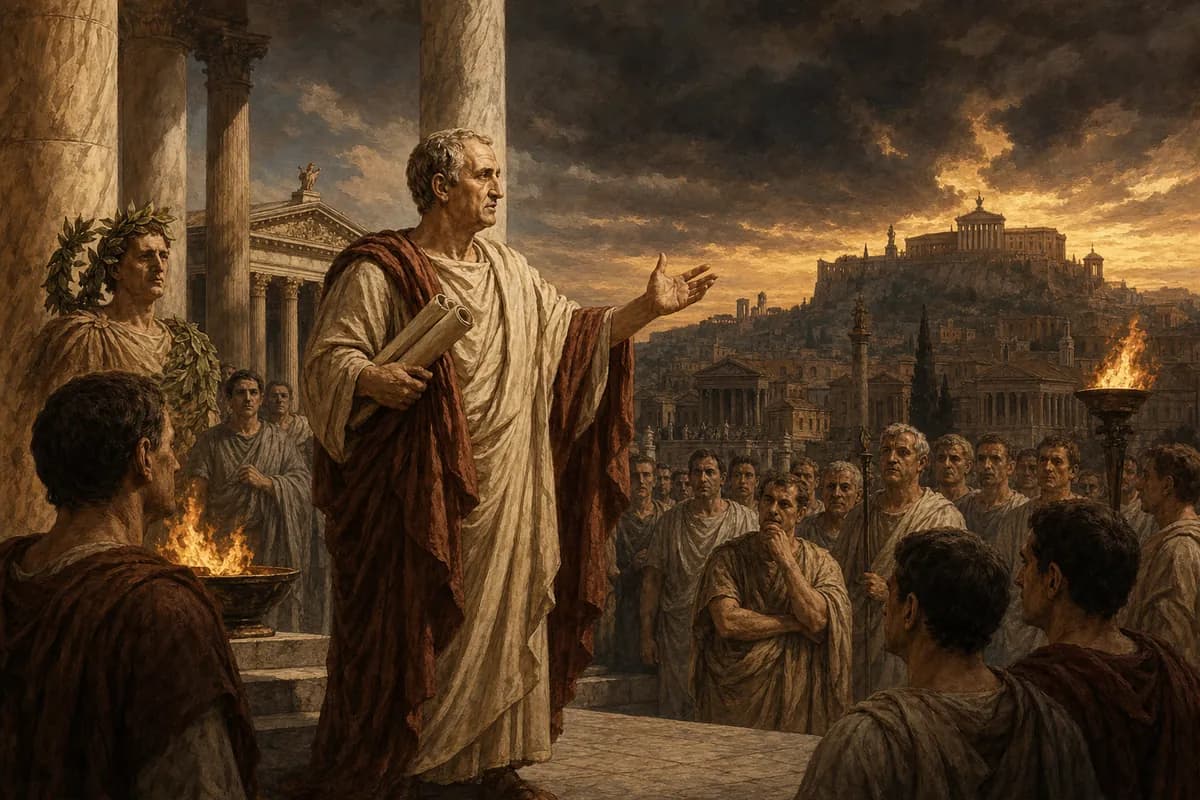
Cicero stands in the Roman Forum at dusk between marble columns, scrolls in hand, citizens listening as storm clouds gather over the Capitol.
Philosophy enters the public square.
1/5

Cicero studied in Athens and Rhodes, absorbing every Greek school (Stoic, Academic, Epicurean) and carried them back to Rome. He held the highest offices of the Republic, survived conspiracies, and was murdered in the civil wars that followed Caesar. Between political crises he wrote at ferocious speed: dialogues on duty, friendship, old age, the nature of the gods, and the proper ends of life. He never founded a school or claimed originality. What he did was make philosophy speakable in Latin, and through Latin, in every European language that came after.

Birth
106 BCE·Arpinum

Born in Arpinum

Born to an equestrian family in the hill town of Arpinum, southeast of Rome. His cognomen means 'chickpea,' a fact he refused to change despite advice from friends who found it undignified.

Words

“The life of the dead is placed in the memory of the living.”