Journey/

John Rawls

Political
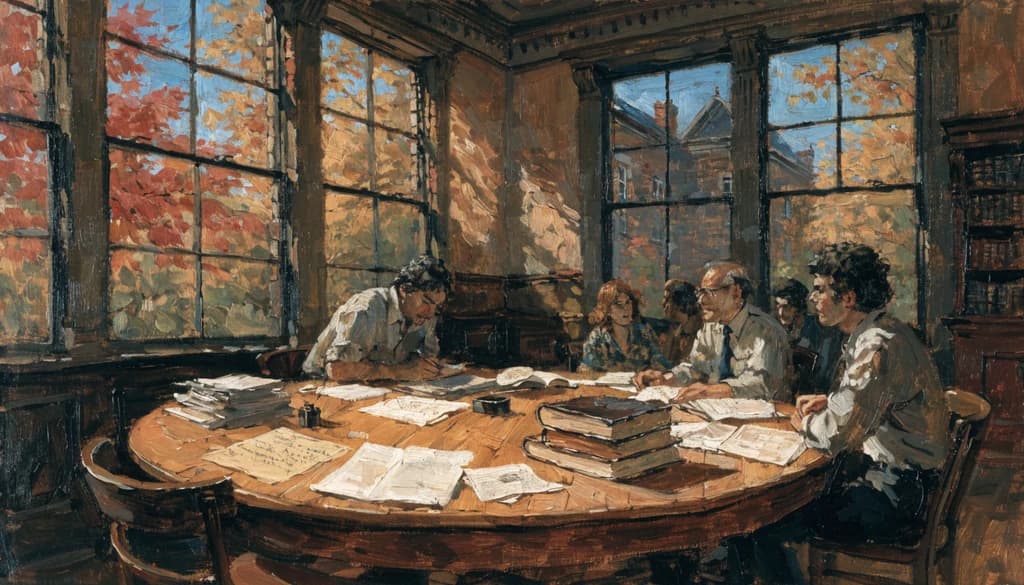
A Harvard seminar room in New England autumn, 1971, round oak table with papers, warm afternoon light through tall windows, red and gold maple trees outside.
Justice as fairness.
1/2

Rawls spent twenty years writing A Theory of Justice, which appeared in 1971 and immediately became the most discussed work in political philosophy since Mill. Its central device was the veil of ignorance: imagine choosing the principles that will govern your society without knowing your position in it: your race, class, talent, or fortune. From behind this veil, Rawls argued, rational people would choose two principles: equal basic liberties for all, and economic inequalities allowed only when they benefit the least advantaged. The second principle was more demanding than it looked: it did not permit inequality for its own sake but only when it raised the floor. He revised and extended the argument for the rest of his life, making it less dependent on a particular account of rationality and more on the idea of a political consensus among people with fundamentally different views of the good life. He was quiet, methodical, and private. The argument did the work.

Study
1950·Princeton

Princeton doctorate and early career

Rawls completed his doctorate at Princeton in 1950. His dissertation on ethical judgments was the first sketch of what would become reflective equilibrium, the idea that we reach ethical principles by moving between our intuitions and our theories until they cohere. He spent the next two decades refining the approach.

Words

“Justice is the first virtue of social institutions, as truth is of systems of thought.”