A quotation from Elizabeth Anscombe
Quotation
It is not profitable for us at present to do moral philosophy; that should be laid aside until we have an adequate philosophy of psychology.
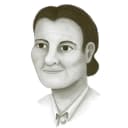
Philosophical Context
Virtue EthicsAnalyticElizabeth Anscombe
She argued that modern moral philosophy's talk of 'moral obligation' was a leftover from a divine-law framework almost nobody still believed in, and called for a return to Aristotle's ethics of character instead.
Anscombe studied under Wittgenstein at Cambridge, became one of his closest students during his most difficult and demanding late period, and was entrusted after his death as one of his literary executors, going on to produce the standard English translation of his Philosophical Investigations, a text she came to know as intimately as anyone alive. Her own most consequential essay, 'Modern Moral Philosophy,' argued that concepts like moral obligation and moral duty only make coherent sense within a framework where a divine lawgiver actually issues laws, and that modern secular moral philosophers had kept using this vocabulary of law and obligation long after abandoning the theological structure that gave the words their meaning, producing what she considered a kind of confused, ungrounded moralizing. Her proposed remedy was to set that entire vocabulary aside and return to something like Aristotle's approach: ask not what abstract duty requires, but what a person of genuinely good character, possessing the virtues, would actually do: a suggestion now generally credited with single-handedly reviving virtue ethics as a serious, live option in twentieth-century moral philosophy after roughly two millennia of relative dormancy. The same essay in passing coined the term 'consequentialism' as a critical label for theories that judge actions purely by their outcomes, a term now so embedded in the field that most people using it have no idea it began as her complaint. Intention, her earlier book, revived rigorous philosophical analysis of human action and practical reasoning, asking what genuinely distinguishes something a person does intentionally from something that merely happens to them. A devout Roman Catholic convert who married the philosopher Peter Geach and raised seven children with him, she staged a formal, widely noted protest against Oxford's decision to award Harry Truman an honorary degree in 1956, arguing in print and in person that ordering the atomic bombings of Hiroshima and Nagasaki made him, whatever else he had done, a man responsible for the mass killing of civilians: a position argued with the same unflinching, syllogism-by-syllogism rigor she brought to every other question she took up.
More Lines from Elizabeth Anscombe
More from Elizabeth Anscombe→Understanding This Quotation
What does Elizabeth Anscombe mean by this quotation?
She argued that modern moral philosophy's talk of 'moral obligation' was a leftover from a divine-law framework almost nobody still believed in, and called for a return to Aristotle's ethics of character instead. Anscombe studied under Wittgenstein at Cambridge, became one of his closest students during his most difficult and demanding late period, and was entrusted after his death as one of his literary executors, going on to pr…