A quotation from Albert Camus
Quotation
In the depth of winter, I finally learned that within me there lay an invincible summer.
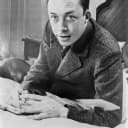
Philosophical Context
AbsurdistContemporaryAlbert Camus
He argued that the universe offers no meaning and never will, and that the only serious philosophical question left is whether that is a reason to keep living: his answer, against the odds, was yes.
Camus grew up poor in colonial Algeria, raised largely by an illiterate, partially deaf mother after his father died in the First World War before Camus was a year old, and the physical clarity of Mediterranean sun and sea he wrote about all his life was never separate, in his mind, from that early poverty. The Myth of Sisyphus opens by declaring suicide the one truly serious philosophical problem, then works through what he called the absurd: the collision between the human need for meaning and a universe that offers, and will always offer, only silence in response. His answer was neither despair nor a leap of religious faith, both of which he considered a kind of philosophical suicide, but a defiant, lucid persistence: imagining Sisyphus, condemned by the gods to roll his boulder uphill forever, as secretly happy in his contempt for the punishment. The Stranger applied the same vision to a novel's worth of consequence, and The Plague, written as an allegory of occupied France, argued that decency and solidarity remain possible and necessary even in a world with no cosmic guarantee that they matter. During the war he edited Combat, a clandestine Resistance newspaper, and after it he became, alongside Sartre, the most visible philosopher in France, until The Rebel's critique of revolutionary violence (his argument that ends could never fully justify murderous means, aimed pointedly at Soviet communism) triggered a public rupture between the two men so bitter that they never fully reconciled. He won the Nobel Prize in Literature in 1957, one of its youngest recipients, and died three years later in a car accident on a rural road outside Paris, a train ticket for the same journey found unused in his coat.
Camus vs. Sartre
The Absurd Rebel vs. Radical Freedom & Revolutionary Politics: How to live without God in an indifferent universe?
In post-war Paris, Albert Camus and Jean-Paul Sartre were the intellectual rock stars of the left bank. Together they gave voice to an era disillusioned by fasc…
Explore Debate→More Lines from Albert Camus
More from Albert Camus→Understanding This Quotation
What does Albert Camus mean by this quotation?
He argued that the universe offers no meaning and never will, and that the only serious philosophical question left is whether that is a reason to keep living: his answer, against the odds, was yes. Camus grew up poor in colonial Algeria, raised largely by an illiterate, partially deaf mother after his father died in the First World War before Camus was a year old, and the physical clarity of Mediterranean sun and s…