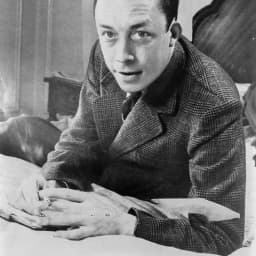
Albert Camus
Evrenin hiçbir anlam sunmadığını ve sunmayacağını, geriye kalan tek ciddi felsefi sorunun bunun yaşamaya değer olup olmadığı olduğunu savundu: kendi cevabı, tüm olanaksızlığa rağmen, evet oldu.
Camus, Cezayir'de yoksulluk içinde büyüdü; babası I. Dünya Savaşı'nda daha o bir yaşına gelmeden öldüğü için, okuma yazma bilmeyen, kısmen sağır bir annenin elinde yetişti. Hayatı boyunca yazdığı Akdeniz güneşi ve denizinin fiziksel netliği, onun zihninde bu erken dönem yoksulluğundan hiçbir zaman ayrılmadı. 'Sisifos Söyleni', intiharın gerçekten ciddi tek felsefi sorun olduğunu ilan ederek başlar ve ardından 'absürd' dediği şeyi işler: insanın anlam arayışı ile yalnızca sessizlikle yanıt veren ve her zaman verecek bir evren arasındaki çarpışma. Onun yanıtı ne umutsuzluk ne de dinsel bir inanç sıçrayışıydı (ikisini de bir tür felsefi intihar sayıyordu), aksine inatçı, aydınlık bir ısrardı, tanrılar tarafından kayasını sonsuza dek tepeye yuvarlamaya mahkûm edilen Sisyphus'u cezayı küçümsemesinde gizli bir mutlulukla hayal etmekti. 'Yabancı' aynı görüşü bir romanın sonuçlarına uyguladı; 'Veba' ise işgal altındaki Fransa'ya bir benzetme olarak yazıldı ve bu dünyada, onların anlamlı olduğuna dair hiçbir kozmik güvence olmasa bile, edep ve dayanışmanın mümkün ve gerekli olduğunu savundu. Savaş sırasında gizli bir direniş gazetesi olan 'Combat'ı yönetti; savaştan sonra Sartre'la birlikte Fransa'nın en görünür filozofu haline geldi, ta ki devrimci şiddeti eleştiren 'Başkaldıran İnsan' (amacın asla araçları tamamen haklı çıkaramayacağı, özellikle Sovyet komünizmini hedef alan bir iddia) ikili arasında öyle acı bir kopuşa yol açana ki bir daha tam olarak barışamadılar. 1957'de Nobel Edebiyat Ödülü'nü kazandı, en genç alıcılardan biriydi; üç yıl sonra Paris kırsalında bir yolda geçirdiği trafik kazasında öldü, ceketinin cebinde aynı yolculuk için kullanılmamış bir tren bileti bulundu.

Yerler
Fikirler
Sözler
“Gerçek anlamda ciddi tek bir felsefi sorun vardır, o da intihardır.”
“Kışın derinliklerinde, nihayet içimde yenilmez bir yaz olduğunu öğrendim.”
Eserler
Hayat ve Anlar
Direniş Gazetesi Combat'ı Yönetir
Alman işgali sırasında Camus, gizli bir Fransız Direniş gazetesi olan Combat'ı yönetir, sürekli keşfedilme riski altında yazar ve savaş sonrası kamusal hayatına taşıyacağı ahlaki otoriteyi inşa eder.
Nobel Edebiyat Ödülü'nü Kazandı
Camus, kırk üç yaşında Nobel Edebiyat Ödülü'nü kazandı; ödülün en genç sahiplerinden biriydi. Üç yıl sonra Paris yakınlarında bir köy yolunda geçirdiği trafik kazasında hayatını kaybetti.
Etki
Etkilendiği düşünürler
- Friedrich Nietzsche
Camus'nün absürd felsefesi, doğrudan Nietzsche'nin geleneksel anlam kaynaklarının çöktüğü teşhisine dayanır; ama Nietzsche'nin güç istenci alternatifine karşı, daha mütevazı, aydınlık bir sebatı tercih eder.
- Simone Weil
Camus, savaş sonrası Gallimard'da editör olarak çalışırken, Weil'in günümüze kalan defterleri ve denemelerinin yayımlanmasını bizzat savundu ve onu sadece çağının tek büyük ruhu olarak nitelendirdi.
- Jean-Paul Sartre
Camus ile Sartre, savaş sonrası Fransa'nın en görünür iki filozofuydu; ta ki Camus'nün Sovyet komünizmine yönelik devrimci şiddeti eleştiren Başkaldıran İnsan adlı eseri, ikisi arasında ne birinin ne de ötekinin tam olarak onaramadığı sert bir aleni kopuşu tetikleyene dek.
Albert Camus ile Felsefe Yapın
Bu düşünürün yer aldığı rehberli yollar, münazaralar ve zihin deneyleriyle fikirleri derinleştirin.
Varoluşçuluk
Albert Camus, bu geleneğin en büyük temsilcilerindendir. Zihninizin bu okula ne kadar yakın olduğunu test edin.
Varoluşçuluk: Özgürlük, Kaygı ve Anlam Arayışı
Hazır anlamlar çöktüğünde özgürlük ürkütücü bir ağırlık kazanır. Varoluşçu düşünürlerin bu kaygıyı nasıl sahici bir sorumluluğa dönüştürdüğünü inceleyin.
Camus ve Sartre
Başkaldıran İnsan ve Radikal Özgürlük: Tanrısız ve anlamsız bir dünyada nasıl yaşamalı?


