A quotation from Jean-Jacques Rousseau
Quotation
Man is born free, and everywhere he is in chains.
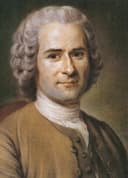
Philosophical Context
EnlightenmentRomanticJean-Jacques Rousseau
Man is born free, and everywhere he is in chains. He meant it as a diagnosis, not a slogan. The cure he proposed transformed political thought forever.
Rousseau was born in Geneva in 1712, the son of a watchmaker, and spent his life oscillating between revelation and persecution. In 1749, walking to visit Diderot in prison, he had a vision on the road to Vincennes: civilization is not progress but corruption. The arts and sciences have not made us better but worse. Natural man was free, healthy, and innocent. Society, property, and inequality have chained him. He published this argument and became famous overnight. The Social Contract and Emile, both published in 1762, were immediately condemned and burned in Paris and Geneva. He spent years as a fugitive. He died in 1778, two months after Voltaire, whom he despised and who despised him back.
Rousseau vs. Voltaire
The Noble Savage & General Will vs. Enlightenment Progress & Rational Wit.
Jean-Jacques Rousseau and Voltaire were the contrasting intellectual giants of the French Enlightenment. Voltaire championed scientific progress, religious tole…
Explore Debate→More Lines from Jean-Jacques Rousseau
More from Jean-Jacques Rousseau→Understanding This Quotation
What does Jean-Jacques Rousseau mean by this quotation?
Man is born free, and everywhere he is in chains. He meant it as a diagnosis, not a slogan. The cure he proposed transformed political thought forever. Rousseau was born in Geneva in 1712, the son of a watchmaker, and spent his life oscillating between revelation and persecution. In 1749, walking to visit Diderot in prison, he had a vision on the road to Vincennes: civi…