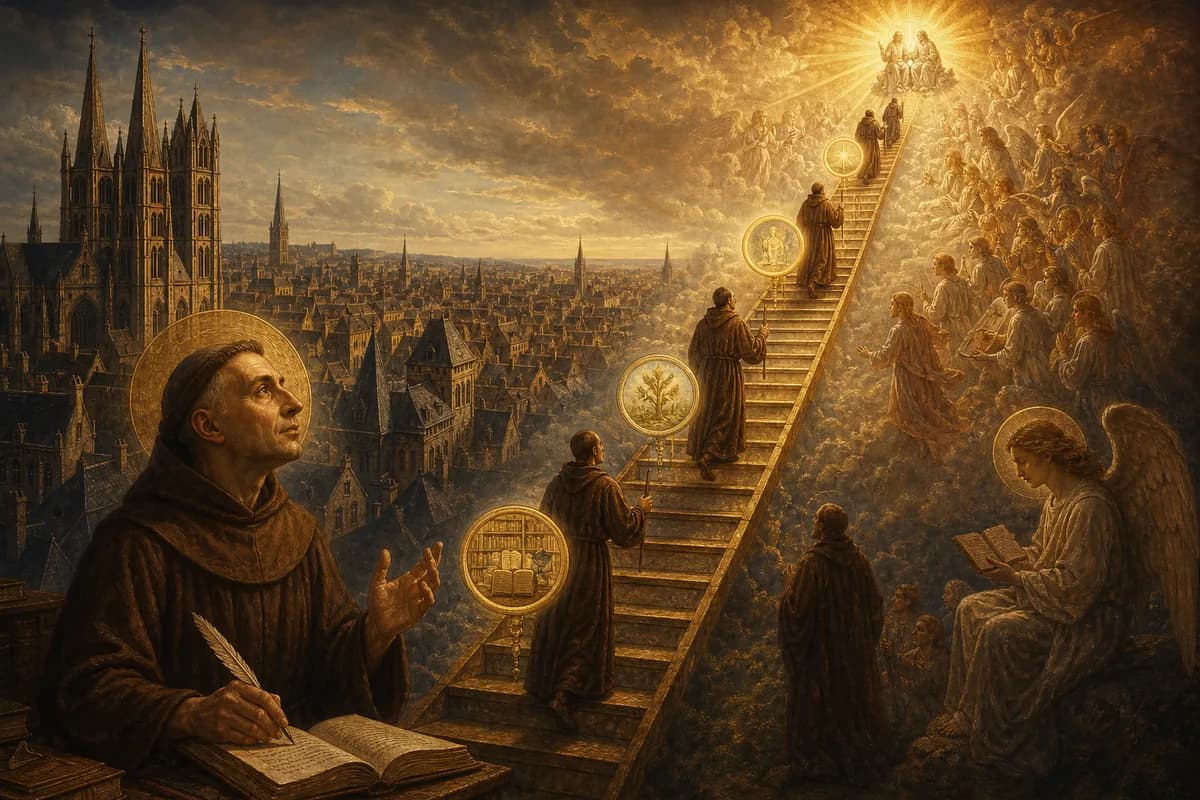
Paris'te Aquinas'ın yanında ders veren ve sonradan tarikatını yöneten bir Fransisken olan Bonaventure, aklın ve sevginin rakip değil, tek bir yolun ortakları olduğunu savundu. Tanrı'ya Ruhun Yolculuğu, ruhun doğal dünyadan Tanrı'nın içimizdeki imgesine ve sonunda düşünceyi aşan bir birliğe yükselişini haritalar. Çağdaşları Aristoteles'e yaslanırken o, Augustine ve eski mistik gelenekle bağını korudu.

Yerler
Fikirler
Sözler
“Lütuf iste, öğreti değil; arzu duy, anlayış değil; dua iniltileri olsun istediğin, okumaya gayret değil.”
Eserler
Hayat ve Anlar
Bagnoregio'da doğdu
Orta İtalya'daki bir tepe kasabasında doğdu; Fransisken tarikatına girdi ve Paris'te okudu.
Paris'te öğretim
Aquinas ile birlikte Paris'te ders verdi; akıl ve sevginin tek yolda ortak olduğunu savundu.
Fransiskenlerin genel lideri
Tarikatına önderlik etti; yönetimi Tanrı'ya yükselen zihinle dengeledi.
Zihnin Tanrı'ya Yolculuğu
Ruhun doğadaki ilahi izlerden düşünceyi aşan birleşime yükselişini haritaladı.
Etki
Etkilendiği düşünürler
- Augustine
Bonaventure, çağdaşları Aristoteles'e yaslanırken Augustinus ve mistik gelenekten koptu.
- Hugh of Saint Victor
Bonaventura, zihnin yükseliş aşamalarına dair Viktorin anlatısından faydalandı ve ruhun Tanrı'ya yolculuğu haritasının arkasındaki otoriteler arasında Hugo'yu andı.

