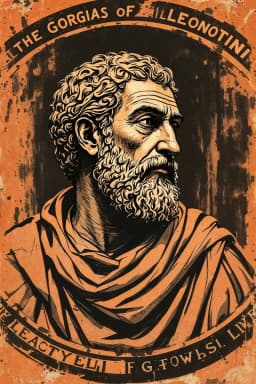
Gorgias
Hiçbir şeyin var olmadığını; olsa bile bilinemeyeceğini; bilinse bile anlatılamayacağını savunan sofist.
Gorgias Sicilya'dan Atina'ya bir elçi olarak geldi ve şehri yeni bir güçle büyüledi: bir sanat olarak ikna. Sabit bir öğretisi yoktu; yüksek ücretler aldı ve usta bir konuşmacının her konunun her yanını savunabileceğini gösterdi. Küçük risalesi Var Olmayan Üzerine üç imkânsız sonuca varır: hiçbir şey yoktur, var olan bilinemez, bilinen aktarılamaz. Platon onu bir diyaloğun karşıtı yaptı ve retoriğin hakikatten önemli olabileceği fikrine bir ömür boyu cevap aradı.

Yerler
Fikirler
Sözler
“Hiçbir şey var değildir; var olsa bile bilinemez; bilinebilse bile sözcüklerle anlatılamaz.”
“Söz güçlü bir efendidir, en küçük ve en görünmez bedeniyle en tanrısal işleri başarır.”
Eserler
Hayat ve Anlar
Sicilya'da doğdu
Sicilya'daki Leontini'de doğdu ve ikna sanatını Yunan anakarasına taşıyacaktı.
Atina Elçiliği
Atina'ya elçi olarak geldi, kaldı ve retorik öğretti. Şehri büyüledi, kelimelerin gücü için yüksek ücretler aldı.
Büyükelçilikle Atina’yı büyüleyen
MÖ 427’de Leontini’den Atina’ya bir elçilik kurdu, Syrakusa’ya karşı yardım istedi. Dengeli tümceler ve uyaklı seslerle yaptığı konuşmalar, Atinalıların hiç duymadığı bir üslupla şehri kasıp kavurdu ve bir gecede profesyonel hitabeti Yunan kurumu haline getirdi.
Etki
Etkilendiği düşünürler
- Empedocles
Antik gelenek, Gorgias'ı Empedokles'in öğrencisi sayar. Bu da Yunan retoriğinin kökenlerini, dört kökün ve arınma şiirinin çıktığı aynı Sicilya çevresine yerleştirir.
Etkilediği düşünürler
- Plato
Platon, Gorgias'ı bir diyalogda karşıt olarak kullandı; sofistin iknanın gerçeklikten daha önemli olduğu iddiasını ömrü boyunca çürütmeye çalıştı.
- Sextus Empiricus
Non-Being hakkında elimizdeki neredeyse her şey, üç tezi bilgi iddialarını sarsan argümanlar arasında kataloglayabilmek için tekrarlayan Sextus sayesindedir.


