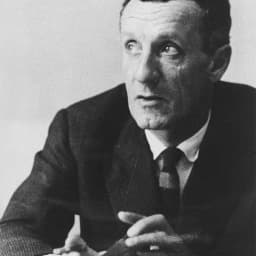
Maurice Merleau-Ponty
Zihnin dünyayı uzaktan gözlemlemediğini, zaten o dünyaya dokunan, onun içinden geçen ve onun tarafından şekillendirilen bir bedende yaşadığını savundu.
Merleau-Ponty, École Normale Supérieure'de Sartre ve Beauvoir ile birlikte eğitim aldı ve kuşağının fenomenolojiye yönelişini paylaştı, ama onu ikisinin gitmediği bir yere itti: bedene. Algının Fenomenolojisi, bedenin zihnin kontrol ettiği bir nesne ya da duyu verisini ayrı, gözlemleyen bir bilince ileten bir makine olmadığını savundu: beden, bir dünyanın algılanabilir hâle gelmesini sağlayan biricik ortamın ta kendisidir. Kör bir kişinin bastonu, elin sadece tuttuğu bir alet değildir; yeterli pratikle dokunmanın kendisinin bir uzantısı hâline gelir, bedenin kendi konum duyusuna dahil olur. Bu, zihnin bir bedene hapsolmuş, dışarıdaki bir dünyaya bakan klasik resminin daha başlangıç noktasında zaten bir hata olduğu anlamına geliyordu: algı, veriden çıkarım değil, herhangi bir teoriden önce gelen bedensel bir angajman biçimidir. Sartre ve Beauvoir ile birlikte Les Temps modernes dergisini kurdu, sonra Kore Savaşı ve bir filozofun Marksizme bağlılığının Sovyet şiddetini bağışlamada ne kadar ileri gitmesi gerektiği konusunda Sartre'la kamuoyu önünde ayrıldı, Fransız felsefesinin en merkezi dostluklarından birini bitiren bir kopuş. Elli üç yaşında, masasında, önünde açık bir Descartes cildiyle, bir felç sonucu öldü.

Yerler
Fikirler
Sözler
“Beden, bir dünyaya sahip olmanın genel aracımızdır.”
“Dünyayı gerçekten algılayıp algılamadığımızı merak etmemeli; onun yerine şunu söylemeliyiz: dünya, algıladığımız şeydir.”
Eserler
Hayat ve Anlar
Algının Fenomenolojisi'ni yayımlar
Merleau-Ponty, bedenin zihnin uzaktan gözlemleyip kontrol ettiği bir nesne değil, bir dünyanın algılanabilir hale geldiği aracın ta kendisi olduğunu savundu: bu eser, bedenlenmiş biliş ve varoluşçu fenomenolojinin kurucu metnidir.
Sartre'la Açıkça Yollarını Ayırıyor
Merleau-Ponty, Kore Savaşı ve bir filozofun Marksizm'e bağlılığının Sovyet şiddetini mazur göstermede ne kadar ileri gitmesi gerektiği konusunda Sartre'dan ayrıldı. Bu kopuş, Fransız felsefesinin en önemli dostluklarından birini ve Merleau-Ponty'nin Les Temps modernes dergisindeki eş editörlüğünü sona erdirdi.
Etki
Etkilendiği düşünürler
- Edmund Husserl
Merleau-Ponty, Husserl'in deneyimi önceki teorik varsayımlar olmadan tam olarak göründüğü hâliyle tarif etme yöntemini alıp bedene doğru genişletti, Husserl'in kendi geç dönem yayımlanmamış bedenlenme üzerine el yazmalarının tam olarak bu sonuca işaret ettiğini savunarak.
- Jean-Paul Sartre
Merleau-Ponty, Les Temps modernes dergisini Sartre ve Beauvoir ile birlikte kurdu ve kuşaklarının fenomenolojiye yönelişini paylaştı; sonra Kore Savaşı ve Sovyet komünizmiyle hizalanmanın etiği konusunda Sartre'la kamuoyu önünde ayrıldı.
- Henri Bergson
Merleau-Ponty, Bergson'un yaşanmış zamanın anlardan inşa edilemeyeceği ısrarını miras aldı ve bunu bedenin dünyaya tutunuşunun bir açıklamasına dönüştürdü.


