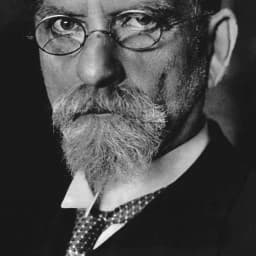
Edmund Husserl
He invented phenomenology, the method of returning to the things themselves, and every major philosopher who followed had to pass through it.
Husserl trained as a mathematician under Weierstrass and came to philosophy through a fundamental dissatisfaction with psychologism, the view that logic describes how we actually think rather than how we must think. His alternative was phenomenology: a rigorous method for examining the structures of consciousness itself, setting aside all assumptions about the external world and attending purely to how things appear. He called this the epoché, the phenomenological reduction. What he found were intentional acts, every state of consciousness is consciousness of something, and the various ways objects give themselves in experience: as present, as remembered, as imagined, as promised. The method he invented was applied in every direction by his students: Heidegger used it to analyze existence, Merleau-Ponty used it to analyze the body, Levinas used it to analyze the face of the other. Husserl himself, stripped of his library and his position by the Nazis in 1933, kept writing until the end.

Places
Ideas
Words
“Back to the things themselves!”
“Philosophy as rigorous science — the dream is over.”
Works
Life & Moments
Studies under Brentano in Vienna
From 1884 to 1886, Husserl studied with Franz Brentano in Vienna. Brentano's doctrine of intentionality, that every mental act is directed toward an object, gave Husserl the pivot around which phenomenology would turn. He later said these two years decided the course of his intellectual life.
Founds phenomenology at Freiburg
Husserl moved to Freiburg in 1916 as full professor and spent his most productive years there. He published Ideas I, directed doctoral students from across Europe, and founded the phenomenological movement. Heidegger was his assistant from 1919, and Freiburg became the center of European philosophy.
Barred from the university library under Nazi law
In 1933, the Nazi racial laws stripped Husserl of his right to use the University of Freiburg library. Heidegger, now rector and a party member, did not protest on his behalf. Husserl continued to work in isolation, dictating manuscripts on the crisis of European sciences until near his death in 1938.
Influence
Influenced by
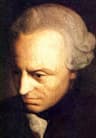
- Immanuel Kant
Husserl described phenomenology as completing the Kantian project: the turn to the subject, pursued rigorously, leads not to transcendental conditions but to the structures of lived experience.
Influenced
- Martin Heidegger
Heidegger was Husserl's assistant at Freiburg and his designated successor. He dedicated Being and Time to Husserl, then rerouted phenomenology away from consciousness toward Being, a move Husserl never accepted.
- Jean-Paul Sartre
Sartre read Husserl in a Berlin café in 1932 and returned to Paris to make phenomenology existentialist. Consciousness as intentional, always aimed at something beyond itself, became the engine of Sartre's account of freedom.
- Simone de Beauvoir
De Beauvoir worked within the phenomenological tradition Husserl founded, applying its method of describing lived experience to the situation of women, a subject Husserl himself had not considered.
- Nishida Kitaro
Husserl's phenomenology gave Nishida a rigorous Western method for analyzing pure experience as it appears prior to any conceptual division between a perceiving subject and a perceived object, a bridge between his Zen training and academic philosophy.
- Maurice Merleau-Ponty
Merleau-Ponty took Husserl's method of describing experience exactly as it appears, without prior theoretical assumptions, and pushed it toward the body, arguing that Husserl's own late unpublished manuscripts on embodiment pointed toward exactly this conclusion.
- Paul Ricoeur
Ricoeur read and began translating Husserl by hand while a prisoner of war, and phenomenology remained the method beneath his later synthesis of psychoanalysis, structuralism, and biblical hermeneutics into a theory of narrative identity.
- Jacques Derrida
Derrida's first published work was an introduction to Husserl's Origin of Geometry, and the deconstructive method grew out of noticing where Husserl's own text could not maintain the distinctions it needed.