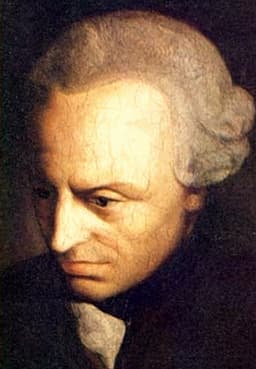
Immanuel Kant
He never left Konigsberg. He remade philosophy. The mind does not simply receive the world; it constructs it. Everything after him is a response.
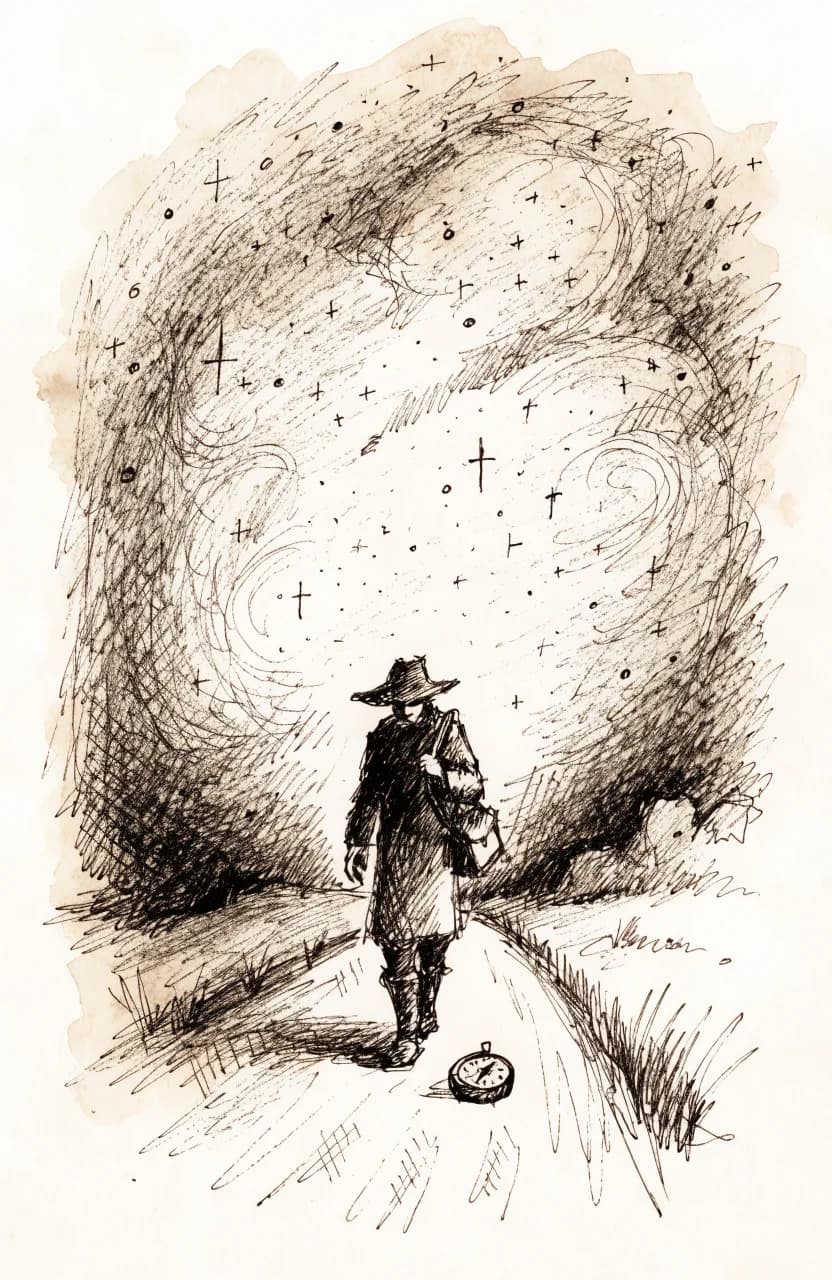
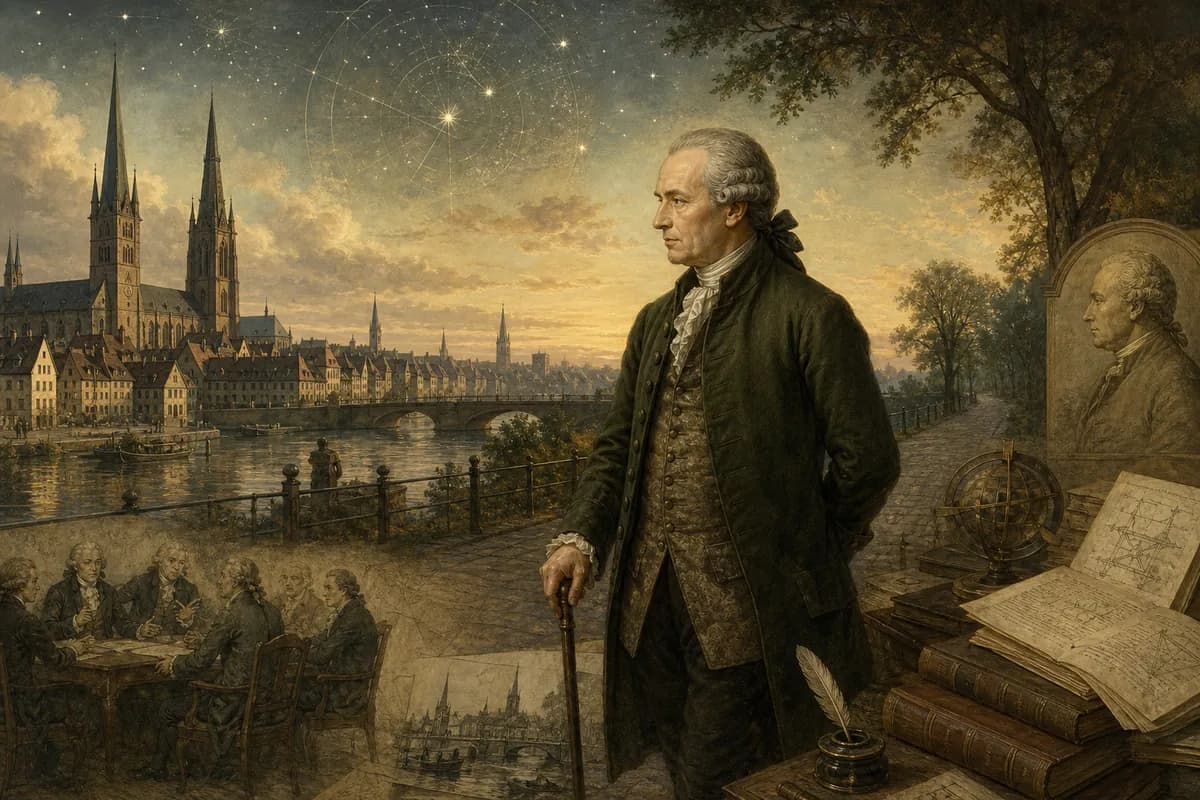
Kant was born in Konigsberg in 1724, the son of a harness-maker, and lived there his entire life. He was so punctual that his neighbors set their clocks by his afternoon walk. He woke at five, drank tea, and wrote. He lectured on geography, mathematics, physics, and philosophy for forty years. When he was fifty-seven he published the Critique of Pure Reason, one of the most difficult and transformative books in the history of thought. It argues that space, time, and causation are not features of the world but structures of the mind through which we experience it. We never encounter things as they are in themselves, only as they appear to us. The Groundwork for the Metaphysics of Morals followed in 1785, laying out the categorical imperative. He died in 1804, aged seventy-nine, reportedly saying: Es ist gut. It is good.

Read in the Library
Places
Ideas
Words
“Two things fill the mind with ever-increasing wonder and awe: the starry heavens above me and the moral law within me.”
“Dare to know! Have the courage to use your own understanding.”
“Act only according to that maxim by which you can at the same time will that it should become a universal law.”
Works
Critique of Pure Reason
Published in 1781, revised 1787. The most important philosophical work of the modern era. Kant argues that space, time, and causation are structures imposed by the mind on experience, not features of the world itself.
Groundwork for the Metaphysics of Morals
Published in 1785. A short, difficult book that tries to establish the single principle underlying all of morality: the categorical imperative. Act only as you would want everyone to act.
Life & Moments
Born in Konigsberg
Born in the Prussian port of Konigsberg, he would live his whole life within a day's walk of its towers.
Critique of Pure Reason
Published at fifty-seven the book that asked what reason can know before experience, and what experience can teach after limits are set.
What Is Enlightenment?
Answered the Berlin journal's question: enlightenment is humanity's emergence from self-imposed immaturity, daring to think for oneself.
Death in Konigsberg
Died in the city he never left, having redrawn the boundaries of knowledge, duty, and freedom for the modern world.
Influence
Influenced by
- David Hume
Kant famously said that reading Hume awakened him from his dogmatic slumber. The Critique of Pure Reason is largely an answer to Hume's skepticism about causation.
- Jean-Jacques Rousseau
Kant kept only one picture on his wall: a portrait of Rousseau. Rousseau's insistence on human dignity and freedom shaped the categorical imperative.
- Moses Mendelssohn
Kant and Mendelssohn corresponded with mutual respect and answered the same public question, what is enlightenment, in the same journal, with Mendelssohn's reply appearing months before Kant's.
- Anselm
Kant's objection, that being adds nothing to the concept of a thing, was aimed at the form of the argument Anselm began and Descartes revived, and is generally taken to have ended it.
Influenced
- Johann Gottfried Herder
Herder studied under Kant, then turned against his cold universal reason for a philosophy of culture, language, and history.
- G.W.F. Hegel
Hegel took the Kantian system as his starting point and tried to complete what Kant left unfinished: showing that thought and being are not separate sides to be bridged, but already one.
- Arthur Schopenhauer
Schopenhauer called himself the only true heir to Kant, keeping the distinction between phenomena and the thing-in-itself while denying that reason could know the latter. He replaced it with will: blind, directionless, and prior to thought.
- Edmund Husserl
Husserl described phenomenology as completing the Kantian project: the turn to the subject, pursued rigorously, leads not to transcendental conditions but to the structures of lived experience.
- C.S. Peirce
Peirce read Kant's Critique of Pure Reason intensively as a student and reworked its table of categories into his own triadic logic of signs, treating his pragmatism as in some ways a continuation of Kant's project by other means.
- Thomas Nagel
Nagel's View from Nowhere reworks a recognizably Kantian distinction between how things appear from a particular standpoint and how they might be described from no standpoint at all, applying it across ethics, mind, and metaphysics.
- Jürgen Habermas
Habermas keeps Kant's test of whether a maxim could hold for everyone but relocates it: the question is no longer what one person can will alone, but what everyone affected could agree to in an argument nobody is coerced in.
Engage with Immanuel Kant
Explore structured paths, classic debates, and thought experiments featuring this thinker.
Rationalism & Enlightenment
Immanuel Kant is a foremost representative of this school. Test your alignment with this tradition.
Foundations of Ethics: What is the Good Life?
Travel across 2,500 years of ethical philosophy to understand how humanity's greatest minds defined duty, virtue, happiness, and moral duty.
Kant vs. Nietzsche
Universal Moral Duty vs. The Will to Power: Is morality an objective law or a creative act of will?
The Trolley Problem
Is an action judged solely by the tally of its consequences, or are certain moral boundaries inviolable regardless of the outcome?