German Idealism
Key Idea
“The mind is not a mirror of the world. The mind makes the world it can experience.”
Overview & Origins
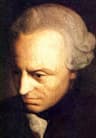
Kant is the pivot on which modern philosophy turns. He woke from his 'dogmatic slumber' by reading Hume and spent eleven years composing a response: the Critique of Pure Reason. His answer: reason does not discover the world as it is; it constitutes what we can experience. Space, time, and causation are forms imposed by the mind, not features of things-in-themselves. This shift from what the world is to how we can know it launched German Idealism and set the agenda for nearly everything since.
German Idealism emerged in the late 18th century as a profound response to the epistemological crisis ignited by David Hume’s skepticism. Immanuel Kant, its foundational figure, sought to reconcile empiricism and rationalism by asserting that the mind actively shapes experience rather than passively reflecting an external reality. In his Critique of Pure Reason, Kant argued that space, time, and causality are not inherent features of the world but a priori structures of human cognition. This ‘Copernican revolution’ in philosophy shifted the focus from metaphysics to epistemology, emphasizing the limits and conditions of human knowledge. Kant’s successors, including Fichte, Schelling, and Hegel, expanded his insights, exploring the dynamic interplay between subjectivity and the absolute. German Idealism’s legacy endures in its profound influence on existentialism, phenomenology, and modern thought, reshaping how we understand the relationship between mind, world, and reality.
Core Tenets
Transcendental Idealism
The mind imposes structures like space and time on experience, shaping how we perceive reality.
Synthetic A Priori Knowledge
Certain truths, such as mathematical principles, are universally valid yet derived from the mind’s framework.
The Primacy of Reason
Reason is the ultimate arbiter of knowledge, morality, and the structure of reality.
Philosophers of this Tradition
Canonical Works
Published in 1781, revised 1787. The most important philosophical work of the modern era. Kant argues that space, time, and causation are structures imposed by the mind on experience, not features of the world itself.
Published in 1785. A short, difficult book that tries to establish the single principle underlying all of morality: the categorical imperative. Act only as you would want everyone to act.
Core Ideas & Concepts
Centers of Thought
Voices & Maxims
“Two things fill the mind with ever-increasing wonder and awe: the starry heavens above me and the moral law within me.”
“Dare to know! Have the courage to use your own understanding.”
“Act only according to that maxim by which you can at the same time will that it should become a universal law.”