French Enlightenment
Key Idea
“Reason must critique everything: including itself, and especially power.”
Overview & Origins
Three thinkers in France pushed Enlightenment reason toward its most radical conclusions. Voltaire used satire to fight superstition, religious cruelty, and arbitrary power. Diderot edited the Encyclopédie (a project to catalogue human knowledge and thereby democratize it) while privately writing the century's most dangerous materialist texts. Rousseau turned against civilization itself: the arts and sciences have corrupted humanity, and the only remedy is a social contract that restores what was lost.
The French Enlightenment, flourishing between 1694 and 1784, represents the apex of radical intellectual critique in the Age of Reason. Originating as a response to the dogmas of church and state, it sought to dismantle superstition and arbitrary authority through relentless rational inquiry. Voltaire, Diderot, and Rousseau, its foremost figures, each pursued reason to its most daring conclusions: Voltaire wielded satire against religious and political oppression; Diderot's Encyclopédie aimed to democratize knowledge while his clandestine materialist writings undermined metaphysical certainties; Rousseau controversially argued that civilization itself had corrupted humanity's innate goodness, proposing a social contract to reclaim lost virtue. Their collective legacy lies in the imperative that reason must interrogate all foundations—especially power—an ethos that ignited revolutions and reshaped modern thought.
Core Tenets
Rational Critique of Authority
All forms of power, including religious and political institutions, must be subjected to rigorous scrutiny by reason.
Empiricism and Materialism
Knowledge derives from observable evidence and material conditions, rejecting metaphysical speculation ungrounded in experience.
The Paradox of Progress
Civilization's advances may corrupt natural human virtue, necessitating deliberate social reorganization to restore balance.
Philosophers of this Tradition
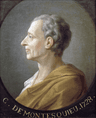
Montesquieu
He studied laws the way others studied nature, and gave the modern world the separation of powers.

Voltaire
The most dangerous writer of the eighteenth century. He used wit as a weapon and spent his life fighting ignorance, superstition, and cruelty in their most powerful forms.
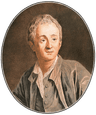
Denis Diderot
He spent twenty years editing the Encyclopedie, the great project of the Enlightenment. He also wrote some of the strangest and most honest prose of the century.

Baron d'Holbach
The most uncompromising materialist of the age, who hosted Europe's boldest minds and denied that anything exists but matter in motion.
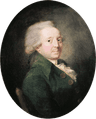
Condorcet
Mathematician of the vote and prophet of progress, he believed reason would carry humanity upward, and died of the revolution he served.
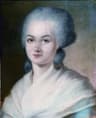
Olympe de Gouges
She answered the Revolution's Rights of Man with the Rights of Woman, and went to the guillotine for taking liberty at its word.
Canonical Works
A comparative study of governments across the world and across time, arguing that laws are shaped by climate, custom, and history, and that liberty survives only where power is divided against itself.
The preface to the great Encyclopedie (1751-1772), written with d'Alembert. It sets out the Enlightenment's ambition: to map all human knowledge and make it available to anyone who could read.
A satirical novella published in 1759. Candide is raised to believe this is the best of all possible worlds, then travels through earthquake, shipwreck, war, and inquisition. The book is philosophy disguised as farce.
Written in 1763 in response to the judicial murder of Jean Calas, a Protestant tortured to death on false charges of killing his son. Voltaire turned the case into a philosophical argument for religious tolerance.
Published anonymously, the era's frankest statement of atheistic materialism: there is only matter and motion, no soul apart from the body, no purpose written into things, and morality is simply what serves human happiness in this one life.
A dialogue written between 1762 and 1779, published only after Diderot's death. His most original work: a conversation with a brilliant, shameless parasite that becomes a meditation on genius, morality, and social performance.
Olympe de Gouges's article-by-article rewriting of the Revolution's Declaration to include women, demanding equal rights in law, property, education, and public life. She paid for it with her life, and the document became a founding text of feminism.
Written in hiding from the Terror, days before his death, Condorcet's last work is a sweeping vision of humanity's advance, confident that knowledge would carry the species toward justice and equality.
Core Ideas & Concepts
Voices & Maxims
“Constant experience shows us that every man invested with power is apt to abuse it.”
“Judge a man by his questions rather than by his answers.”
“To hold a pen is to be at war.”
“We must cultivate our own garden.”