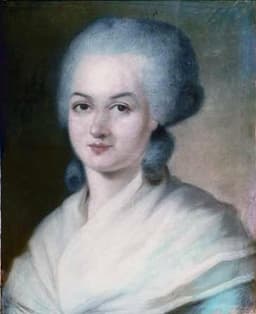
Olympe de Gouges
She answered the Revolution's Rights of Man with the Rights of Woman, and went to the guillotine for taking liberty at its word.
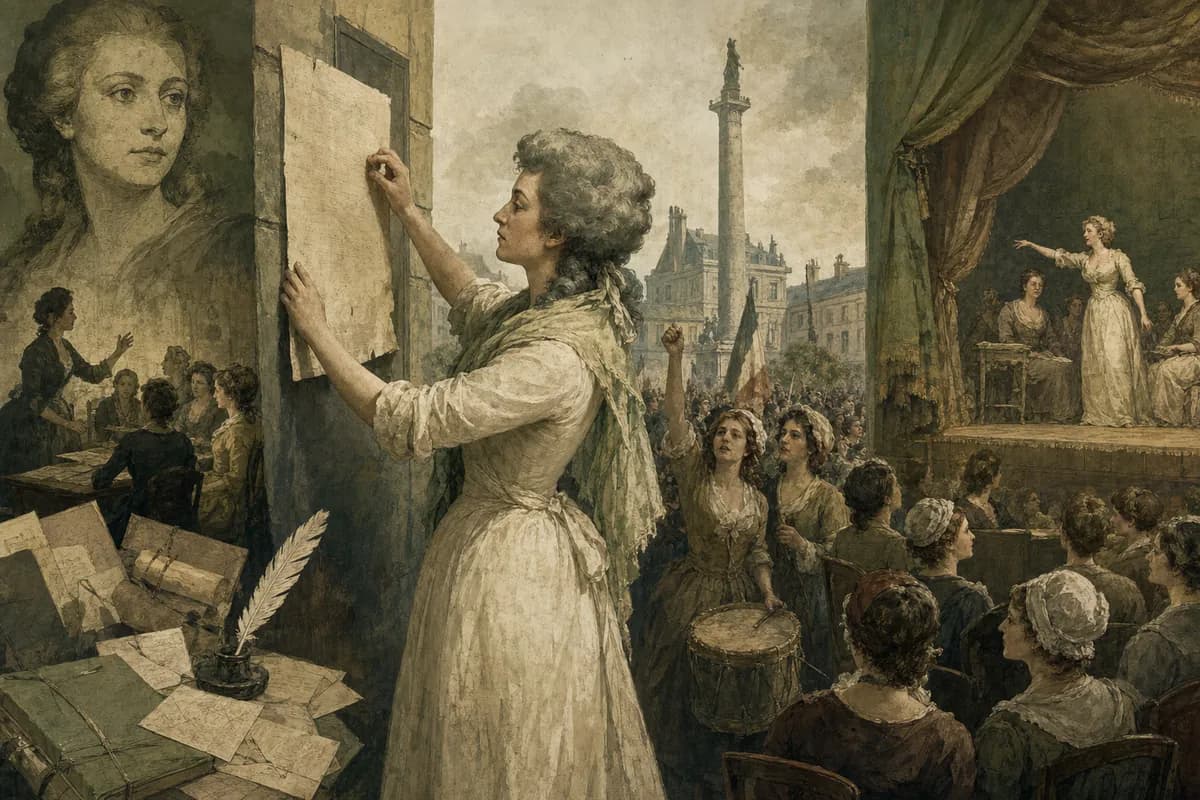
A butcher's daughter who became a playwright and pamphleteer, Olympe de Gouges threw herself into the French Revolution and then held it to its own promises. In 1791 she published the Declaration of the Rights of Woman and the Female Citizen, rewriting the famous Declaration article by article to include women: if a woman may mount the scaffold, she wrote, she must equally have the right to mount the rostrum. She campaigned against slavery and for the poor, and attacked the Terror. In 1793 the revolution she had served sent her to the guillotine: proof, and indictment, of the rights she demanded.

Places
Ideas
Words
“A woman has the right to mount the scaffold; she must equally have the right to mount the rostrum.”
Works
Life & Moments
Born in Montauban
Born Marie Gouze in the south of France, she took the stage name Olympe and walked to Paris to write and act.
Playwright of the Revolution
Wrote plays and pamphlets from Paris that put slavery, divorce, and women's rights on the public stage.
Rights of Woman
Published the Declaration of the Rights of Woman and the Female Citizen, rewriting the Revolution's charter to include women.
Guillotined in the Terror
Sent to the guillotine by the revolution she had served, for attacking the Terror and demanding women's rights.
Influence
Influenced by
- Condorcet
Condorcet published his argument for admitting women to the rights of citizenship in 1790, a year before Gouges issued her Declaration, and the two belong to the same brief moment when the question was live in Paris.
- Jean-Jacques Rousseau
Gouges wrote her Declaration of the Rights of Woman in the language of the revolution's own founding documents, using the vocabulary of natural rights and the general will to expose whom that vocabulary had quietly left out.
Influenced
- Mary Wollstonecraft
In France and England within a year of each other, Gouges and Wollstonecraft made parallel demands for the rights of women.