British & Scottish Enlightenment
Key Idea
“Sentiment, not reason, is the engine of morality. But reason can refine and correct it.”
Overview & Origins
Hume, Smith, and Wollstonecraft worked at the intersection of philosophy, economics, and moral theory. Hume found that reason cannot reach the conclusions we need it to: causation, the self, and morality rest on habit and sentiment, not logic. Smith converted moral philosophy into economic science without abandoning ethics. Wollstonecraft applied Enlightenment principles to sex: if reason is the human faculty, women have it too.
The British & Scottish Enlightenment, flourishing between 1689 and 1797, represents a pivotal moment in Western thought, where philosophy, economics, and moral theory converged to redefine human understanding. At its heart lay David Hume’s radical empiricism, which challenged the supremacy of reason by asserting that foundational concepts like causation, the self, and morality arise from habit and sentiment, not logical deduction. Adam Smith, building on this framework, transformed moral philosophy into economic science, arguing that ethical behavior and market dynamics emerge from human sympathy and self-interest, not abstract rationalism. Mary Wollstonecraft extended these insights to gender, insisting that if reason defines humanity, women must equally possess it—a revolutionary claim that laid the groundwork for modern feminism. Together, these thinkers shifted the locus of moral authority from cold rationality to the warmth of human sentiment, while maintaining that reason’s role is to refine and correct our innate impulses. Their legacy endures in contemporary debates about the nature of ethics, the limits of rationality, and the pursuit of social justice.
Core Tenets
Empiricism over Rationalism
Hume argued that knowledge and morality stem from sensory experience and habitual associations, not innate reason or logical deduction.
Moral Sentiment as Foundation
Smith posited that ethical systems arise from natural human sympathy and social interdependence, not divine command or pure reason.
Reason as Refinement
Wollstonecraft and others held that while sentiment drives morality, reason must guide its application to ensure justice and equality.
Philosophers of this Tradition
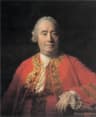
David Hume
The most thoroughgoing skeptic in the history of philosophy. He argued that reason cannot justify itself, causation cannot be proven, and the self is a fiction.
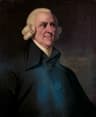
Adam Smith
He explained how a market economy works, but he started from a question about why we feel for strangers. His two books are one argument.
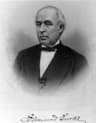
Edmund Burke
He defended liberty and reviled the French Revolution in the same breath, and so fathered modern conservatism.
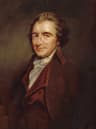
Thomas Paine
The corset-maker turned revolutionary whose pamphlets set two continents on fire, arguing in plain words that government rests on the consent of the living.

Jeremy Bentham
The reformer who reduced morality to a single arithmetic, the greatest happiness of the greatest number, and tried to redesign every institution by it.

Mary Wollstonecraft
She took the Enlightenment's own arguments and turned them on the people who made them. If reason is the basis of rights, she asked, why does it stop at women?
Canonical Works
Written when Hume was in his twenties and published in 1739-40. He later called it juvenile, but it is the most radical work in the British empirical tradition: reason is the slave of the passions, the self is a fiction, causation cannot be proven.
Published in 1748, a more accessible rewriting of the Treatise's central arguments. The most sustained philosophical examination of knowledge, causation, and miracles written in English.
Published in 1759, the book Smith himself considered his greatest work. It grounds moral judgment in sympathy and the figure of the impartial spectator: not what I want, but what a fully informed, impartial observer would approve.
Published in 1776. The founding text of modern economics. Smith explains how the division of labor, free markets, and the self-interest of individuals combine to create prosperity without anyone intending it.
Paine's incendiary pamphlet, written in language any farmer could read, that made the case for American independence so forcefully it turned grievance into revolution. It argues that government is at best a necessary evil and that a small island has no business ruling a continent.
Three speakers argue about whether the order of the world proves a designer. Hume withheld the book all his life and arranged for it to appear after his death, which tells you how dangerous he judged it to be. The argument from design has never fully recovered from the questions put to it here.
Bentham's founding statement of utilitarianism: that pleasure and pain govern us, and that the right act is the one producing the greatest happiness of the greatest number. From this single measure he set out to rebuild law, punishment, and government on rational lines.
Burke's warning that abstract reason loosed upon a living tradition would end in terror, a prophecy events soon honored. Society, he argues, is an inheritance to be pruned with care, not a machine to be redesigned by theory.
Published in 1792. The first systematic argument in the English language for women's equal access to education and civil life. Wollstonecraft takes the Enlightenment's own premises and follows them to conclusions her contemporaries refused to accept.
Core Ideas & Concepts
Voices & Maxims
“Reason is, and ought only to be the slave of the passions, and can never pretend to any other office than to serve and obey them.”
“Custom, then, is the great guide of human life.”
“A wise man proportions his belief to the evidence.”
“It is not from the benevolence of the butcher, the brewer, or the baker that we expect our dinner, but from their regard to their own interest.”