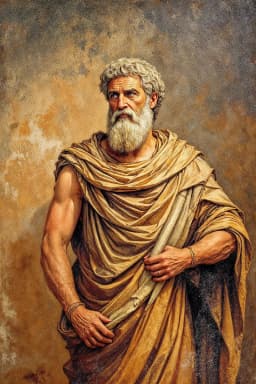
Musonius Rufus
Romalı Sokrates. Felsefenin teori değil, pratik olduğunu, ve kadınların da onu çalışması gerektiğini öğretti.
Musonius Rufus, yazılı incelemeler yerine sohbet yoluyla felsefe öğreten bir Roma şövalyesiydi. İmparatorlar tarafından iki kez sürgün edildi, nereye giderse gitsin öğretmeye devam etti. Bir öğrencisi tarafından korunan dersleri şaşırtıcı derecede pratiktir: nasıl yemek yenir, bir ev nasıl döşenir, kız çocuklarının eğitilip eğitilmemesi gerektiği (evet). Felsefenin, yaşayışınızı değiştirmediği sürece işe yaramaz olduğunu savundu. Epiktetos'un hocasıydı.

Yerler
Fikirler
Sözler
“Eğer sıkı çalışmayla iyi bir şey başarırsan, emek çabuk geçer, ama iyi olan kalıcıdır.”
“Kadınlar da tıpkı erkekler gibi tanrılardan akıl armağanını almıştır.”
Eserler
Hayat ve Anlar
Volsinii'de doğdu
Etrüsk eques ailesine Volsinii'de doğdu. Roma'ya gelip birinci yüzyılın en saygın Stoacı öğretmenlerinden biri oldu.
Roma'da öğretim
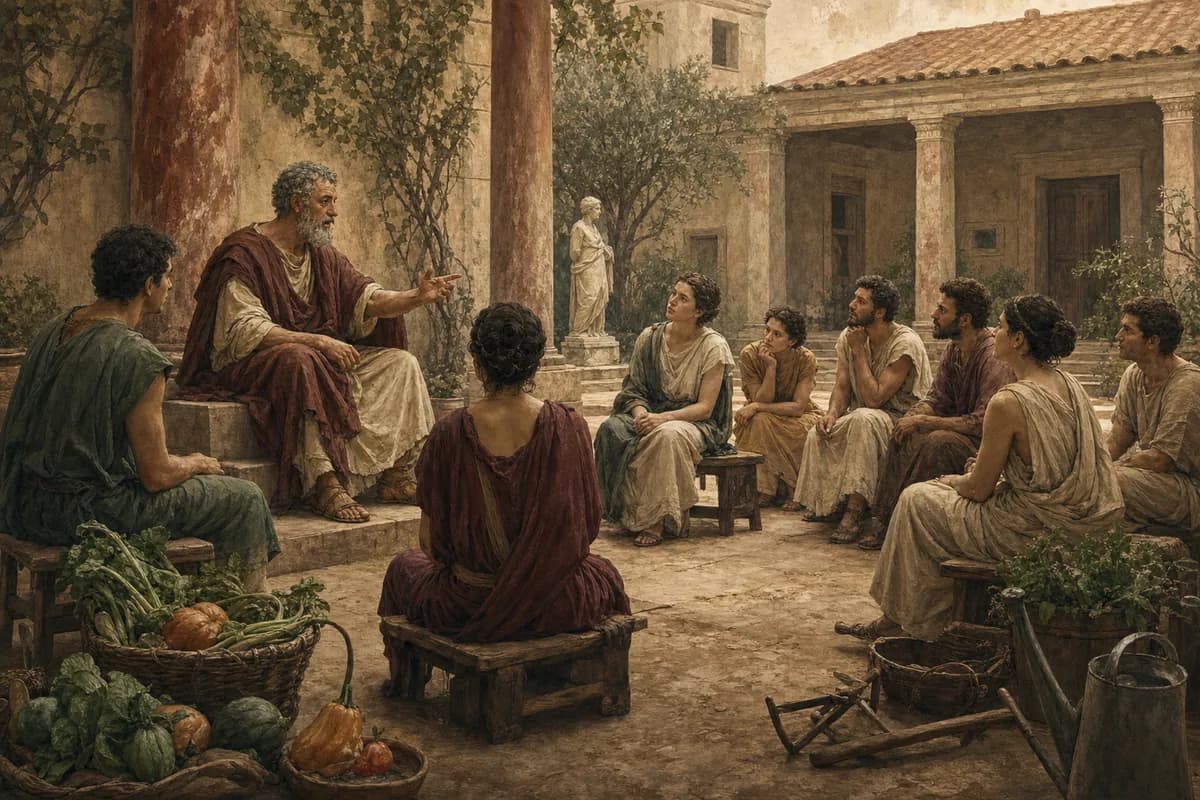
Sürgünler arasında Roma'da öğretti. Kadınların felsefe öğrenmesi, evliliğin ortaklık olması ve el emeğinin ruh için iyi olduğunu savundu. En ünlü öğrencisi Epiktetos'tu.
Nero tarafından sürgün
Nero onu Ege'deki ıssız Gyaros adasına sürdü. Tatlı su kaynağı bularak hayatta kaldı; sürgün itibarını artırdı.
Kadınlar felsefe öğrenmeli
Kızların oğullar gibi eğitilmesi ve felsefenin kadınlar için de erkekler kadar gerekli olduğunu savundu. Ders Roma'yı şaşırttı; hâlâ okuyucuyu şaşırtıyor.
Roma'da ölüm
Roma'da öldü; çağının en pratik Stoacısı olarak anıldı. Öğretisi Epiktetos ve Roma Stoacı canlanmasıyla sürdü.
Etki
Etkilediği düşünürler
- Epictetus
Musonius, Epiktetos'un Roma'daki öğretmeniydi. Epiktetos'un orada öğrendiği özgürlük dersleri daha sonra öğrettiği her şeyi şekillendirdi.
- Dio Chrysostom
Dio, Roma'da Musonius Rufus ile ilişki kurdu ve onun pratik Stoacılığını söylev sanatına taşıdı. Ahlaki öğretiyi, kalabalığın dinlemek için kalacağı konuşmalara dönüştürdü.

